

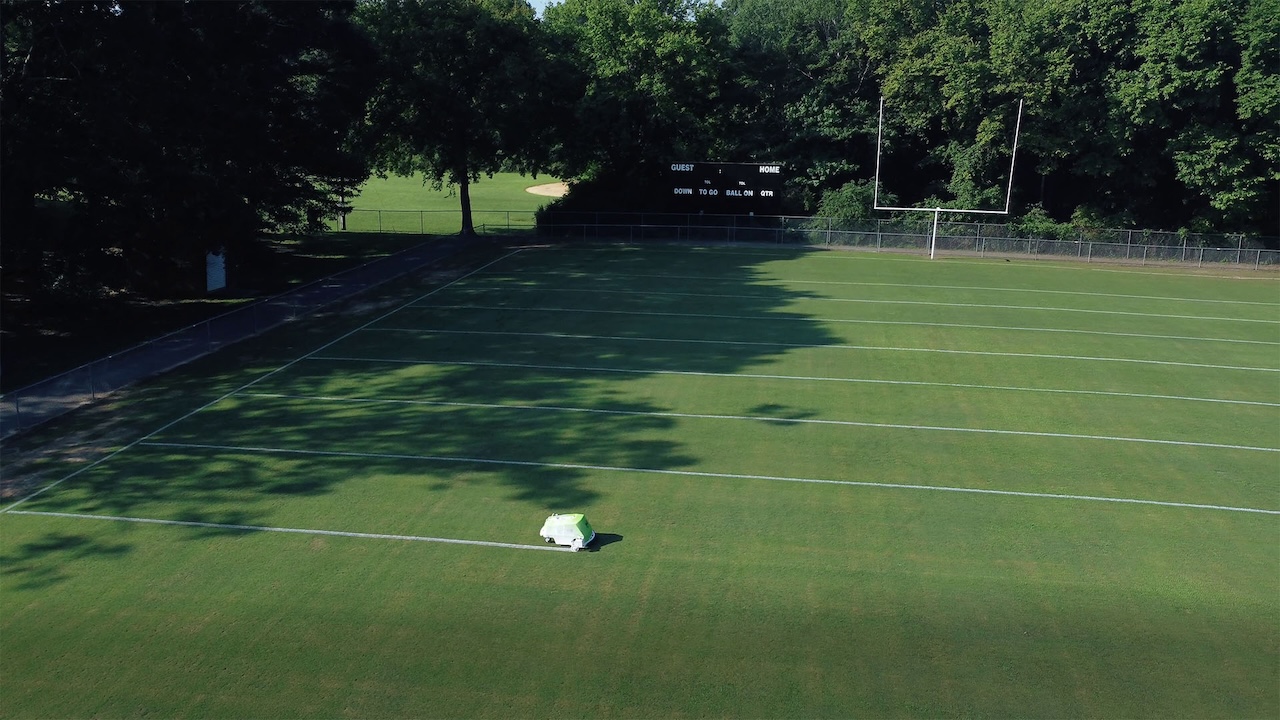
As luxury stadiums and local sports pitches alike seek greater operational efficiency, traditional methods of field upkeep are gradually yielding to innovative, automated solutions. With pressure to deliver precision and cost-effective maintenance, the sports industry is witnessing a paradigm shift guided by emerging robotics and automation technologies.
The Changing Landscape of Field Maintenance
Sports facilities, from pristine professional stadiums to community pitches, require carefully maintained lines and markings that impact both performance and safety. Historically, manual field marking has been a time-consuming, labor-intensive process prone to human error and inconsistency. In response to these challenges, several companies are investing in cutting-edge solutions to streamline maintenance protocols while significantly cutting down on operational costs.
In previous years, many clubs and local councils have relied on conventional painting machines and manual labor to demarcate boundaries and lines on pitches. This approach not only consumed excessive amounts of paint but also disrupted scheduled practice sessions and matches. As a result, there has been a growing interest in automated technologies that can transform the field maintenance industry.
Embracing Automation in Sports Facilities
The adoption of autonomous systems in sports field management mirrors broader transformations seen in sectors ranging from agriculture to urban infrastructure. At the forefront of this technological revolution is the integration of robotics to perform tasks traditionally handled by human operators. Automated field marking is now emerging as a game-changer, offering improvements in accuracy and saving both time and resources.
One notable innovation is the robotic line marker, which utilises advanced navigation systems to ensure consistently accurate markings. By eliminating the variability inherent in manual methods, this solution guarantees that each field is painted with precision, contributing to a visually impeccable and safe playing environment. Such technological breakthroughs not only enhance efficiency but also allow sports venues to reallocate labor resources to other critical tasks.
Driving Efficiency Through Robotics and Data
Robotics in field maintenance is driven by a combination of advanced sensors, GPS-based tracking, and data analytics. Collectively, these systems allow automated devices to operate with minimal human intervention while adapting to diverse conditions. Sports facilities are increasingly exploring these cost-efficient options to meet higher standards of performance and sustainability.
Detailed studies published by government publications outline how these smart systems can mitigate resource waste and pave the way for a more sustainable approach to facility management. For further details, refer to the UK government publication on the impact of AI and automation.
Economic and Operational Benefits
Looking beyond the obvious efficiency gains, the integration of robotics into sports facility maintenance offers several economic advantages. Autonomous systems reduce the need for extensive manual oversight, which can lower operating costs significantly over time. With timely and precise field markings, the risk of costly rework or operational delays is minimised.
Moreover, these innovations contribute to a broader trend in industrial digitalisation where data and automation converge. For example, regularly updated performance analytics allow facility managers to monitor wear-and-tear patterns across pitches, schedule maintenance more effectively, and predict future repair needs. These practices contribute not only to improved safety but also to enhanced resource allocation across the sector.
Automation Trends in the Sports Industry
Technological developments in sports maintenance are also attracting significant attention from major media outlets. Data compiled by reputable sources, including BBC News, confirm that innovations in robotics and precision automation are rapidly reshaping traditional maintenance practices. Reported growth rates in the adoption of automated solutions often surpass 20% annually, highlighting robust market confidence in these transformative technologies.
These insights are paralleled by an increasing focus on sustainability in facility management. Automated painting systems notably reduce paint usage compared to manual methods, thus making a considerable contribution toward greener, more eco-friendly sports facilities. The reduced environmental footprint aligns with evolving regulatory frameworks aimed at promoting sustainable practices across public and private sectors.
Emerging Tech Trends and Future Prospects
The future of sports facility maintenance lies in continuous innovation and the amalgamation of traditional expertise with state-of-the-art technology. Innovations in robotic solutions illustrate this dynamic change, where advanced systems not only improve performance but also offer predictive maintenance capabilities. By integrating real-time data analytics, facilities can better forecast maintenance needs and consequently minimise disruptions during peak usage periods.
As interest in automation grows, the market is also witnessing a shift in how technology is perceived among sports professionals and ground managers. Increasingly, decision-makers appreciate automated solutions not just as a means of reducing labor costs but also as a strategic investment in long-term operational excellence. A trend that warrants attention in broader discussions on technological investments can be found in the emerging tech trends observed across London’s vibrant tech landscape. These trends are shaping how contemporary challenges in sports facility management are being addressed through practical and scalable solutions.
The integration of robotics in sports maintenance represents only one facet of a larger digital transformation sweeping across various industries. As facilities continue to adopt smart solutions, market dynamics are bound to shift. For instance, autonomous systems have the potential to drive competitive advantages in sports management by delivering consistency, reliability, and significant cost savings. Coupled with strong data analysis tools, such approaches are turning what was once a routine task into a highly specialised area of operational strategy.
Integrating Sustainability and Technological Innovation
An often overlooked yet critical aspect of this transformation is sustainability. The application of automated solutions in sports facility maintenance not only paves the way for operational savings but also contributes to environmental conservation by optimising resource consumption. Reduced usage of paint and lower energy requirements exemplify how technological advancements can align with green initiatives, ensuring facilities operate more responsibly in an era of heightened environmental awareness.
Furthermore, broader automation trends underscore the evolving role of government policy in supporting green innovations. Strategic public policies and supportive measures encourage investment in technologies that deliver both economic and environmental benefits. Such a confluence of factors underlines the strategic importance of integrating automated maintenance systems across all levels of sports and recreational management.
Conclusion
The sports field maintenance industry stands on the brink of a major technological revolution, with automation and robotics promising to reshape how facilities maintain optimal performance. Innovations like the robotic line marker not only address the practical challenges of manual field marking but also unlock new avenues for efficiency, sustainability, and cost savings. As reliable automation systems become a staple in sports facility management, stakeholders can look forward to a future where technological prowess meets operational excellence.
Adapting to these advancements requires a balanced approach that honours both tradition and innovation. With comprehensive data support and robust market signals, investments in automated solutions illustrate a forward-thinking model for economic and operational resilience. The industry is well-positioned to harness these cutting-edge technologies as it continues to evolve in alignment with modern environmental and economic imperatives.