

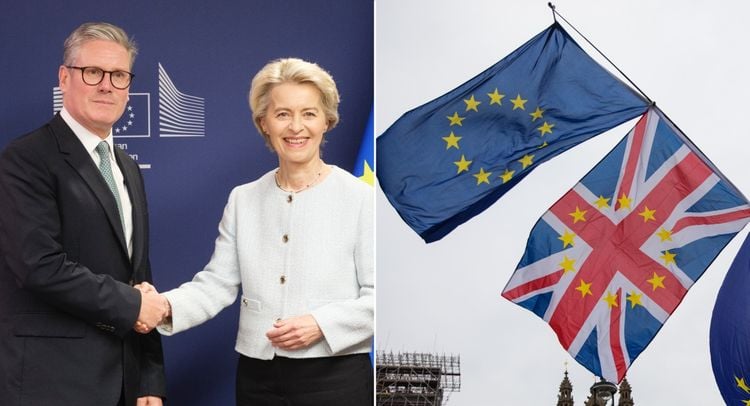
Sir Keir Starmer is reportedly preparing a bill that would help bring the UK in line with laws in the European Union as part of the government’s Brexit ‘reset.’
According to the Independent, the bill will be brought forward this year and would give ministers powers to bring the UK in line with EU law in areas such as food standards, animal welfare and pesticide use.
This is a process known as dynamic alignment, and could be used to implement deals struck with the EU.
READ NEXT: Keir Starmer burns Reform MPs in first PMQs of 2026
This would help with agreements to align electricity and carbon markets, or plant and animal standards.
UK food manufacturers have been largely following EU rules since Brexit so the material impact of dynamic alignment is not expected to be significant. However, it is hoped the bill will reduce paperwork for supplies who want to export to the single market.
Critics are concerned that the bill would see the UK give up control over its own laws though, the Independent reports. Now that the UK is no longer an EU member, it will not have the power to vote on new laws being passed by Brussels.
Instead, the UK would have to accept new laws without a vote in order to remain in dynamic alignment with the EU.
As you might expect, the Tories and Reform are expected to oppose the plans, accusing Sir Keir of “surrendering our freedom.”
In recent months, Starmer and his government have become more vocal in their criticism of Brexit and desire to forge closer ties with the EU.
This was kickstarted last year with the so-called reset deal between the UK and the EU, and it seems Labour want to carry on down this path.
Over the weekend, Starmer issued one of his fiercest critiques of Brexit and its proponents whilst also declaring his willingness to align the UK more closely with the EU single market.
At the same time, new polling has found that, almost a decade on from that fateful referendum, most Brits want to see Brexit reversed.
A poll for the Mirror found that almost six in ten Britons would vote to rejoin the EU if another referendum was held.