

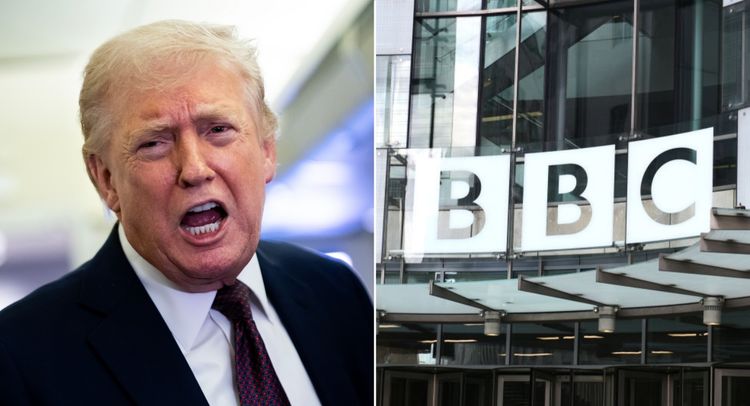
The BBC has officially filed a motion to dismiss Donald Trump’s $10 billion defamation lawsuit against the broadcaster over the editing of a Panorama documentary.
In December, Trump filed a lawsuit against the BBC totalling up to $10bn (£7.5bn) over the editing of one of his speeches from 6 January 2021.
The speech, which was broadcast in an episode of BBC’s Panorama series, saw parts of Trump’s speech at the US Capitol spliced together.
This made it seem like he said: “We’re going to walk down to the Capitol… and I’ll be there with you. And we fight. We fight like hell.”
READ NEXT: Donald Trump criticises Keir Starmer’s leadership style as rift grows over Iran
Trump accused the broadcaster of defamation and of violating Florida’s Deceptive and Unfair Trade Practices Act, according to court documents filed in Florida.
The US president is claiming $5bn (£3.75bn) for defamation and another $5bn for the violation of trade practices, totalling $10bn (£7.5bn).
The controversy led to the resignations of both BBC director general Tim Davie and head of news Deborah Turness, with the BBC apologising for the edit.
However, the corporation has rejected the president’s demands for compensation and maintained that his defamation lawsuit has no basis.
Now, they have officially filed to have the lawsuit dismissed.
A spokesperson for the BBC said on Monday: “We have said throughout we will robustly defend the case against us.
“Put simply — the documentary was never aired in Florida — or the U.S. It wasn’t available to watch in the U.S. on iPlayer, online or any other streaming platforms including BritBox and BBC Select. We have therefore challenged jurisdiction of the Florida court and filed a motion to dismiss the President’s claim.”
Trump’s lawsuit claims people in Florida may have viewed the programme by using a virtual private network (VPN). In response, the BBC said it “prohibits the unauthorised use of VPNs to watch iPlayer from outside the UK and takes active steps to enforce this ban.”
Reuters reports that the BBC’s motion to dismiss also argues that Trump ““cannot plausibly claim that the documentary harmed his reputation” because he went on to win the election after the documentary aired.
It is understood Trump has two weeks to respond to the motion to dismiss, however he may request a reasonable extension.
If the motion to dismiss is unsuccessful, a trial set for February 2027 will proceed.