

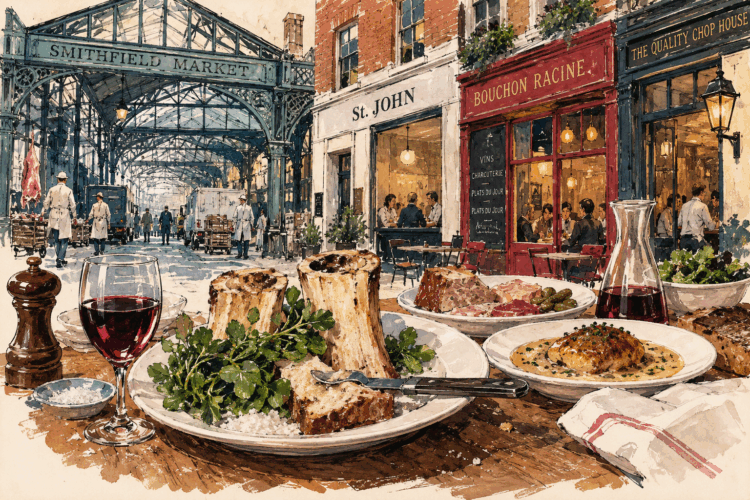
Walk through the great iron arches of Smithfield and meat is everywhere, even when it isn’t.
For more than eight centuries, animals have been brought to this patch of London to be traded, butchered and eaten. The cattle are long gone from the streets, and the market itself is entering an uncertain new life, but the neighbourhood has retained something of its old appetite. You can feel it in the chop houses and dining rooms clustered around Farringdon: places where lunch is still permitted to be lunch, where offal appears without apology and where a bottle of red at midday feels less like an indulgence than the proper order of things.
Nowhere is this more obvious than at St JOHN.
A few minutes from the market, the restaurant’s most famous dish arrives with almost comical simplicity: roasted veal bones, parsley salad, coarse salt and thick slices of toast. You dig the marrow from its cavity, spread it generously over the bread, scatter over salt and eat. It is rich, messy and profoundly satisfying.
Fergus Henderson’s cooking has become so influential that “nose-to-tail” now risks sounding like a marketing phrase. At St JOHN it remains something more elemental: the proposition that if an animal is going to be eaten, the supposedly difficult bits — marrow, kidneys, tripe, heart, tongue — deserve as much attention as the expensive ones.
Henderson was reviving a particularly British way of eating. But wander around Farringdon today and his philosophy begins to look curiously Lyonnais.
A short walk away, at Bouchon Racine, Henry Harris cooks the sort of French food that has never felt the need to apologise for butter, innards or appetite. Nearby, The Quality Chop House has occupied its narrow Farringdon Road dining room since 1869, its tiled walls and famously unforgiving wooden benches surviving from its days as a “Progressive Working Class Caterer”. Josette adds another French dining room to the neighbourhood.
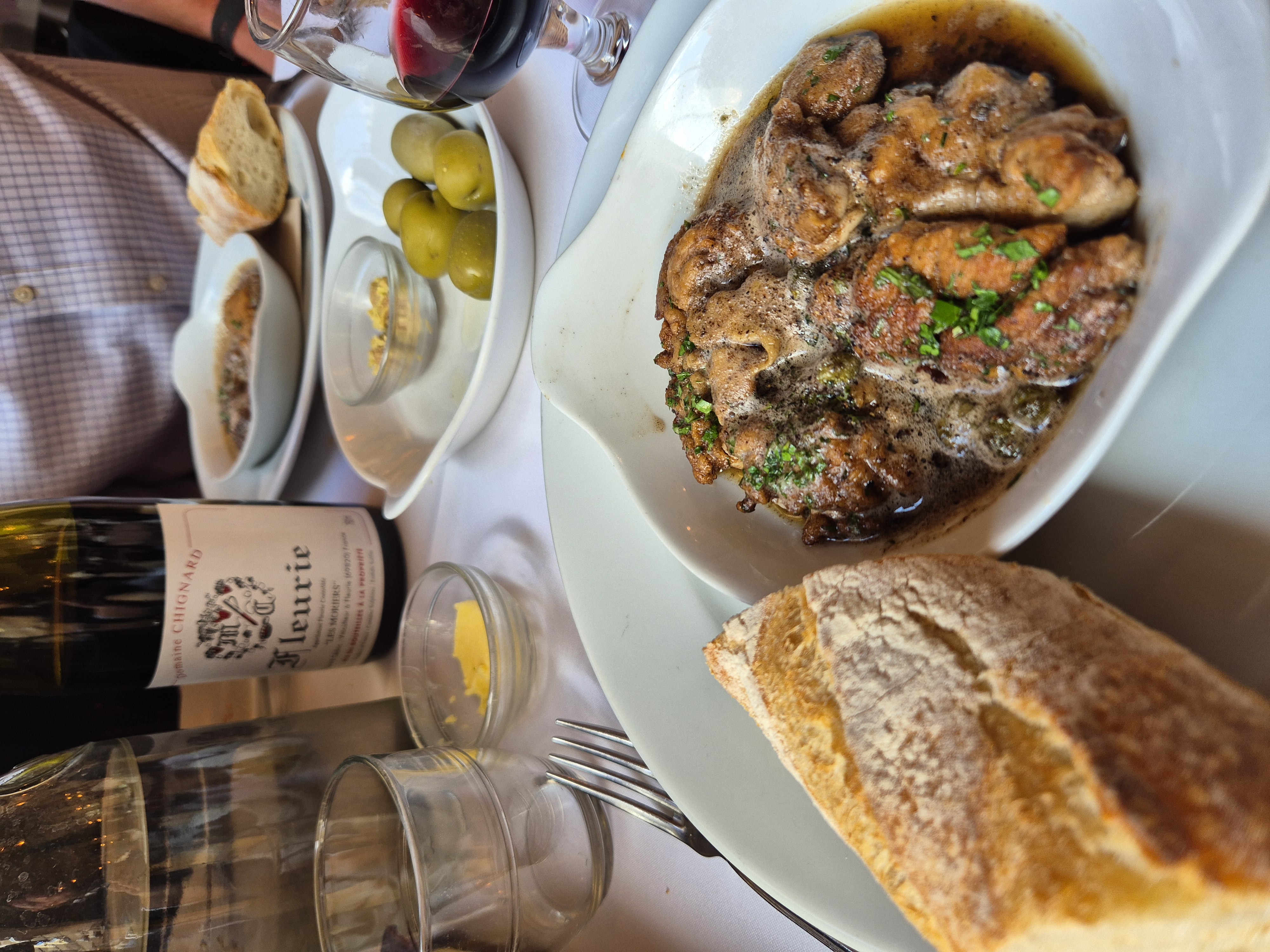
Taken together, they make Farringdon feel like London’s own accidental Little Lyon.
Not because these restaurants are all Lyonnais – emphatically, they are not – but because they share something with the institution at the centre of Lyon’s eating culture: the bouchon.
A bouchon is difficult to define by dishes alone. There will probably be pork. There may be tripe, andouillette, pâté, sausages or a wobbling quenelle of pike. There will certainly be wine. But the important thing is an attitude.
The bouchons of Lyon grew from a city of merchants, markets and workers, and developed a cuisine in which thrift and pleasure were never opposites. Lesser cuts were not substitutes for better ones. They were simply the raw material from which good cooks made good things. Tables were close, food was substantial and restaurants existed primarily as places in which people ate, drank and talked rather than admired the ingenuity of a chef.
There is a word for an even more concentrated expression of this culture: mâchon.
The mâchon was the traditional meal of Lyon’s canuts, its silk workers, eaten after hours of labour and frequently at an hour when respectable society might have been contemplating breakfast. Charcuterie, offal, cheese and wine were shared around the table. It was nourishment, certainly, but also companionship: the meal as punctuation between work and home.
Which makes it difficult to stand in Smithfield without noticing the rhyme.
For centuries this neighbourhood also woke while everyone else slept. Butchers, porters and buyers worked through the small hours at London’s great meat market, and an ecosystem of cafés, pubs and chop houses grew up to feed them. The Quality Chop House’s old promise to be a “Working Class Caterer” makes considerably more sense in that context.
Lyon had silk workers eating mâchon. Smithfield had market men eating breakfast.
The foods were different; the impulse was much the same.
And this is what makes Farringdon’s present restaurant culture more interesting than a coincidental cluster of places serving kidneys.
St JOHN is not a bouchon, but it shares the bouchon’s deepest instinct: reverence for the unfashionable parts of the animal. The Quality Chop House shares its origins in feeding working people substantial food. Bouchon Racine supplies the French grammar explicitly — terrines, offal, sauces, wine and the almost radical contemporary pleasure of a restaurant unconcerned with appearing virtuous.
What connects them is Smithfield.
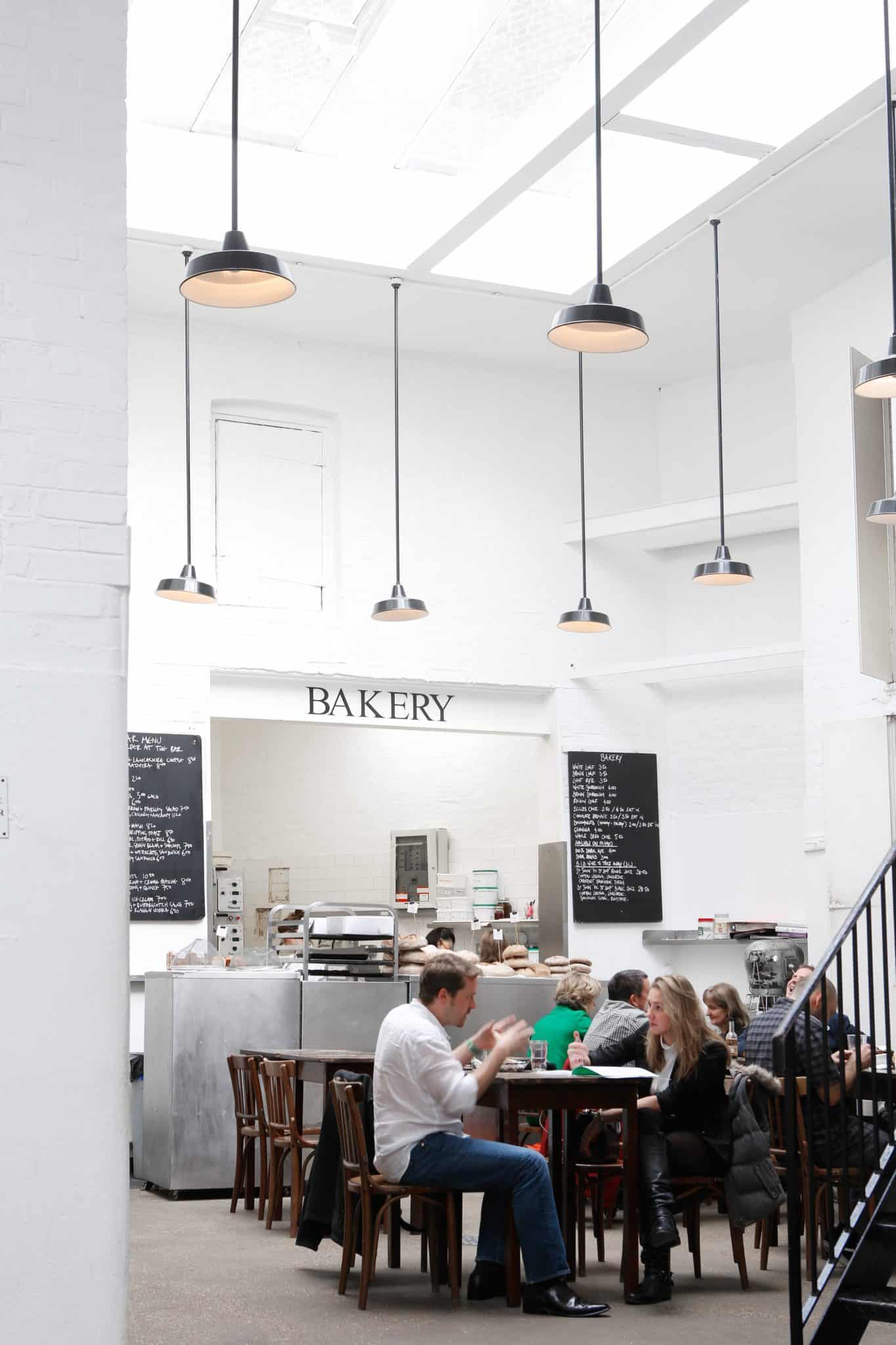
The market made meat part of the physical language of this neighbourhood. It arrived here on hooves, then on hooks and refrigerated trains, passing through the hands of people who knew an animal as something considerably more complicated than a steak. When Henderson opened St JOHN in a former smokehouse on St John Street in 1994, nose-to-tail cooking therefore had an unusually appropriate address.
There is an irony in Farringdon becoming London’s Little Lyon just as the trade that made such a culture possible begins to disappear from Smithfield. The wholesale meat market is leaving its historic home; the great Victorian buildings are being repurposed, and London Museum is moving into part of the site. A neighbourhood organised around carcasses and dawn deliveries is becoming something else.
Yet food cultures have a habit of outliving the economies that created them.
Perhaps that is what survives around Smithfield now. Not Lyonnais cooking exactly, but a Lyonnais understanding of what makes eating pleasurable: generosity without grandeur, technique without fuss, wine without ceremony and an enduring suspicion of anyone who thinks the best part of an animal is necessarily the most expensive.
You can find it in a plate of tripe or a chop, in a terrine shared over lunch, or in the small ritual of digging a knife into a roasted bone and spreading its contents thickly across toast.
Lyon would understand.