

As the news cycle continues to be dominated by yet another Peter Mandelson controversy, you’d be forgiven for thinking there’s no good news for the UK at the moment.
Well, you’d be wrong, because we’ve just had two weeks of positive news stories about the UK economy – and it’s about time Labour got some credit for their good work.
On Thursday, figures from the Office for National Statistics (ONS) showed UK government borrowing for the year had fallen to a three-year low.
Borrowing fell by £19.8bn to £132bn in the year to March, the Office for National Statistics (ONS) said. This was the lowest March borrowing figures since 2022, with borrowing as a proportion of GDP sitting at 4.3%, the lowest since 2019-20.
READ NEXT: Sadiq Khan says it would be ‘folly’ for Keir Starmer to be forced out this year
This was only the latest piece of good news for Chancellor Rachel Reeves and Labour though. Here are the other headlines from a very good two weeks.
Unemployment down
Also this week, ONS figures showed that the country’s unemployment rate fell to 4.9 per cent during the three months to February.
This is down from 5.2 per cent and is the lowest level since last summer.
UK economy growing
This news came just a few days after the ONS announced the UK economy grew faster than expected in February.
According to official figures, the economy grew by 0.5% in February, beating forecasts of 0.1% from most economists.
Growth figures were also revised up to 0.1% for January, with the ONS having previously said there had been no growth to start the year.
All of this helped the UK quietly regain its status as the fifth largest economy in the world, overtaking India in the International Monetary Fund’s rankings.
Promising City signs in financial sector
Earlier this month, it was announced that Britain’s financial services firms experienced the fastest turnaround in fortunes for the sector in 30 years, in a surprise boost for the government.
According to the latest findings from a long-running survey by the Confederation of British Industry (CBI), nearly two-thirds (65%) of banks, insurers and investment managers said their businesses were growing.
This was up from a negative balance of -38% in December, marking the fastest turnaround in fortunes for the financial sector since December 1996.
Positive news goes even further back
Looking even further back than the last couple of weeks, in February ONS figures showed the government posted its largest ever January budget surplus.
Public sector finances recorded a surplus of £30.4 billion in January, according to the ONS – double the figure from the same month last year and well above the £24 billion forecast by the Office for Budget Responsibility (OBR) and City economists. It is the highest January surplus since monthly records began in 1993.
And we haven’t even mentioned stories such as the green-lighting of construction on the UK’s biggest wind farm, the Rolls-Royce contract to build the UK’s first small modular nuclear reactors, and the decision from AI giant Anthropic to increase it’s London hub, helping the UK become a world-leading tech hub.
Labour should have confidence as Trumpflation looms
Of course, we now have to address the orange war-mongering elephant in the room. These figures were all taken largely before Donald Trump, with the help of Israel, decided to start a war with Iran.
Already, we’re starting to see the consequences of this as inflation rose in March, and its widely expected the Strait of Hormuz blockade since the start of the war will result in spiralling energy prices later in the year.
But let”s not ignore the fact that there was a growing mountain of evidence to suggest that Labour’s plans for the economy were working and starting to reap rewards.
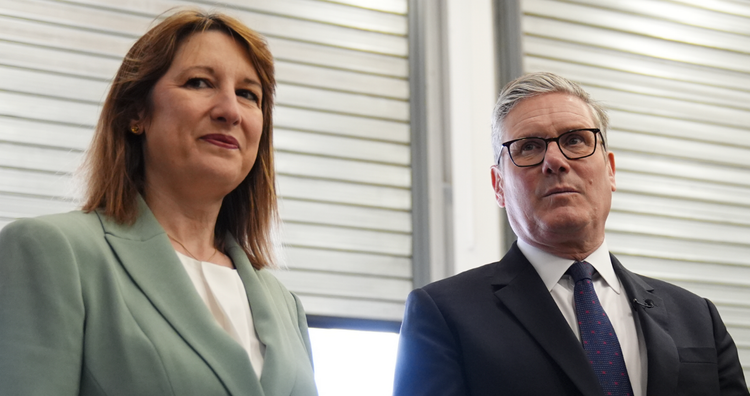
Keir Starmer, Rachel Reeves and the government should use the last two weeks as proof they are the party best-placed to oversee the economy and guide it through the expected choppy waters ahead.
And they should start shouting more about this.