

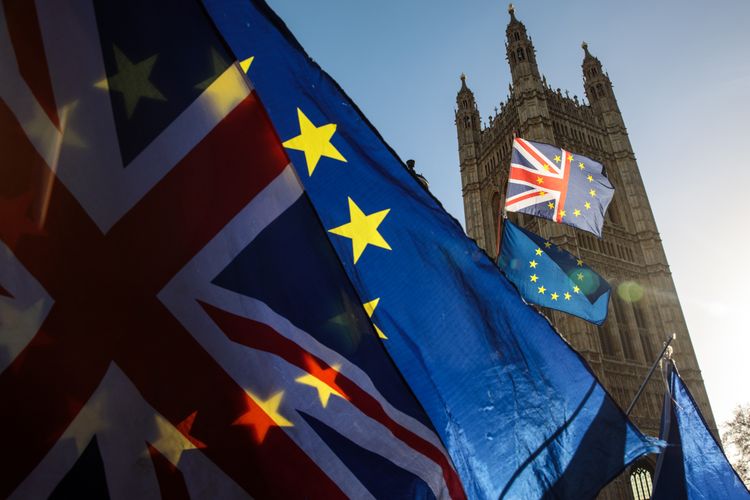
The European Council has officially greenlit talks between the UK and EU on restarting financial contributions to the bloc’s cohesion policy.
The council announced on Monday in a press release that talks have been confirmed to discuss the cohesion policy as well the UK’s participation in the EU’s internal electricity market and Erasmus+ programme.
This comes following efforts from Keir Starmer and Labour to strengthen ties between the UK and EU.
The statement on the Council’s website said that: “The aim of the electricity agreement is to allow the UK’s participation in the EU’s internal electricity market by aligning respective rules, thus significantly contributing to energy security for both parties, especially amid the current geopolitical turmoil.”

Meanwhile, it stated: “The agreement on the UK’s financial contribution towards reducing disparities between the EU regions by increasing the bloc’s economic, social and territorial cohesion is part of a consistent EU policy that couples the granting of market access to a third country with a fair financial contribution reflecting the benefits derived from such access.
The UK used to be part of this EU cohesion policy before Brexit, however, it was one of a number of financial contributions being paid towards the EU that Brexiteers pointed out as a reason to leave the Union.
Estimates suggest the UK was paying around £2.5–£4 billion into this pot which has the aim of developing underdeveloped areas of the European Union – this included in the UK, with places like Cornwall and west Wales receiving funding.
Marilena Raouna, Deputy Minister for European affairs of the Republic of Cyprus said: “Today’s decisions mark tangible progress in delivering on the outcomes of the first EU–UK Summit held in May last year, where we opened a new chapter in our partnership.
“By promoting learning mobility via Erasmus+, we are advancing shared interests and reinforcing people-to-people ties, especially for our youth.
“At the same time, by deepening cooperation in electricity, we are enhancing energy security and creating new opportunities for businesses.
“These decisions undoubtedly mark a significant step in forging a strong, mutually beneficial, and forward-looking EU-UK partnership.”
The move seems to be the latest step in the UK edging towards a return to the EU – or a Breturn, if you will.
Last week there were reports that Starmer’s government was looking to reintroduce dozens of EU laws, whilst senior Labour have stopped shying away from condemning Brexit for what it has done to the country.
Meanwhile, London mayor Sadiq Khan has said Labour, who continue to lag behind Reform in the polls, should make rejoining the EU a manifesto pledge at the next election, something we suggested months ago.
Public opinion on the EU has been tilted in favour of the Remainers, who could one day become the Rejoiners. Studies state that the decision to leave the single market and customs union has cost the UK billions in lost revenue, with projected GDP figures also being blunted by Brexit.
A large number of those who voted for Brexit 10 years have, to put it bluntly, passed away since then. With younger voters overwhelmingly harbouring pro-European views, any decision to align further with the EU carries less political risk than at any point since 2016 – something Labour are sensing.