

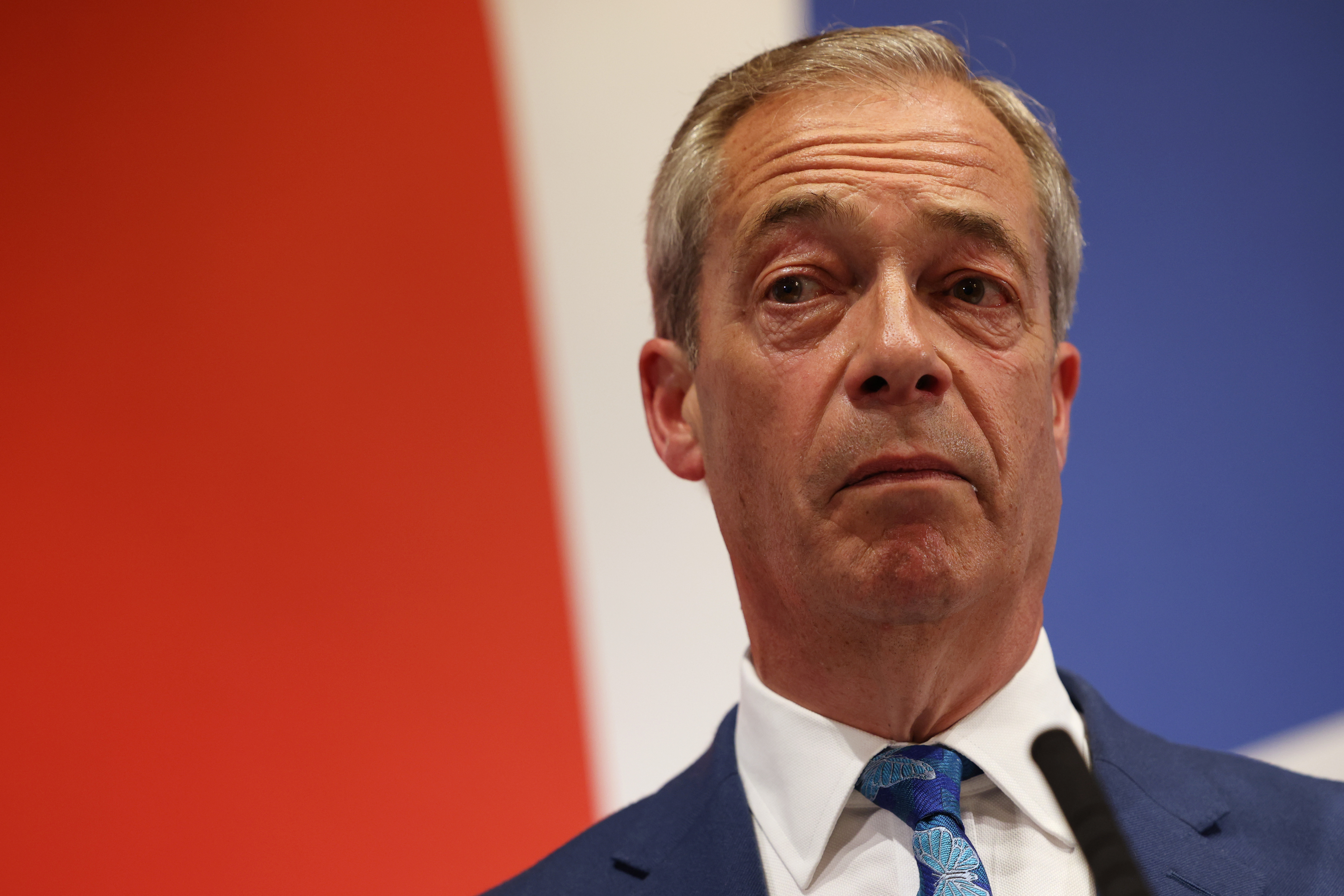
As local election results continue to come in, there’s no doubt that Reform will end the day having made huge gains. However, an election expert has explained how, when you drill down into the data, there might be concern for Nigel Farage…
Reform make big gains
With the first raft of councils having announced their results by the end of Friday morning, it’s clear Reform are the big winners.
At the time of writing, they’ve won 406 seats and gained control of two councils, in Havering and Newcastle-under-Lyme.
Speaking in Havering, where Reform won control of their first ever London borough council, party leader Nigel Farage said the results coming through across England on Friday morning show a “truly historic shift” in British politics.
READ NEXT: Nigel Farage shuts down question about £5m sum from crypto billionaire
With 90 councils still left to declare their results, Reform will almost certainly end the day as the party who have made the most gains.
However, this doesn’t quite tell the full story…
Reasons for Reform concerns
Let’s not forget that since the turn of the year, Reform’s polling has stalled and fallen. There is plenty of evidence to suggest we’re actually past the party’s popularity peak – and the local elections back this up as well.
This was explained by former YouGov president Peter Kellner. In an analysis of the results so far on his Substack blog, the elections expert highlighted some of the underlying numbers of Reform’s performance.
He wrote: “Behind the impressive tally of Reform’s gains – likely to end up well over 1,000 – Nigel Farage should be privately worried.
“In last year’s local elections Reform won 41 per cent of all seats contested across England. On the basis of the overnight figures, this year’s tally is around 33 per cent.
“If there were no polls, and there had been no elections last year, this year’s figure would be astonishing. But we do have the record of recent polls and elections, and it seems clear that Reform has peaked.”
Kellner went on to explain how significant this was in the first-past-the-post system. At last year’s local elections, this helped Reform as they won a “much higher proportion of seats than votes.”
“Its support is now at the point where that bonus has started to shrink,” Kellner wrote. “If more voters desert the party, it could suffer badly – falling short in many council and parliamentary seats that it would have won last year.
Light relief for Labour?
The other big story so far on Friday has been the huge losses for Labour. The party have lost 261 council seats and lost control of eight councils.
With further losses expected, including in Wales where the party are predicted to lose control of the Senedd for the first time, this is ramping up the pressure on Keir Starmer’s leadership.
However, Kellner reckons the results do show some small signs of positivity for Labour.
He pointed out that losing half of the seats they were defending is actually not as bad as Labour’s record in local council by-elections over the last 12 months.
Kellner wrote: “In contrast to Reform, Labour has cause for relief, despite losing half the seats it was defending. It’s bad – and in normal times it would be catastrophic – but it’s not as bad as its record in local council by-elections over the past 12 months, where it hast lost three-quarters of the seats it was defending.
“The overnight average conceals wide variations. Labour has lost all the seats it was defending in Wigan and Hartlepool, and all but one in Tameside, Dudley and Redditch. In other parts of England, where Reform is weaker, Labour’s support has held up better.”
But he added that the results still show a “stark warning” for Labour, in the form of the Green Party. As highlighted by the BBC’s John Curtice, it seems that whilst Labour are losing seats to Reform they are losing more votes to the Greens.
So, although there’s no denying who the big winners and losers will be in these local elections, it’s worth remembering that there’s always more to these results than meets the eye.
You can read Peter Kellner’s full Substack here.