

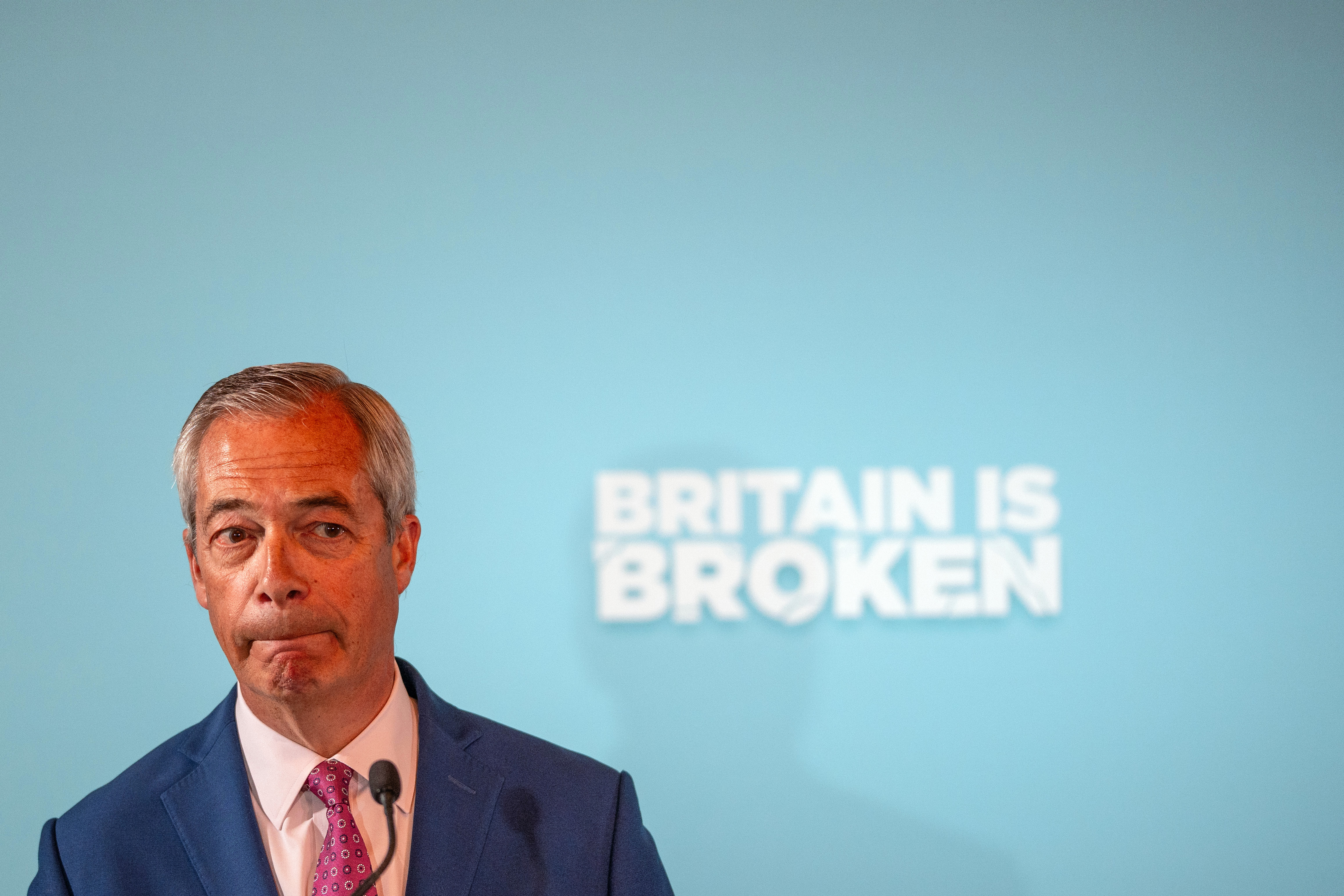
Nigel Farage had a political opportunity staring him in the face.
When questions emerged over his outside earnings and financial arrangements, he could have done what populist insurgents across the world do best: turn scrutiny into persecution and persecution into momentum.
The script almost wrote itself.
The establishment was closing ranks. Westminster, the media and the political class were all piling in because they feared Reform’s rise. They weren’t really interested in hospitality declarations or earnings, his supporters could have been told. They were trying to stop the one party prepared to take radical action on immigration and small boats.
Agree with that argument or not, it would have resonated.
It would have fired up Reform’s base. It would have reinforced the party’s central message that Britain’s institutions are fundamentally opposed to the change millions of voters want to see. Most importantly, it would have made the story about Reform UK rather than Nigel Farage.
Instead, Farage made it about Nigel Farage.
His argument was not that the establishment was trying to stop a movement. It was that the establishment objected to him making money.
That is a much harder sell.
People may rally behind a politician who claims to be under attack for challenging the political consensus on immigration. They are considerably less likely to march to the barricades because a politician’s earnings have come under scrutiny.
After all, Farage is a curious choice for an anti-establishment martyr.
He is privately educated. A former commodities trader. A fixture in some of London’s more exclusive clubs. A politician supported by wealthy donors and business figures. His politics may be insurgent, but Nigel Farage himself has spent much of his adult life moving comfortably within Britain’s elite circles.
That does not make him uniquely unqualified to lead an anti-establishment movement. History is full of establishment figures who successfully channelled anti-establishment anger.
But they understood something Farage appears to have forgotten this week: the cause has to be bigger than the individual.
Had he framed this as the establishment versus Reform, he might have had a fight on his hands.
Instead, he framed it as the establishment versus Farage.
That distinction matters because it reveals the central weakness that continues to hold Reform back from becoming a serious party of government.
Successful political parties eventually become bigger than their founders.
Reform still feels less like a party than an extension of one man’s political career.
And that is why Farage’s gamble has backfired.
Not because he picked a fight with the establishment.
But because, at the crucial moment, he couldn’t resist making himself the main character.