


Choosing a commercial water softener is not only about removing hardness. The right system must match the water profile, daily demand, operating schedule, and service expectations of the site.
Assessing water hardness and daily water demand
The first step is to assess water hardness and actual water use. Hardness level affects how much resin capacity is needed, while daily demand determines how often the system must regenerate and how much softened water must be available at peak times. A commercial unit should be selected for real operating conditions, not average use alone. In business applications, peak consumption often matters more than a simple daily total.
Key system types and capacities for commercial use
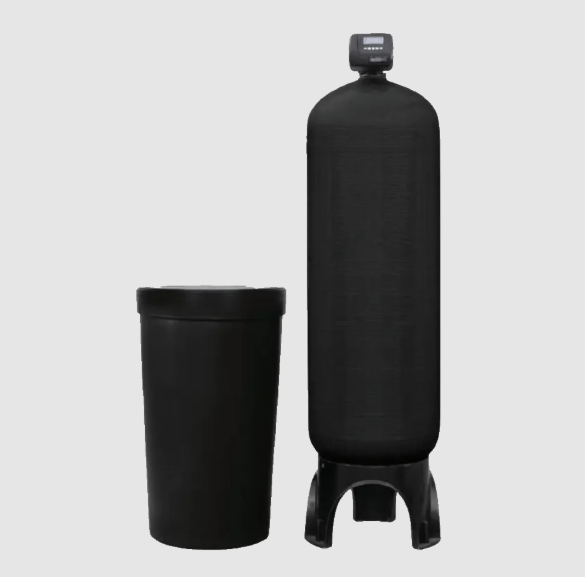
Commercial softeners are available in different formats. Single-tank systems can be suitable where demand is moderate and short regeneration pauses are acceptable. Twin or duplex systems are better where continuous soft water supply is required, because one vessel can remain in service while the other regenerates. Capacity should be matched to hardness load, service flow, and the type of business using the water. High-flow applications usually need more resin volume and a more robust control setup.
Important features for efficiency, durability, and maintenance
Important features include reliable control valves, efficient regeneration settings, strong resin quality, and service-friendly construction. A good commercial water softening system should support stable water softener efficiency without unnecessary salt or water use. Durability also matters, especially where the system operates every day under heavy load. Easy access for servicing, clear control logic, and dependable components can reduce maintenance pressure over time.
Installation requirements and operating cost considerations
Installation planning should include available space, drain connection, salt storage, inlet pressure, and access for maintenance. Operating costs should also be reviewed before purchase. Commercial softener cost is shaped not only by the equipment price, but also by salt use, regeneration frequency, service intervals, spare parts, and water consumption during operation. A cheaper unit may become more expensive if efficiency is low or maintenance is difficult.
How to choose a commercial softener for long-term performance
For long-term performance, the best choice is the system that fits the water conditions and operating pattern of the site most closely. A water softener for business should be sized for the real hardness load, configured for the required service continuity, and selected with maintenance practicality in mind. The strongest long-term result usually comes from balancing capacity, efficiency, durability, and operating cost instead of focusing on one factor alone.
Conclusions
A commercial water softener should be chosen by assessing water hardness, demand, system type, efficiency, maintenance needs, and installation conditions together. When these factors are matched correctly, the system can support better commercial water quality, stronger limescale prevention, and more reliable long-term operation.