

London’s greatest dishes are rarely the fanciest thing on the menu. They’re the meals that have become part of the city’s folklore – the plates Londoners argue over, queue for, drunkenly crave, and insist visitors must try before claiming they understand the capital at all.
This is not a Michelin guide. It’s a survival guide to the city’s culinary identity. A list built on old East End cafés, Soho institutions, immigrant cooking, post-pub rituals and restaurants that changed how Britain eats.
Because you haven’t really eaten in London until you have…
1. Eaten pie and mash at M.Manze
M.Manze
No meal is more deeply tied to working-class London than pie, mash and liquor. Minced beef pie, soft mashed potato and parsley sauce that looks radioactive to outsiders but tastes unmistakably of the city itself.
M.Manze has been serving it since the Victorian era, and walking inside still feels like stepping into another London entirely – tiled walls, no-frills service, proper East End tradition. Add jellied eels if you want the full experience.
2. Ordered the “10 Deadly Sins” breakfast at Simpsons
Simpsons
Every city has a breakfast that borders on self-harm. London’s is the all-in fry-up: bacon, sausage, eggs, black pudding, beans, hash browns, toast and enough grease to power the Northern line.
The “10 Deadly Sins” breakfast at Simpsons has become legendary because it understands something important about London dining culture: sometimes excess is the point. Best consumed with industrial-strength tea and absolutely no plans afterwards.
3. Tried the tortilla at Barrafina
Barrafina
A humble potato tortilla becoming one of London’s defining dishes says everything about modern Soho.
At Barrafina, the tortilla arrives wobbling in the middle, barely set, rich with onion and olive oil. It’s deceptively simple and almost impossible to replicate properly at home. Sit at the counter, order vermouth, and accept that Londoners have been trying to copy this dish in their kitchens for over a decade.
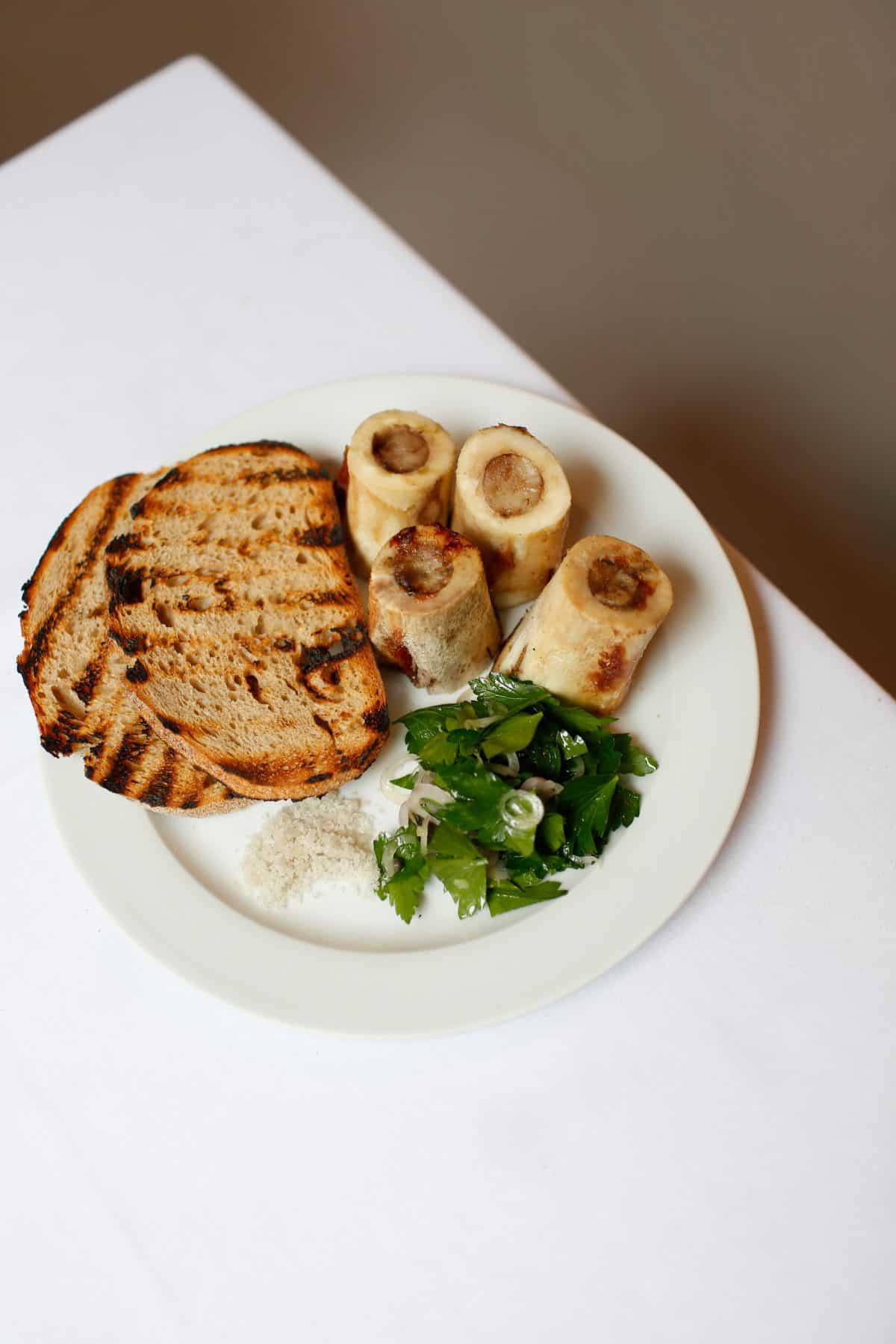
4. Enjoyed bone marrow on toast at St. John
St. John
Few dishes have changed British food culture more than St. John’s roasted bone marrow with parsley salad and toast.
Before Fergus Henderson, British restaurant cooking often apologised for itself. St. John changed that entirely. Suddenly offal, nose-to-tail cooking and unapologetically British ingredients became cool again.
The dish itself is absurdly rich — molten marrow scooped onto toast with sharp parsley cutting through the fat – but eating it feels like participating in modern London food history.
5. Queued for a salt beef beigel at Beigel Bake
Beigel Bake
Open 24 hours and permanently chaotic, Beigel Bake is one of the city’s true institutions.
The order is simple: hot salt beef, mustard and pickle stuffed into a chewy beigel. Ideally eaten standing outside on Brick Lane at 1am while debating whether to go home or continue the night elsewhere.
This is immigrant London, nightlife London, East End London – all compressed into one warm paper bag.
6. Had a full English at Regency Cafe
Regency Cafe
The Regency Cafe is the full English breakfast as cinema fantasy. Black-and-white tiled walls, builders’ tea, sizzling grills and portions large enough to alter your day’s plans.
It has appeared in countless films and TV shows because it looks exactly how people imagine old-school London cafés should look. But unlike many famous places, it still feels authentic rather than preserved for tourists.
A proper fry-up here remains one of the city’s great inexpensive meals.
7. Eaten a bacon naan roll at Dishoom
Dishoom Carnaby
London’s defining comfort foods increasingly come from immigrant communities, and no modern dish captures that shift better than Dishoom’s bacon naan roll.
Inspired by Bombay café culture but fully absorbed into London life, it’s now one of the capital’s canonical breakfasts: crispy bacon, cream cheese, chilli jam and fresh naan wrapped together with near-perfect balance.
It is impossible to eat one without immediately understanding why queues form around the block.
8. Shared lamb chops at Lahore Kebab House
Lahore Kebab House
Long before “small plates” and sleek modern Indian restaurants arrived, Londoners were gathering around huge tables at places like Lahore Kebab House.
The Whitechapel institution remains gloriously old-school: fluorescent lighting, BYOB chaos, sizzling grills and deeply smoky lamb chops arriving by the dozen.
This is the London curry-house tradition at full volume – loud, generous and deeply communal.
9. Tried the smoked eel sandwich at Quo Vadis
Quo Vadis
There are few dishes more elegantly “London” than the smoked eel sandwich at Quo Vadis.
Eel has fed Londoners since the city was built around the Thames, but here the old tradition gets reimagined through Soho sophistication: soft bread, rich smoked eel and sharp horseradish working together perfectly.
It tastes like old London meeting modern London in a single bite.
10. Finished the night with a kebab at Mangal 2
Mangal 2
London’s kebab culture deserves the same reverence New York gives pizza.
Mangal 2 represents the best version of that tradition – Turkish cooking transformed through decades of North London life into something distinctly local. The ocakbasi grill sends out blistered flatbreads, smoky meats and kebabs that manage to feel both refined and deeply comforting.
Importantly, it also captures one of the city’s universal truths: some of London’s best meals happen very late at night.
A proper London food bucket list should leave you slightly exhausted, permanently full and occasionally standing outside in the rain holding something wrapped in paper.
That’s the point.
Because the city’s greatest dishes aren’t about perfection. They’re about memory, migration, routine, pubs, markets, cab rides, late nights and neighbourhoods changing around the restaurants that stubbornly remain.
And once you’ve done all ten, you can probably say you’ve really eaten in London.