

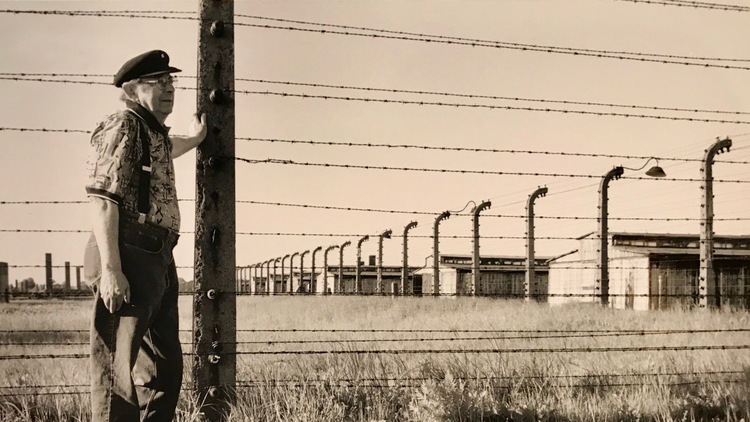
There are parts of our parents’ lives we assume we understand simply because we were there for the rest of it.
I thought I knew my father.
He worked hard, supported his family, and spoke with a heavy accent that softened over time but never quite disappeared. He rarely raised his voice or spoke about the past. When he did, it was vague—unfinished sentences, stories without endings. At our dinner table, there were no dramatic speeches, moral lessons, or warnings about the world. Just a quiet man who sometimes seemed far away, as if part of him was elsewhere, in a place I could not see.
Outside the home, however, he was different. At his shop, Leo’s Men’s Wear, among friends and customers, he was the funny one—the guy who could make anyone laugh. He had a sharp wit, a mischievous timing, and a sense of humour that lit up the room.
For most of my life, I knew him simply as Dad.
As a child, and then as a young adult, I didn’t question the silences. Families are full of them. Everyone has something they don’t talk about. I assumed whatever lay behind his quiet had nothing to do with me, and certainly nothing to do with the present. Possibly just the day-to-day stress of running a small business and raising a family.
I was wrong.
Like many people, I grew up thinking history belonged to other people—people in books, documentaries, grainy black-and-white footage that felt distant and abstract. I didn’t see it as something that shaped the man sitting across from me at the dinner table.
When asked about his youth, my father deflected or minimised. As he aged, fragments surfaced: references to my aunt, his twin sister, Miriam; mentions of a camp; descriptions of medical procedures that sounded less like treatment and more like punishment. He never lingered. I didn’t push. Life was busy. The past could wait.
It could not.
What I came to know at first came largely from a documentary I produced in the spring of 2000, Leo’s Journey: The Story of the Mengele Twins, narrated by Christopher Plummer. By then, early dementia had begun to take hold. In the film, my father spoke carefully and sparingly about being subjected, as a teenager, to repeated medical experiments—not to cure him, but to see what would happen.
Needles. Measurements. Injections designed to make him sick.
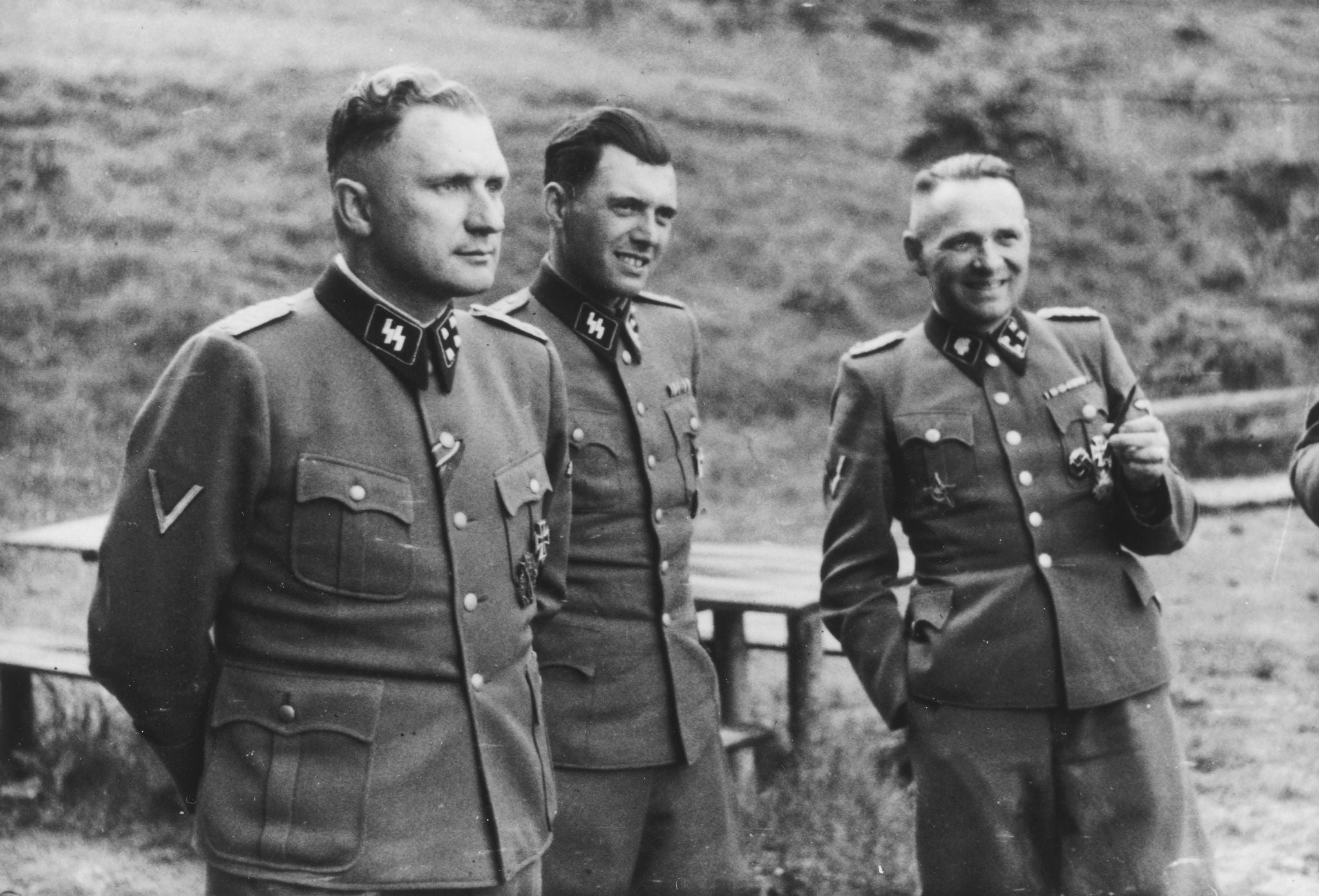
Only later did I start to understand where those experiments took place, or why.
Even then, much remained unsaid.
What I did not yet know was that my father had not endured those months alone. That truth emerged in 2002, after he was reunited with another survivor: Kalman.
Kalman was a very religious boy from Hungary, at fourteen, he was younger and far more naïve than my 16 years old father. In the camp, he clung to “Lipa,” the nickname he had given my father, relying on him to navigate a world ruled by fear, violence, and arbitrary cruelty. For six-and-a-half months, the two boys were forced to work inside the hospital guard shack—an unimaginable vantage point, witnessing the daily operations of a facility designed for mass murder. At the same time, they were subjected to the twisted eugenic twin experiments, where their very bodies became objects of inquiry and cruelty.
My father took responsibility for protecting Kalman. He did so not out of heroism, but because his naïveté would have drawn deadly attention from the guards. From that shack, less than a hundred metres from Crematoria IV and the open-air fire pit where they burned people alive, Kalman recalled how he and Leo served meals to guards who had just returned from beating and murdering people. Every day, they were surrounded by the machinery of death, yet had to move through it, silent, alert, while trying to stay alive.
This was Auschwitz-Birkenau.
The doctor who personally oversaw their experiments was the infamous Josef Mengele.
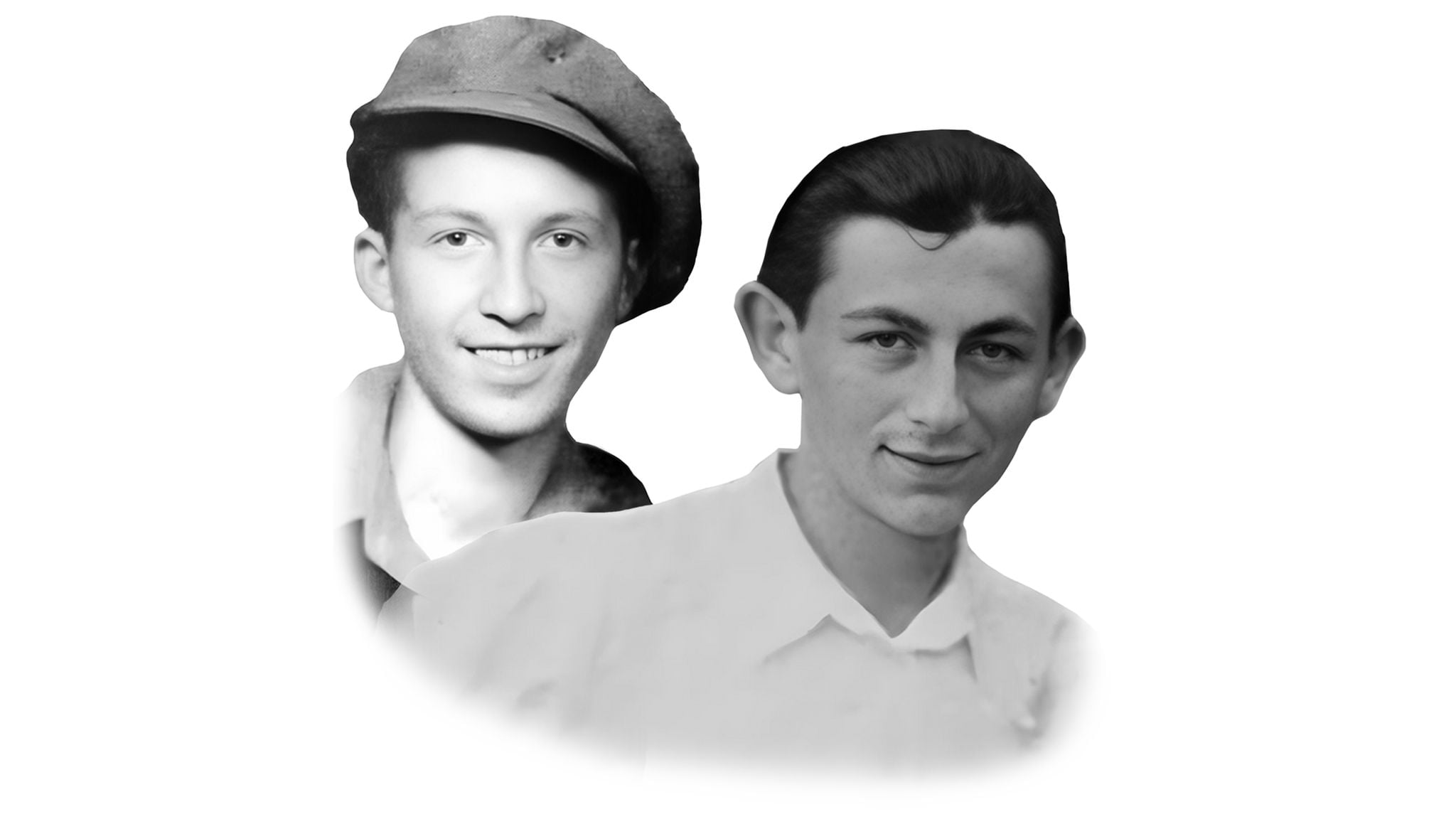
Upon liberation, Kalman and Leopold went their separate ways, never expecting to see each other again. To my father, Kalman was just another prisoner he was forced to work with. But to Kalman, Leopold was his hero.
For fifty-six years, Kalman actively searched for “his Lipa.” He had no last name, no address, and no photographs to help him. He only had a nickname, a memory, and a need to say, “Thank you.”
In 2001, simply by chance, Kalman’s twin sister called and told him there was a documentary on TV about the Mengele twins. He watched. And then it happened. He saw Leo as a young boy. He saw his Lipa. He recognised him instantly.
The following year, the two men, now in their seventies, embraced in Vancouver. They were no longer old men; they became their younger selves, the only two people on earth who truly understood what the other had lived through.
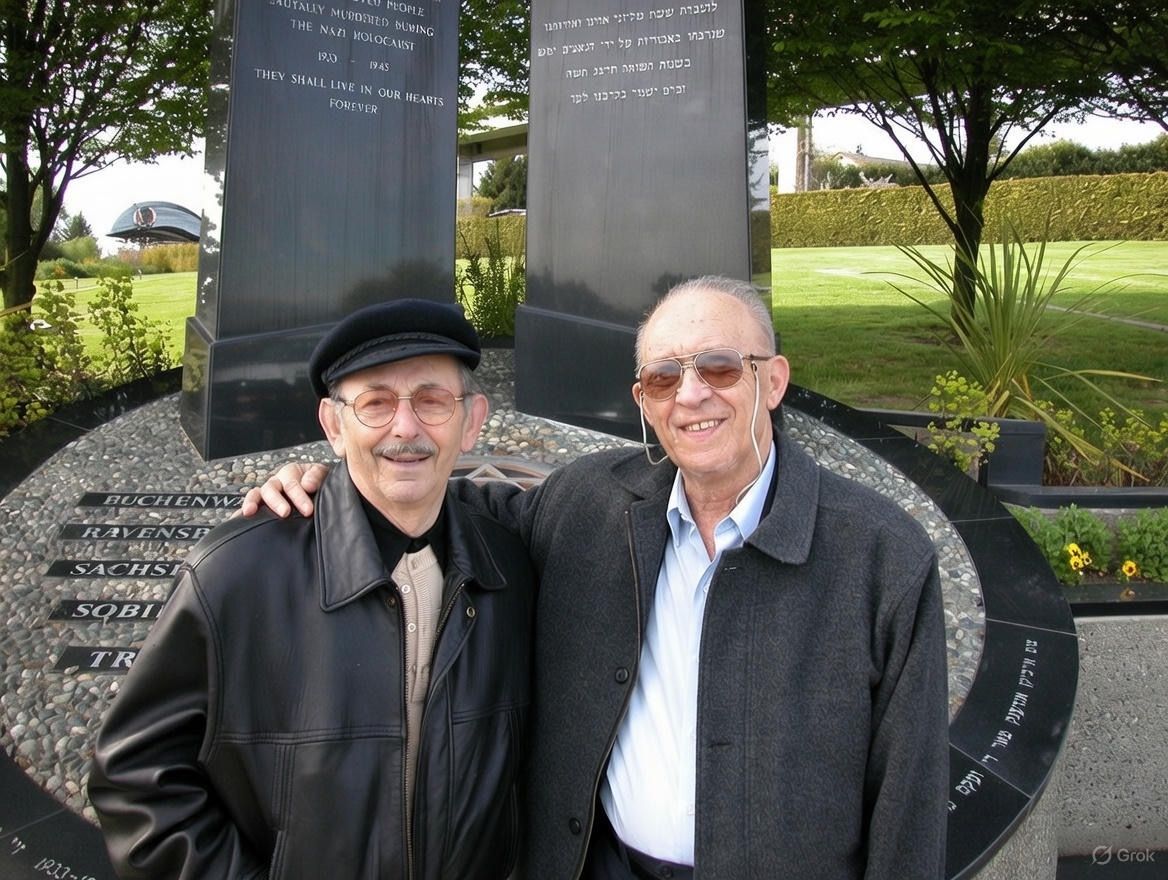
For me, that reunion changed everything.
Suddenly, my father’s story was no longer just his own. It became a shared testimony: two teenage boys, two perspectives, one vantage point inside a system designed to erase them. With Kalman present, new truths emerged. Details surfaced that Leo had never spoken aloud. Stories he had carried silently for decades, stories he had forgotten, stories Kalman had reawakened.
This is not the kind of information you absorb and move on from. At some point, I had a choice: to treat this as a tragic family detail or do something with it. I chose the latter.
I began recording their testimonies. Not as a historian or an academic, but as a son trying to understand who his father really was. The process was slow. It involved long, vivid recollections from Kalman, and gaps from my father—moments where memory simply failed, then suddenly reawakened. Preserving their voices meant sitting with their painful memories long enough for something honest to surface.
What emerged was not a story about heroes or villains but one told by two boys, aged fourteen and sixteen, about how genocide actually works.
It did not begin with gas chambers. It began with words. With rumours. With propaganda. With people slowly getting used to lies about their neighbours until those lies felt normal. Until cruelty became routine. Until silence felt safer than asking questions.
That is the part that matters if you are reading this far from Auschwitz and wondering what it has to do with you.
The world my father and Kalman grew up in did not think of itself as murderous. It thought of itself as practical. Orderly. Sensible. People adjusted—step by step—to things they would once have found unthinkable.
If that sounds uncomfortably familiar in an age of online outrage, conspiracy theories, and weaponised misinformation, it should.
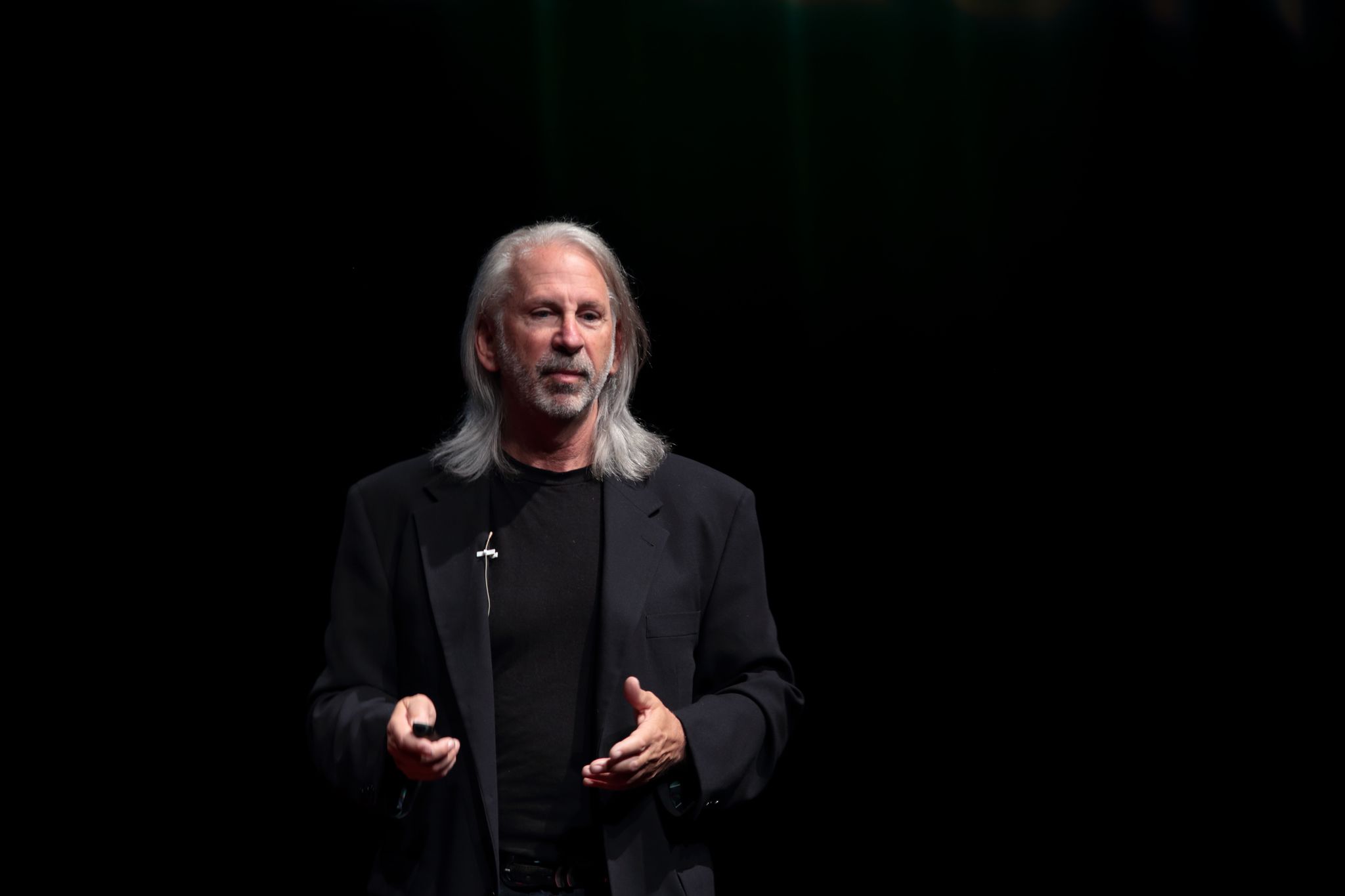
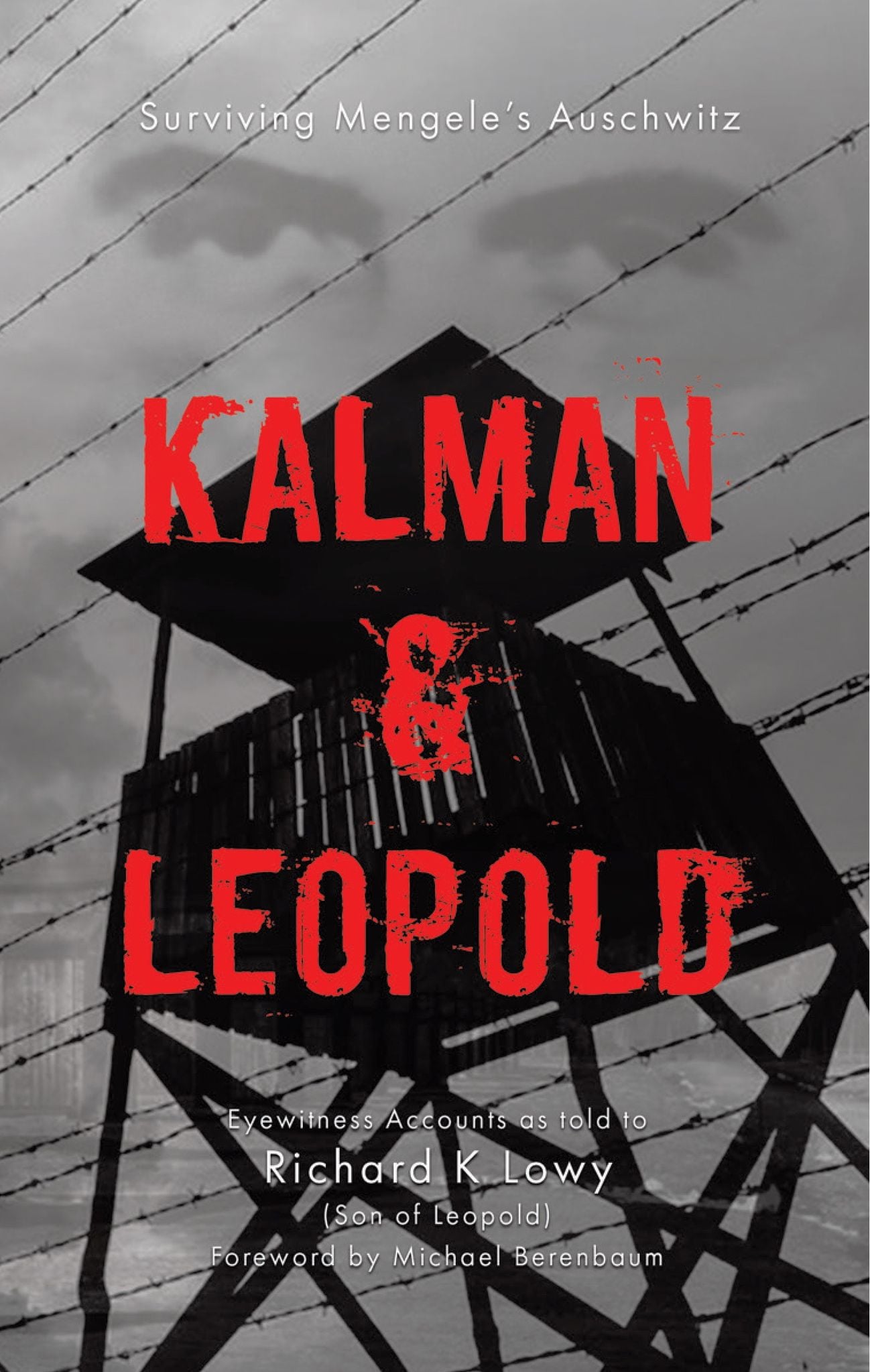
Writing Kalman & Leopold: Surviving Mengele’s Auschwitz was not about giving readers a history lesson. It was about giving them a seat beside two teenage boys and letting them see the world through their eyes: the confusion, the fear, the dark humour, the improvisation required to survive one more hour. Teenagers anywhere can recognise that vulnerability, even if the stakes in their own lives are very different.
When I speak to audiences now, I do not start with dates or statistics. I start with what I did not know. With the shock of realising that history was not an abstract subject, but an unspoken trauma sitting across from me at the dinner table. I speak about denial—not just the denial of those who claim the Holocaust never happened, but the quieter denial of those who sense that something is wrong in the world today and choose not to look too closely.
The person who has never met a Jew, a Muslim, a Hindu, a Sikh, a Christian from a minority community, a Roma family, a Yazidi survivor, or anyone else pushed to the margins, yet scrolls through posts about “elites”, “globalists”, “invaders” or any other borrowed caricature, is not a monster. He is evidence that propaganda still shapes minds, that lies still outrun truth, and that when people have no lived connection to those they discuss, it becomes dangerously easy to turn whole communities into abstractions. Once real individuals are replaced by slogans and conspiracies, the ground is laid for any group to be treated as something less than human.
In bringing Leo and Kalman’s voices together, my hope is to extend that moment outward—to anyone willing to listen, to question, and to resist easy narratives that divide the world into “us” and “them.” And to say thank you to those who take the time to try to understand.
You do not have to be Jewish to find yourself in their story.
You only have to have a parent you never fully understood, a family silence you learned not to disturb, or a sense that the world feels angrier, more divided, and less truthful than it used to.
History is not finished. It is being written right now—in classrooms, in comment sections, and in quiet conversations where uncomfortable questions are either asked or avoided.
My father and Kalman will not be here much longer in living memory. But if their voices can reach one reader—anywhere—and make them pause before sharing one more lie or dismissing one more human being as “other,” then their journey from Mengele’s labs and guard shack in Auschwitz to the pages of a book will have done what history is meant to do.
Not just inform us—but change us.
Richard K. Lowy is the son of Auschwitz survivor Leopold Lowy and the author of Kalman & Leopold: Surviving Mengele’s Auschwitz. He has spent the past two decades documenting his father’s testimony and the reunion with fellow survivor Kalman Bar-On, 56 years after liberation. He speaks internationally on Holocaust memory at a time when eyewitnesses are disappearing. He lives in Vancouver.