

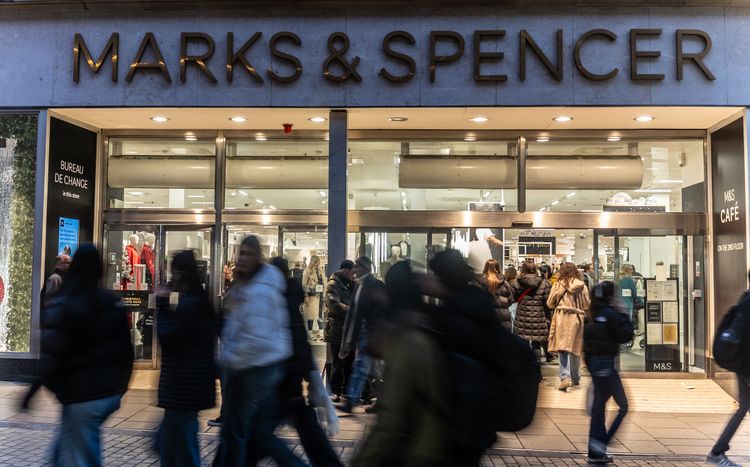
There’s a joke doing the rounds on social media at the moment: people are trying to work out whether they’re getting old, or whether Marks & Spencer has suddenly got really cool. The punchline, of course, is that it’s probably both. But for a brand that spent much of the last decade being shorthand for beige cardigans and expensive cheese sandwiches, something genuinely interesting is happening.
Not so long ago, M&S was the retail equivalent of a reliable uncle: dependable, vaguely comforting, but hardly the first name you’d drop in polite conversation if asked where to shop. Then came the cyber attack – a serious one, which knocked out its e-commerce operations for weeks and exposed just how vulnerable even heritage giants can be in the digital age. For many businesses, that kind of disruption would have been existential. For M&S, it seems to have acted as a strange form of retail defibrillator.
What’s impressive isn’t just that the business recovered, but how it has come back. In recent weeks I’ve bought a handful of items from M&S – shirts, knitwear, a jacket – and they are, without exaggeration, some of the best pieces of clothing I’ve purchased in years. The quality feels properly premium, the fit is sharp without trying too hard, and the prices are reasonable enough to avoid that nagging sense of buyer’s remorse. Most tellingly, the online experience has been seamless: fast delivery, clear communication, no sense of the clunky systems that once plagued the brand.
This is where the cyber attack becomes more than just a cautionary tale about security. It feels like M&S used the enforced pause to rethink how it works, rather than simply scrambling to get back to business as usual. Instead of flapping and floundering, it appears to have quietly rebuilt parts of its digital infrastructure and sharpened its overall proposition. Out of adversity, in other words, came something genuinely positive.
The same is true in-store, particularly in its food halls. Once mocked for selling overpriced sandwiches and middle-class picnic supplies, M&S food now sits in an interesting space: premium, but with a purpose. Walking around one of the newer stores feels a little like strolling through Eataly or some other upmarket food emporium, where Brits are perfectly happy to part with a tenner for a mouthful of cheese wrapped in prosciutto. It’s indulgent, yes, but also carefully curated and, crucially, enjoyable.
There’s something quietly smart about this repositioning. M&S isn’t trying to compete with Aldi on price, nor with TikTok brands on hype. Instead, it’s leaning into what it does best: quality, consistency, and a sense of understated confidence. The result is a brand that suddenly feels relevant again – not in a desperate, rebrand-heavy way, but in a calm, “we’ve been here all along” manner.
The wider lesson for business is fairly simple. Crises are unavoidable; how organisations respond to them is not. The cyber attack could have been the start of a long, slow decline, reinforcing the idea that M&S was a tired brand in a fast-moving world. Instead, it seems to have been a moment of reinvention. By using disruption as an opportunity to improve rather than panic, M&S has reminded us that resilience isn’t just about survival – it’s about coming back better than before.
And if that means I now get excited about buying clothes and food from Marks & Spencer, then so be it. Maybe I am getting old. But at least I’m doing it in a trendy jumper.