

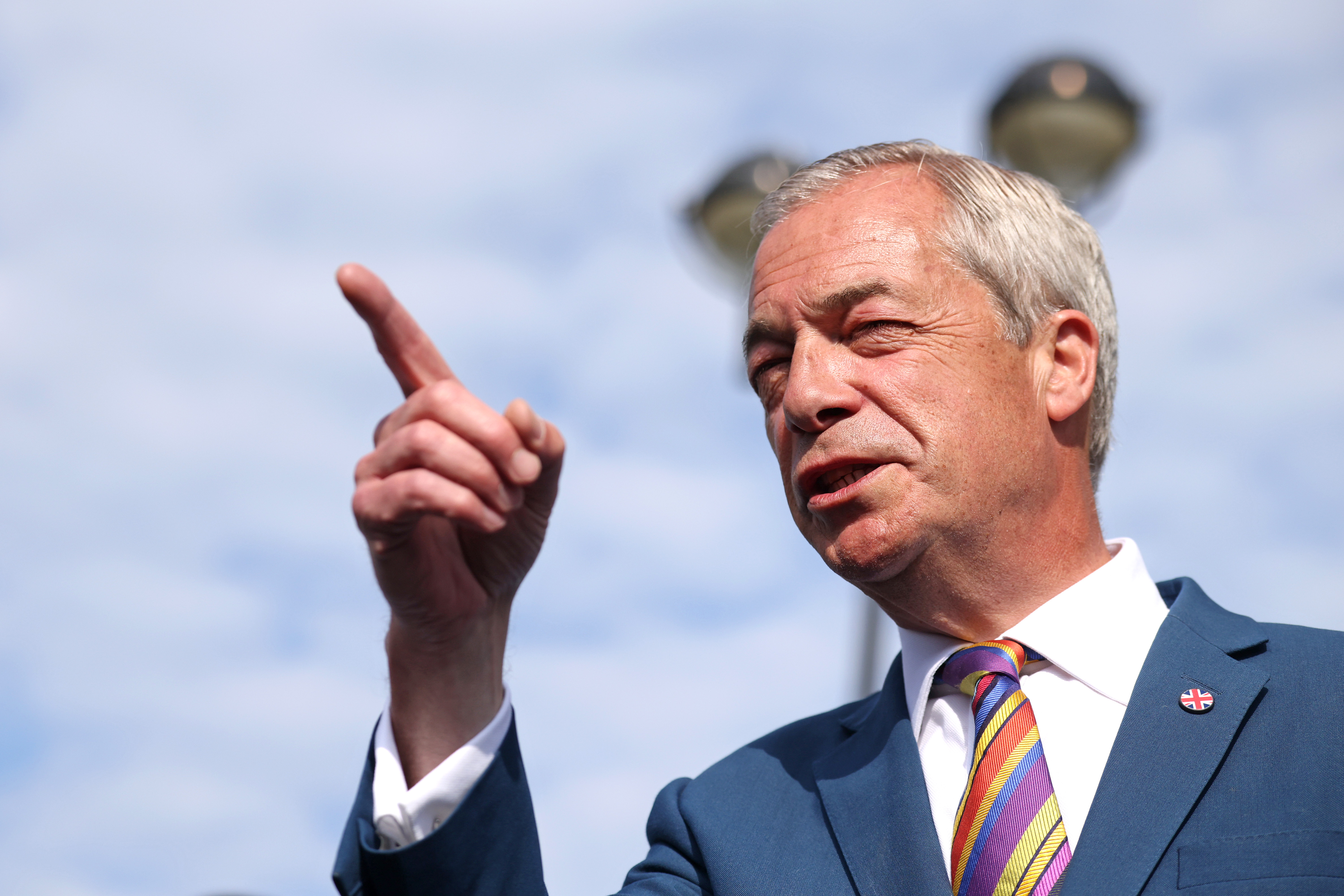
Make no bones about it, Reform are the big winners from this week’s local elections. At the time of writing, the party have gained some 779 seats and now control five councils.
As a result, leader Nigel Farage and plenty of other senior voices in the party are now claiming Reform are truly a national party.
Whilst it is true that they are winning seats in a number of different parts of the country, a look at some of the voting data shows it’s wide of the mark to claim Reform are now a national party.
READ NEXT: Election expert explains why Farage should be ‘privately worried’ by Reform local election results
There is still a very pronounced split down the country when it comes to Reform support, and it’s all to do with the Brexit referendum.
As polling expert Sir John Curtice pointed out on Friday morning, there is a “very clear relationship between Reform’s performance and how an area voted in the 2016 EU referendum.”
He explained: “Support for Reform is averaging just 9% in wards where less than 40% voted for Brexit.
“In contrast, it is running at 40% in wards where 60% voted for Brexit.
“This result is a clear confirmation of the fact that support for Reform is heavily concentrated among those who support Brexit.”
A similar point was made by Times columnist Fraser Nelson, who highlighted that there is “not a single Remain seat where Reform and Reform councillors have got more than 10 per cent share.”
“We can still see that is the dividing line,” he said.
This perhaps should not come as a surprise given that Reform used to be the Brexit Party, also led by Nigel Farage.
But it proves that claims that Reform can win anywhere are untrue.
They are not a national party – they are in fact still, in spirit, the Brexit party.