

Something extraordinary happened in American politics this week – and it could have consequences far beyond the United States.
For years, Americans and, indeed, voters around most major western economies, have been told that their economic struggles are the fault of immigrants, the poor and those at the bottom who are supposedly taking more than their fair share. But what happens when voters begin to realise that the people taking the most are actually those at the very top?
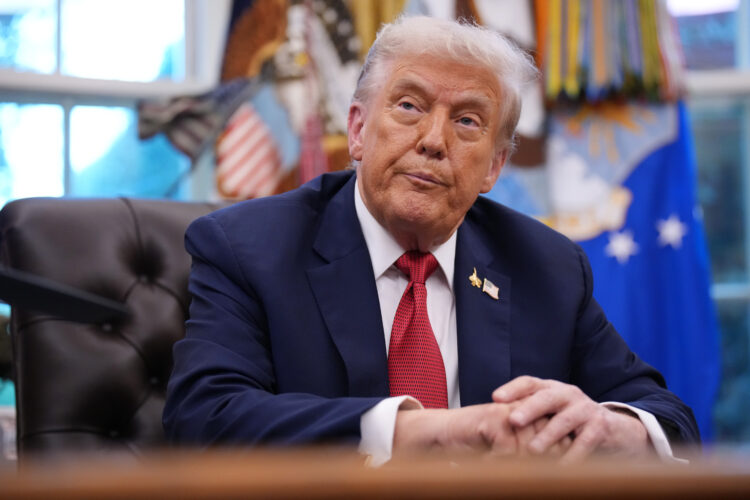
Donald Trump has turned the presidency into arguably the most lucrative business venture of his life.
According to Forbes, he is now worth around $7 billion, some $2.7 billion more than when he won the 2024 election. His second term has enriched him on a scale his previous business career never achieved.
Cryptocurrency ventures, overseas deals and payments linked to his political celebrity have generated extraordinary sums. His administration’s wars and market-moving announcements have also raised troubling questions about who profits from volatility, even where personal profiteering has not been established.
Then there’s Elon Musk.
Musk spent at least $288 million supporting Trump and other Republicans in 2024, followed by roughly $366 million in the 2026 midterm cycle by October. Meanwhile, his companies’ fortunes have soared, with SpaceX’s stock market flotation briefly making him the world’s first trillionaire.
And while America’s billionaires accumulate fortunes beyond comprehension, ordinary Americans are struggling.
Food bills, soaring fuel costs, expensive housing and declining purchasing power have left millions feeling poorer. The war with Iran has compounded the pressure on household budgets.
For years, the political right offered a familiar explanation: blame immigrants, welfare recipients and the poorest members of society.
But something appears to be changing.
Americans are increasingly looking upwards, not downwards, for someone to blame.
A recent poll found government corruption ranked among voters’ biggest concerns. CBS exit polling suggests roughly nine in ten voters considered corruption a major factor in their decision.
Lewis Goodall observed something remarkable in Texas: voters were raising corruption even before the cost of living. The two had become inseparable, he suggested, with voters seeing a wealthy elite rigging the system for its own benefit.
Democrat James Talarico successfully tapped into precisely that anger, winning a historic Senate victory in a state long dominated by Republicans.
And nationally, Democrats have captured both houses of Congress.
This is what makes these midterms potentially historic.
Not simply because Trump has suffered a devastating electoral rebuke. But because the political argument itself may be changing.
For decades, economic resentment has been weaponised against the powerless. Now voters are increasingly questioning the powerful.
Trump remains president. The billionaires remain billionaires. And American democracy faces enormous challenges.
But if voters have begun to recognise that their greatest enemy isn’t the immigrant next door, but a political system serving those at the very top, something fundamental has shifted.
And that is a message that could reverberate around the world.