

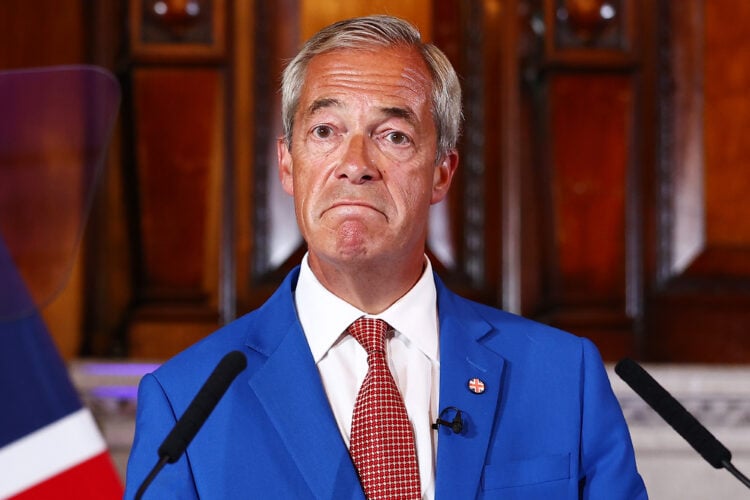
This is, actually, quite funny. Iceland finds itself as a major political talking point on Sunday, after the electorate voted against EU membership. It’s got a few right-wing figures feeling quite giddy… to the point where Nigel Farage may have accidentally said the quiet part out loud.
What does the Iceland EU membership actually mean?
Almost 190,000 voters exercised their democratic rights this weekend, with the ballot paper asking if Iceland ‘should start new negotiations with the European Union’, providing a simple ‘yes’ or ‘no’ answer box. Iceland previously applied to join the EU in 2009, but shelved their plans in 2013.
And, as proved yesterday, a majority of the population still remain cold on the idea of unification. The ‘No’ votes totalled 99,000, almost 10,000 clear of those who backed the ‘Yes’ campaign, splitting the vote by a near identical percentage witnessed in the UK back in 2016.
On the face of it, this seems like a cut-and-dry rejection of what the EU stands for, and the benefits that membership brings. That’s certainly how Nigel Farage has framed it, after he posted his congratulations to the Icelandic people on social media and praised them for ‘retaining their independence’.
Has Nigel Farage made the case for rejoining the Single Market?
Now, ‘independence’ is the operative word here. Iceland’s vote is very different to the UK’s vote ten years ago. For a start, Iceland is not currently part of the European Union, so in that sense, there is little to lose. But the island nation is, in fact, very strongly aligned with the EU and its flagship policies.
Though it lacks the voting rights of member states, Iceland is still part of the Schengen travel zone. Students have reciprocal access to the Erasmus scheme. Scientists can participate in the Horizon programme, and border control is enforced with the EU’s Asylum and Migration Management Regulation (AMMR)
But the real kicker here is that Iceland is still part of the EU Single Market. That hasn’t changed with this vote, which means – unlike with Brexit – customs and trade can remain perfectly frictionless between the country and the trading bloc. That now puts a very different spin on what Mr. Farage says.
In his view, a country CAN retain its independence from the EU while also remaining in the Single Market. And in this case, access to the Erasmus and Schengen initiatives are far from some sort of assault on personal freedoms. So it begs the question… why can’t the UK have this, too?
Can we have some of that ‘independence’, maybe?
If Brexit is here to stay, and the so-called ‘will of the people’ is not going to be reversed, then perhaps it’s time we got ourselves some of that Icelandic-style independence – with Nigel’s blessing, of course – and claimed more of the benefits that non-members continue to enjoy.
Later this week, Parliament is set to debate the economic impact Brexit has had on the UK. Several prominent financial institutions estimate that the decision to leave the EU has knocked around 6-8% off Britain’s GDP, with trade and exports also severely impacted.
More than one set of experts also flagged that preparations for Brexit – including the implementation mind-numbing red tape in the separation agreements – were a massive drain on Britain’s finances, with the USNBER concerned by the ‘management time diverted from other activities’.
Hopefully, this is one Parliamentary debate Nigel Farage does turn up for…