

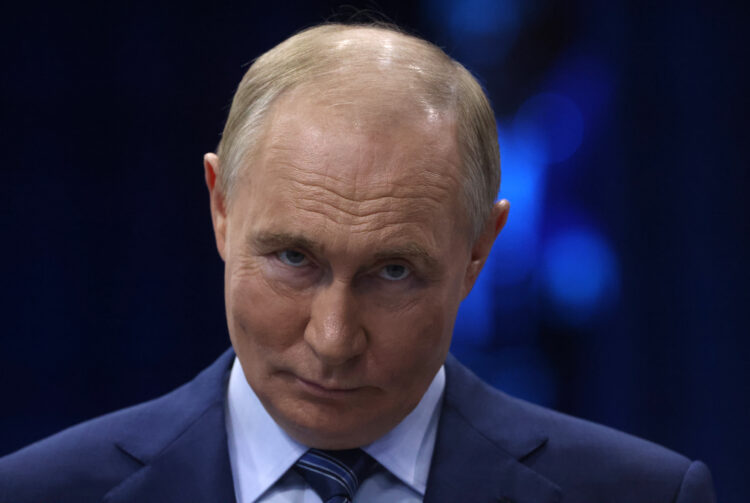
Russia doesn’t need to fire a shot to cause damage in the UK – all it needs is bots and some gullible, angry Brits.
That is the increasingly uncomfortable reality of modern information warfare.
This week, Andy Burnham launched a searing attack on the Kremlin for running an “insidious” campaign of misinformation attacks against the UK.
The prime minister said Russian agencies were spreading misleading narratives, impersonating trusted media organisations and exploiting existing political divisions.
READ NEXT: Farage issues angry response to new measures aimed at tackling Russian interference in UK
He told the UN General Assembly: “They’ve used bots and fake websites. Falsified newspaper articles. Forged the branding of 28 British organisations – including universities and the BBC. They’ve amplified far-right narratives.”
Just think about how much the conversation about Russian threats has changed over the years.
Back in the days of the Cold War, the threat from Russia was all about weapons – the number of warheads, the size of the nukes, the range of missiles. Now, the main Russian threats we talk about are bots, misinformation, electoral interference, hacking.
The narrative has shifted from a physical threat to a digital one.
And, when you think about it, it makes perfect sense why Moscow has chosen this course of action. They can sow chaos without firing single weapon.
Find an existing grievance. Add a misleading statistic. Throw in a fake image. Give it an outrageous headline and send it hurtling through social media.
Before long, the argument isn’t really about whether the original claim was true. It’s about Britain arguing with itself.
And that’s where social media users come in. A bot can create a post, but it needs real people to spread. A fabricated story can sit unnoticed on a fake website, but suddenly become credible when your mate, colleague or naive political commentator posts it.
Artificial intelligence is only making the problem harder to spot. Deepfakes can now manufacture convincing video, audio and images at a speed and scale that would have been difficult to imagine a few years ago. The government has warned that such technology can be used to undermine trust in what people see and hear.
And this is the real danger.
Not that Brits suddenly wake up and decide they love Russia, but that enough chaos is sown for Brits to stop trusting authorities and spark chaos.
The cheapest weapon Russia has at its disposal isn’t a tank, a missile or a drone – it’s a gullible Brit on social media.