

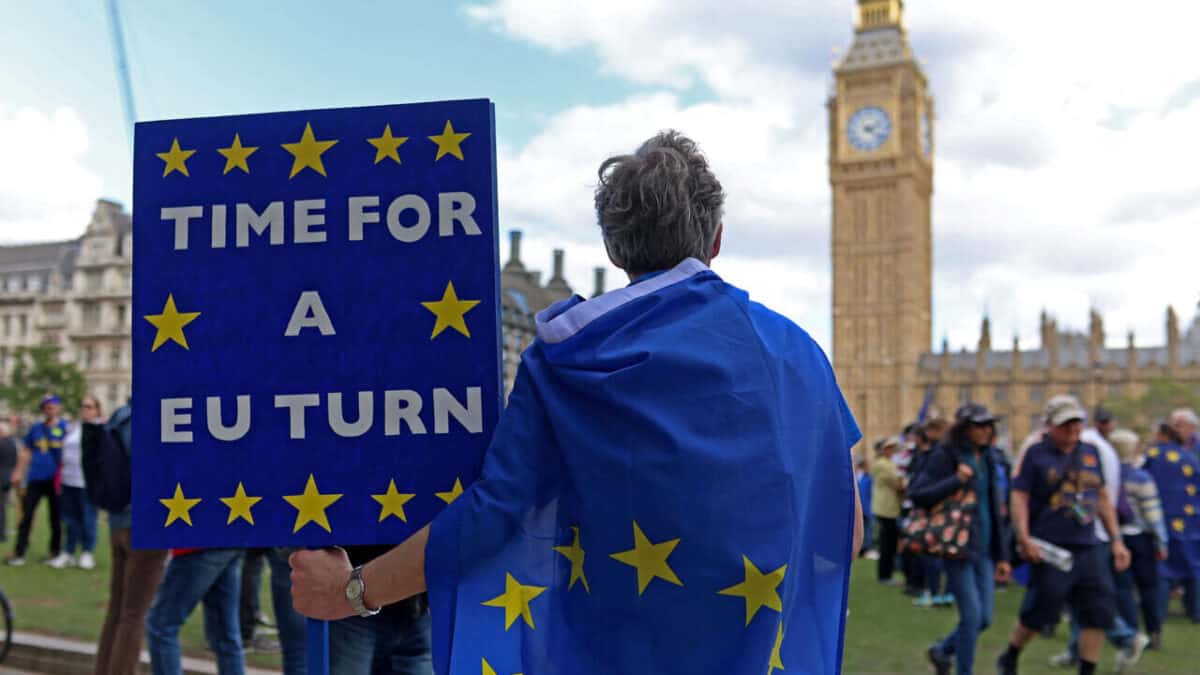
Who are we sending the invoice to, then? Ahead of a Parliamentary reckoning for the UK’s greatest act of economic self-harm, data from a collection of leading experts is being used to inform MPs on how Brexit has shaped the nation’s finances over the past decade. Spoiler alert, it’s not good news…
ALSO READ: Upset about immigration? Then you’ll be furious with Brexit…
Parliamentary debate on Brexit to lay bare the economic realities
On Wednesday 2 September, there will be a major debate on the impact of the 2016 EU membership referendum on the UK. The sitting will be lead by Pete Wishart, MP for the Scottish National Party (SNP), and a trove of statistical findings will form part of the research briefing.
Many of the figures are, in the most alarming way, astounding. Some of the world’s most renowned financial experts have come to the same conclusion regarding Brexit and its impact on GDP, arguing that an ‘uncertainty premium’ has hampered growth and limited potential investment opportunities.
List of leading experts reveal huge decline in UK GDP
Bloomberg assert that the UK is up to 4% worse off in terms of its GDP as a direct consequence of Brexit – which has left us approximately £30 billion lighter PER YEAR due to lost tax revenue. The Office for Budget Responsibility (OBR) also states the same percentage for GDP and productivity losses.
Panmure Liberum estimates that GDP is down 2.5% compared to where we would be had the country voted to remain in the EU back in 2016. However, the final figures from Goldman Sachs and the US National Bureau of Economic Research are much more severe, stating that GDP is now down ‘by 6-8%’.
OBR concludes GDP, Trade ‘badly impacted’ by Brexit vote
More than one set of experts also flagged that preparations for Brexit – including the implementation mind-numbing red tape in the separation agreements – were a massive drain on Britain’s finances, with the USNBER concerned by the ‘management time diverted from other activities’.
The research briefing also features materials which assess the negative impact Brexit has had on trade. Again, this makes for a difficult read, and leans on data updated by the OBR (and supported by both Goldman Sachs and Kings College London) last month which show a staggering 15% hit
“Both exports and imports will be around 15 per cent lower in the long run than if the UK had remained in the EU. The size of this adjustment is calibrated to match the average estimate of a number of external studies that considered the impact of leaving the EU on the volume of UK-EU trade.” | OBR
But still, blue passports. Yay…