

Figures from the UK farmland market suggest that one of the principal aims of the Government’s controversial inheritance tax reforms – discouraging wealthy non-farmers from buying agricultural land for tax purposes – may be starting to have the desired effect.
The latest edition of Private Eye points to figures from land agents Strutt & Parker showing that the proportion of farmland purchases made by so-called “lifestyle buyers” fell to 11 per cent in 2025, down from 16 per cent in 2024.
At the same time, purchases by farmers rose to 59 per cent, their highest proportion for seven years. The figures are based on the number of transactions rather than the acreage involved.
The trend is backed by Strutt & Parker’s own annual farmland review. It says farmers accounted for more than half of purchases in England during 2025, marking the second consecutive year in which their share increased. However, the firm cautions that investor buyers still tend to acquire larger farms, meaning the picture is different when measured by acreage rather than transactions.
There is also evidence of a cooling market. Knight Frank’s Farmland Index found that the average price of bare agricultural land in England and Wales fell by around 5 per cent during 2025, the largest annual decline since 2017.
The figures are particularly significant given the political row that erupted over Rachel Reeves’s reforms.
The controversy actually began in October 2024, rather than 2025, when Reeves announced plans in her first Budget to reform Agricultural Property Relief (APR) and Business Property Relief. The original proposal would have restricted 100 per cent relief to the first £1 million of qualifying agricultural and business property from April 2026, with a 20 per cent effective rate applying above that threshold. GOV.UK+1
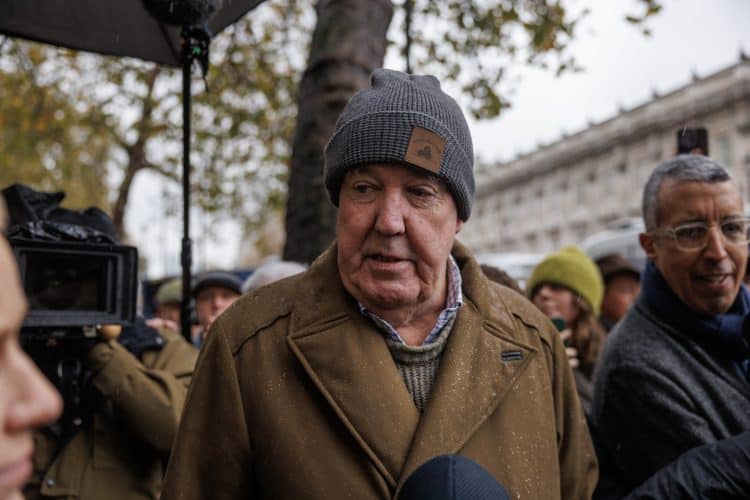
The announcement triggered a series of demonstrations, including the huge Westminster protest in November 2024 attended by figures including Jeremy Clarkson, Nigel Farage and Kemi Badenoch. Further rallies followed in February and March 2025, with Farage and Badenoch again backing the farmers’ campaign.
The Government subsequently increased the threshold to £2.5 million per individual, allowing spouses or civil partners to potentially pass on up to £5 million of qualifying agricultural or business assets before the new relief restrictions bite. The changes came into force on 6 April 2026.
The latest figures therefore offer an interesting counterpoint to the political campaign against the policy. They do not, on their own, prove that the tax change caused the shift in buying patterns — Strutt & Parker notes that other economic factors are at play — but they are consistent with the argument that removing some of the tax advantage attached to farmland can make it less attractive to non-farming investors.
It is a point The London Economic made when the reforms were first announced.
As we wrote in November 2024: “The reality is that we need far more Kaleb’s and less Clarkson’s if we really want to sort the nation’s food supply conundrum.” thelondoneconomic.com
The emerging evidence suggests that, at least when it comes to who is buying farmland, the balance may finally be moving in that direction.