

Across the world’s parliaments, a structural problem has gone largely unaddressed. Young people are subject to the laws that legislatures pass, affected by the budgets they set, and mobilised during elections, but in most countries, there is no permanent formal mechanism through which they can participate in the legislative process itself. The gap is well-documented. Studies on democratic participation consistently identify declining trust in institutions among younger age groups, and a widening distance between citizens and their elected representatives. What those studies rarely produce is a workable solution.
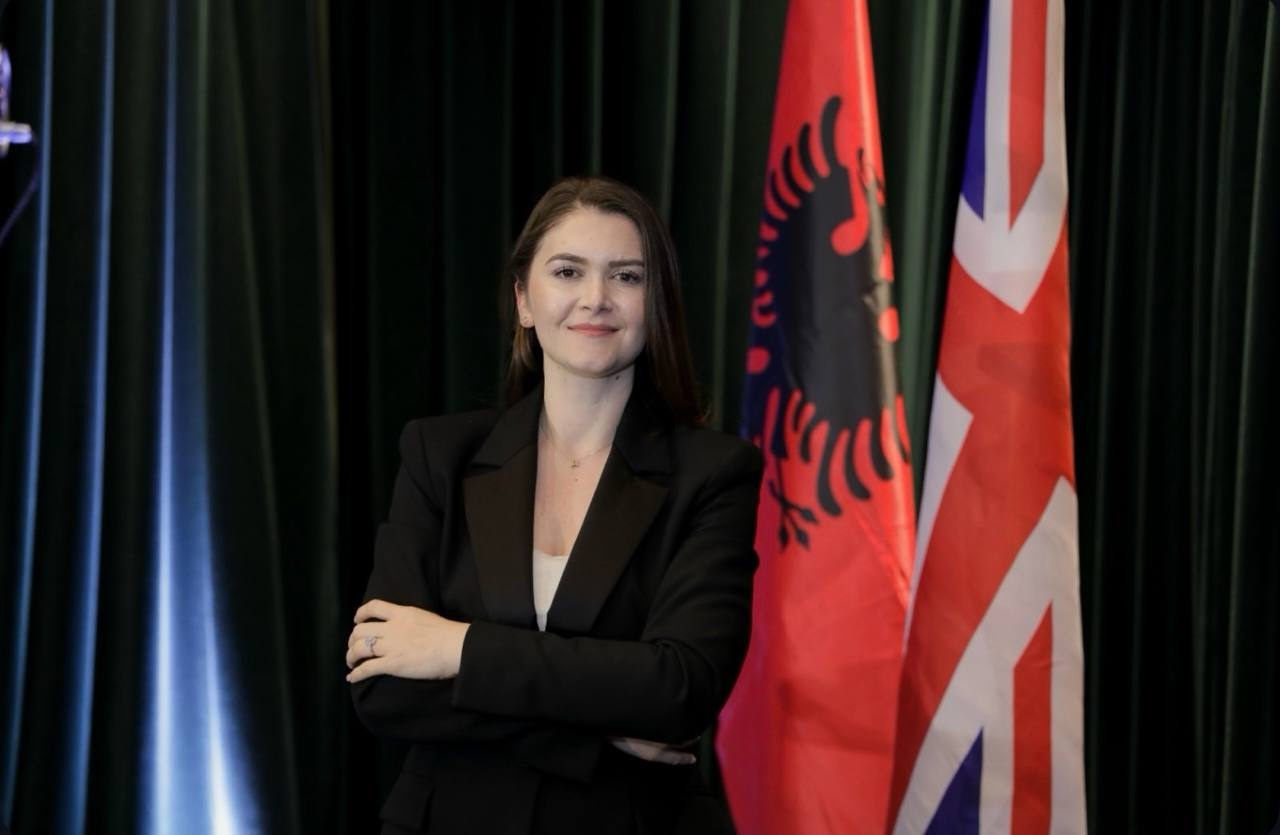
In Albania, that changed in 2022. A permanent youth participation structure now sits inside the national parliament, its membership drawn from across the political spectrum, its participants debating live policy with sitting MPs as a matter of formal institutional routine. Since its establishment, Albania’s Youth Law has been revised and the national youth budget has increased, both at the direct instigation of the structure’s members. The model has since been adopted in North Macedonia and the Maldives. It was designed, negotiated into existence, and developed for international replication by Alkida Lushaj, a political scientist and democracy practitioner originally from Albania and now based in New York, with support from Westminster Foundation for Democracy, the UK public body dedicated to strengthening democracy worldwide.
Building a Permanent Institution from Concept to Parliament
When Lushaj began developing the concept, there was no precedent to draw from. No comparable institution had existed in Albanian parliamentary history, which meant building the entire framework from nothing: how the Club would be constituted, what authority it would carry, how membership rules would be structured to make participation politically manageable for MPs from opposing parties, and most critically, how to secure the kind of formal, lasting parliamentary commitment that most civic programmes never achieve.
Parliaments are not naturally receptive to new standing obligations. Getting MPs to make a formal, standing commitment to engage with young citizens beyond election campaigns required a different kind of negotiation altogether. Lushaj secured the initial commitment of 21 MPs and saw the Club through to its 2022 launch.
“There was nothing like this in Albanian parliamentary life before. Young people had been part of election outreach, but not part of legislative work in any structured, ongoing way. What Alkida did was ask MPs to formally commit to that engagement outside of election cycles. That was no small thing to negotiate.”
Erisa Xhixho, Member of Parliament, Albania
When the Club launched, it became a permanent feature of Albania’s national parliament, not a pilot, not a one-off event, but a standing institution that has since grown to 47 participating MPs, with hundreds of young Albanians debating actual policy as formal participants, not observers.
Legislation Changed. Budgets Shifted.
The Club’s influence has extended well beyond dialogue. Since its establishment, the budget allocated to youth programmes in Albania has increased, as a direct result of sustained lobbying by Club members who now have a formal platform inside parliament to press that case. More significantly, Albania’s Youth Law was formally revised at the request of Youth Club participants, with amendments designed to bring legislation closer to the realities of young Albanians and address the issues they identified as most pressing.
Three Countries, One Model
Civic engagement frameworks are typically built for specific political contexts and tend not to travel well. This one has. Working with WFD teams in both countries, Lushaj led the adaptation of the model in North Macedonia and in the Maldives, two countries with entirely different political histories, legal cultures, languages, and geographies. That a structure designed for a post-communist democracy in the Western Balkans proved equally applicable in a small Indian Ocean island state reflects the nature of the underlying problem: democracies systematically fail to create formal participation pathways for young citizens, and that failure is not specific to Albania.
In North Macedonia, the replication was hands-on. A delegation of MPs travelled to Tirana to meet directly with Albanian Youth Club members, studying the regulatory framework Lushaj had designed and observing how cross-partisan cooperation functioned inside a working parliament. Safije Sadiki Shaini was among them.
“Visiting Tirana and meeting directly with members of the Albanian Parliamentary Youth Club was unlike any training or briefing we could have received at home. We sat with MPs who had already built what we were trying to build – we saw how they structured the regulation, how young people were lobbying on real issues, how cross-partisan cooperation actually functioned in practice. That visit shaped how we approached our own work in North Macedonia.”
Safije Sadiki Shaini, Member of Parliament, North Macedonia
A Consistent Record of Institutional Firsts
The Parliamentary Youth Club is the most internationally visible part of a broader body of work. Lushaj’s work on political violence against women produced StopVAWP, the first platform in Albania dedicated to allowing women to formally report election-period harassment and political violence. No equivalent mechanism had existed in Albanian political life before it was built. Since its launch, nearly 6,000 individuals have used the platform, and it has been presented to over 250 women candidates across two consecutive electoral cycles.
A separate initiative, developed in partnership with National Commercial Bank, Albania’s largest bank, established the country’s first direct scholarship-to-employment programme, providing over 60 university students with both financial support and a structured route into work. In each case, the institution built was the first of its kind in the country.
Lushaj has presented original research at a Johns Hopkins University conference, lectured at the University of New York Tirana, and served as Adviser to Albanian Parliament.
What Three Countries Running the Same Model Means
Youth disengagement from democratic institutions is not a problem unique to Albania. It is a documented and growing challenge across both mature and emerging democracies, one that most governments acknowledge in policy documents without ever building a structural response to it.
What Lushaj has demonstrated across three countries is that a practical, replicable solution exists. It requires a clear understanding of what democratic systems are actually missing, a framework designed to last beyond a single funding cycle, and someone with the political skill to negotiate it into existence. The evidence from Albania, North Macedonia, and the Maldives suggests the model transfers. Revised legislation, increased budgets, and cross-border replication are the results.
“If young people are excluded from democratic life today, tomorrow’s institutions risk losing their legitimacy. The Parliamentary Youth Club was created to close this gap, to give young people the tools, the voice, and the space to participate.”
Alkida Lushaj
Alkida Lushaj is a political scientist and democracy expert based in New York. She specialises in democratic governance, youth civic engagement, and gender policy in the Western Balkans.