

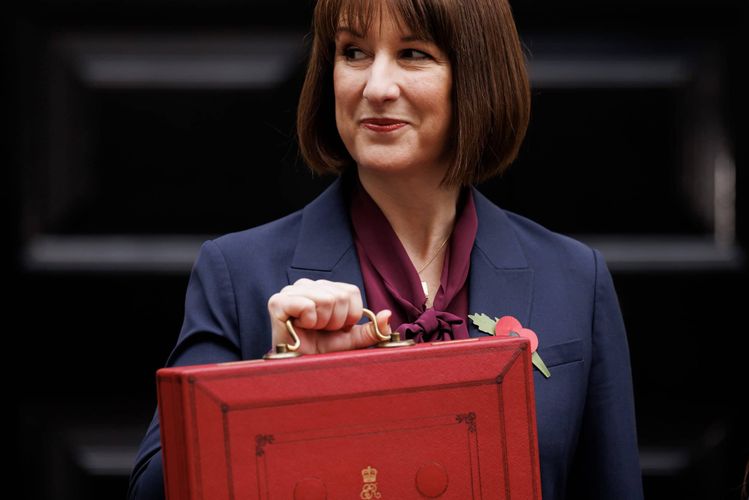
The UK government posted its largest ever January budget surplus, official figures show, boosted by a surge in tax receipts and lower debt interest costs ahead of the chancellor’s spring statement next month.
Public sector finances recorded a surplus of £30.4 billion in January, according to the Office for National Statistics (ONS) – double the figure from the same month last year and well above the £24 billion forecast by the Office for Budget Responsibility (OBR) and City economists. It is the highest January surplus since monthly records began in 1993.
Paul Dales, chief UK economist at Capital Economics, said the figures suggested “the economy started the year looking a lot healthier and will give the chancellor something positive to point to” in her fiscal statement on 3 March.
January is traditionally a strong month for government revenues due to self-assessment tax payments, but this year’s figures were also driven by a sharp rise in capital gains tax receipts. The tax raised £17 billion – nearly £7 billion more than a year earlier – as investors disposed of assets ahead of anticipated changes announced in the autumn budget. Self-assessed income tax receipts reached £29.4 billion.
Grant Fitzner, the ONS chief economist, said revenues were “strongly up on the same time last year” while spending remained broadly flat, with lower debt interest payments offsetting higher public service and benefit costs.
The surplus means borrowing in the first 10 months of the financial year totalled £112.1 billion, below the OBR forecast of £120.4 billion, putting the government on track to undershoot its full-year borrowing projection by about £10 billion.
However, economists cautioned that the broader fiscal picture remains challenging, with national debt standing at £2.9 trillion – equivalent to 92.9 per cent of GDP – despite the recent improvement.