

Despite decades of medical advances and widespread health messaging, physical inactivity remains one of the world’s most stubborn public-health challenges — and the latest global data show just how stark the gap is between rhetoric and reality. According to a World Health Organization report, nearly one-third of adults worldwide — approximately 1.8 billion people — did not meet recommended levels of physical activity, and if current trends continue, this figure could rise to 35% by 2030, leaving the world off track to meet international targets and contributing to higher rates of heart disease, type 2 diabetes, dementia and some cancers.
Against this backdrop, movement — once understood as a daily and essential component of life — increasingly takes place under the banner of consumer culture: it is packaged into gym memberships and boutique studios, while many communities remain underserved or excluded. The result is a paradox: a booming fitness industry on one hand and a global population drifting toward sedentary lifestyles on the other.
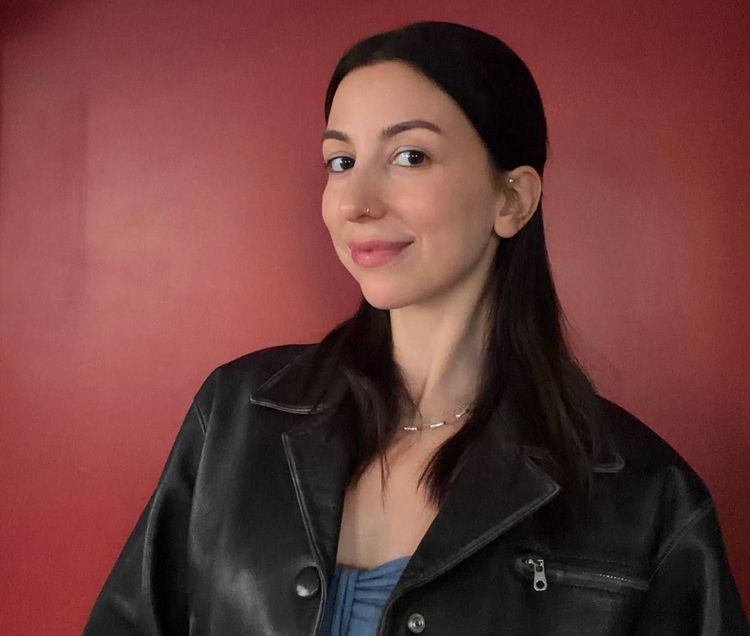
Barbara Mkhitarian’s work sits squarely at the intersection of these two realities. She studied modern languages at the University of Oxford and holds an MSc in Global Public Health Nutrition, combining academic rigour with hands-on experience — from qualitative field research on severe childhood malnutrition in Ethiopia to delivering government-supported diabetes-prevention programmes in the UK. Today she is developing inclusive, movement-centred initiatives designed to bring physical activity into community spaces, prisons, and mental health settings, reimagining movement not as a luxury commodity but as a social determinant of health.
In the following conversation, Mkhitarian explains why the mainstream fitness industry has drifted from its public-health origins, how socio-economic circumstances shape people’s capacity to be active, and what it will take to ensure that movement — like nutrition and preventive care — becomes a right rather than a privilege.
“Historically, Pilates was linked to rehabilitation and accessibility — not aesthetics”
You work at the intersection of public health, nutrition, and movement practices. Given your academic path — from Oxford to an MSc in Global Public Health Nutrition, along with your experience in government diabetes-prevention programmes and digital behaviour-change initiatives — when did you first begin questioning whether the mainstream fitness industry truly serves everyone?
I started to question this a long time ago, when I first started practising yoga as a teenager. I noticed that this ancient spiritual practice, now brought to the West, was attended mostly by people of a certain background and social class. Studios in London, where I live, particularly in central areas of the city, are not affordable for the general public to attend regularly.
If we talk about fitness in general, gyms and strength training are usually more accessible and less tied to class. But Pilates is different. In the last few years, it has become extremely popular, and with that came a specific image, which I believe is exclusionary and even elitist.
Pilates has a very different origin story. It was created in confinement — in a prisoner-of-war camp during World War I — as a rehabilitative practice. Joseph Pilates developed it to help fellow inmates and veterans restore mobility, strength, flexibility, and lung capacity. These roots are largely lost today.
How has studying this history, combined with your Pilates training and work with different groups (including your plans to introduce Pilates in prisons and community spaces), changed how you see the modern Pilates industry?
It completely changed my perspective. Today, Pilates is often marketed as a luxury, female-oriented practice aimed at a specific body type. But historically, it was linked to rehabilitation and accessibility — not aesthetics.
I was also struck by the fact that modern Pilates was largely shaped by Kathy Grant — a Black woman who trained directly with Joseph Pilates and had a huge influence on the development of the practice. This part of the story is rarely told.
When you see the contrast between where Pilates started and what it has become, it’s hard not to ask who this industry is really for today.
“We live in an environment that does not always support movement”
You are not only a trainer but also a public health specialist, having worked on government diabetes prevention programmes and digital initiatives with Liva Healthcare. How has this experience — working with people at risk of diabetes, seeing how nutrition and activity influence biomarkers — shaped your understanding of movement as a social determinant of health?
Working with pre-diabetic patients showed this very clearly. Movement — whether planned exercise or everyday activity — plays a key role in preventing and even reversing this condition. I have seen patients who follow a balanced diet but still have elevated blood sugar because their activity levels are low.
Movement is also directly linked to mental well-being. People with sedentary jobs who don’t make time for physical activity often report lower energy and mood.
Working in public health reveals that physical activity is not just about motivation. Income, type of work, access to transport, disability or chronic illness — all of these factors affect a person’s ability to be active. Behaviour is shaped by socio-economic context.
Given your research background, what is missed when physical inactivity is reduced to personal responsibility and “just go exercise”?
Structural reality is overlooked. We live in an environment that does not always support movement. Long work hours, long commutes, unsafe neighbourhoods, and inaccessible infrastructure — all of this limits opportunities for physical activity.
When movement is treated purely as a personal choice, we ignore how strongly behaviour is shaped by the conditions of life.
“Fitness has become increasingly privatized”
You have worked in public health long enough to see prevention become a strategic priority, and you know how important early intervention is. Why, in your view, has fitness gradually stopped being seen as a public necessity and become a privilege — especially given that prevention of chronic disease is increasingly discussed in the public sector?
There are several reasons. In many countries, government funding for parks, leisure centres, and public spaces has been reduced. At the same time, fitness has become increasingly privatised and commercialised.
There is also a strong cultural narrative of personal responsibility — as if physical activity depends entirely on willpower and discipline. This adds a moral value to fitness and creates a sense that people who don’t exercise regularly are lazy or irresponsible.
Finally, the treatment model dominates prevention. Instead of investing in environments that support healthy lifestyles, society focuses on treating diseases after they occur.
How does this shift affect people who already face barriers to movement — especially considering your experience with vulnerable groups and your idea of expanding Pilates into public and institutional spaces?
It often leads to shame and exclusion. High studio costs, lack of time, negative body image, and inaccessible spaces — all of this reduces participation.
For people with disabilities or mobility limitations, the barriers are even more obvious. Many fitness spaces are not designed with their needs in mind, and classes are created for a narrow range of abilities.
“The industry has drifted from its origins”
You have Mat Pilates and Level 3 Personal Training qualifications and are developing a project to make Pilates accessible in places where people face barriers — prisons, mental health institutions, and community spaces. How has your training influenced your vision for inclusive movement programmes?
Pilates training gave me a deep understanding of its original purpose. I was fortunate to train with a teacher who was very conscious of the history of the practice and the need for inclusion. She runs a programme called “Pilates in Prison,” teaching women in prisons the basics of Pilates to improve strength, mobility, and mental health.
This reinforced how far the industry has drifted from its origins. Pilates was not created for elite studios or aesthetic goals — it was a practice for people with limited resources.
My personal training qualification added another perspective. My mother’s osteoporosis diagnosis and two fractures within a year showed me how important strength and mobility are, especially for older women. Fitness is not about appearance — it’s about independence, injury prevention, and quality of life.
Yet many gyms and strength spaces remain aimed at younger, mostly male audiences.
“Movement becomes a shared experience, not an individual duty”
You work in clinical and community contexts — from NHS and Liva Healthcare diabetes-prevention programmes to field research in Ethiopia and developing Pilates initiatives for vulnerable groups. What do movement programmes need to look like in prisons, mental health institutions, and community centres to actually work, and not become just “good intentions”?
I am developing a “Pilates for Everyone” model — structured programmes that can be implemented in such spaces, for example, over 12 weeks with several sessions per week, each addressing a specific problem using an evidence-based approach.
This could support new mothers from deprived areas, teach inmates the foundations of Pilates to improve physical and mental health, or help people living with HIV build strength and mobility to improve bone density and reduce injury risk.
Funding and organisational support can come through partnerships with charities, healthcare trusts, prison services, and integrated care boards.
What changes when movement is introduced in non-traditional settings — and why is this important for chronic disease prevention, which you have observed in both digital programmes and field research?
The benefits go far beyond physical health. Movement supports mental well-being, nervous system regulation, and social connection. In situations of isolation, participating in shared practice restores a sense of autonomy and control.
Movement becomes a shared experience, not an individual duty. That is why I believe physical activity should be treated as a public service. It should be provided, not just encouraged. This shift is an important step toward reducing health inequalities.