

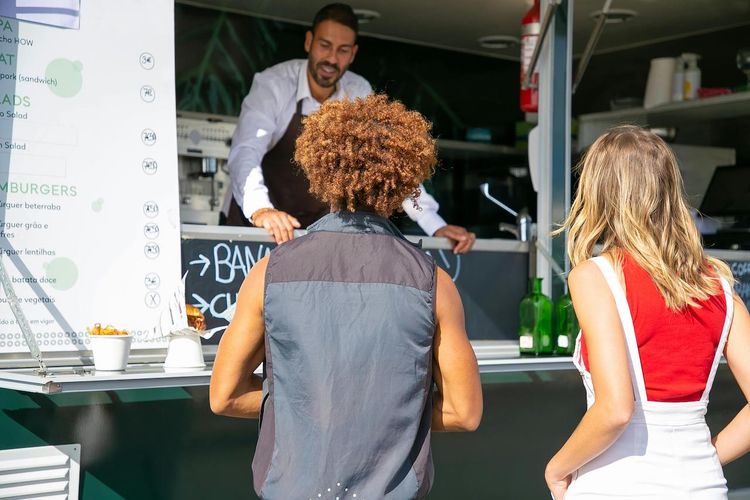
Customers expect speed, clarity and zero friction, while staff need tools that work instinctively, even during the busiest shifts. Choosing the right card machine means supporting this rhythm without slowing it down or adding unnecessary complexity to daily operations.
Fast, repeatable transactions
Quick service environments are defined by volume and repetition. Orders are placed quickly, payments follow immediately and the next customer is already waiting. A card machine in this setting must respond instantly and behave consistently every time. Clear on-screen prompts, fast confirmation and a predictable payment flow reduce hesitation at the counter and help staff maintain momentum.
Countertop devices work well when ordering and payment happen in one place. Positioned next to the till, they allow employees to move seamlessly from order confirmation to payment without breaking eye contact with the customer. When the process is smooth and familiar, queues move faster and the overall experience feels organised rather than rushed.
Flexibility across service points
Many quick service restaurants no longer rely on a single counter. Secondary ordering stations, pickup zones or temporary service points are common, especially during peak hours. In these scenarios, payment technology needs to adapt to the space rather than dictate it.
Portable card machines make it possible to accept payments wherever orders are taken. This flexibility helps spread customer flow across the venue and prevents bottlenecks forming in one area. It also allows teams to respond dynamically to busy periods, pop-up counters or layout changes without disrupting service or retraining staff.
Simple for staff, natural for customers
Card machines should therefore be intuitive from the first use. Touchscreens with clear visual feedback reduce mistakes and give staff confidence, even if they are new or working under pressure.
For customers, familiarity is key. Contactless cards and mobile wallets feel effortless and require little explanation. When payment feels obvious and immediate, customers move on quickly and leave with a positive impression — even if their entire visit lasted only a few minutes.
Technology that supports growth
While speed and simplicity are essential today, the right card machine should also fit into a broader operational setup. As restaurants expand, add new ordering channels or open additional locations, payment devices need to work alongside ordering, reporting and staff tools. Integrated solutions help maintain consistency and visibility across the business, rather than creating isolated systems.
Viewed as part of a wider quick service restaurant management system, the card machine becomes more than a payment tool. It supports workflow, reinforces service standards and scales with the business. In a quick service setting, that quiet reliability is what keeps operations running smoothly — shift after shift, customer after customer.