

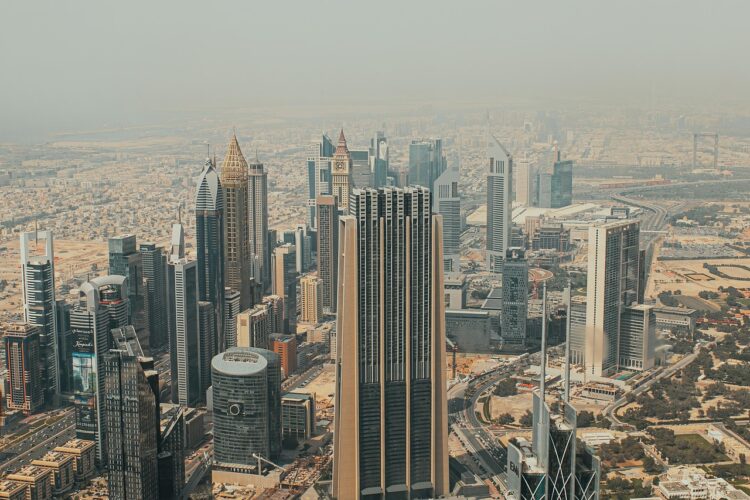
What began as an ambitious initiative to connect regional markets with global capital has evolved into the leading financial centre for the Middle East, Africa and South Asia (MEASA) region, attracting banks, asset managers, insurers, fintech firms, family offices and multinational corporations from around the world.
That growth has been reflected not only in the number of firms operating within the Centre, but also in the increasing depth and sophistication of its financial ecosystem. As competition among global financial centres intensifies, DIFC has developed a reputation for combining regulatory certainty, business-friendly policies and strategic access to some of the world’s most dynamic emerging markets.
Today, DIFC is preparing for its next phase of development. Having established itself as a leading regional financial hub, it is now pursuing a more ambitious objective: becoming the world’s first financial centre built around artificial intelligence.
Moving Beyond AI Adoption
Artificial intelligence is rapidly becoming a central feature of modern finance. Banks are deploying AI to improve customer service, asset managers are using it to analyse markets, and regulators are exploring new ways to strengthen oversight and compliance.
DIFC’s vision goes a step further. Rather than viewing AI as a collection of tools to be adopted by individual firms, the Centre intends to embed artificial intelligence across the wider financial ecosystem. The objective is to create an environment where AI supports everything from regulatory processes and compliance functions to legal services, business operations and urban infrastructure.
For financial institutions, the potential implications are significant. AI-powered compliance systems could reduce administrative burdens, automated reporting could improve efficiency, and intelligent digital infrastructure could help firms scale more effectively. While many financial centres are exploring similar technologies, DIFC’s ambition is notable because it seeks to integrate them at the ecosystem level.
The initiative also reflects a broader shift taking place across global finance. Increasingly, financial centres are competing not only on location and regulation, but also on their ability to provide the technological infrastructure required for the next generation of financial services.
Building Capacity Through the Zabeel District
Supporting this vision is one of the most significant expansion projects currently underway in the global financial sector.
The DIFC Zabeel District represents a AED100 billion investment designed to accommodate the Centre’s continued growth and strengthen its position as a global financial destination. Once completed, the development will add approximately 7.1 million square feet of commercial and mixed-use space, creating capacity for more than 42,000 businesses and over 125,000 professionals. More than one million square feet will be dedicated to artificial intelligence, advanced technologies and innovation-focused activities.
The scale of the project reflects both current demand and future expectations. As financial institutions increasingly seek locations that combine connectivity, talent, regulation and technological infrastructure, the ability to offer additional capacity becomes an important competitive advantage.
Importantly, the Zabeel District is not being designed solely as a business district. The development incorporates residential, educational, hospitality and cultural assets, creating an integrated environment intended to attract both companies and talent over the long term.
A Distinctive Position in Global Finance
DIFC’s ambitions are supported by an increasingly strong international standing. According to the Global Financial Centres Index (GFCI), Dubai continues to rank among the world’s leading financial centres and remains the highest-ranked financial centre in the Middle East and Africa. The city is also regularly identified as one of the financial hubs with the greatest potential for future growth and influence.
The UAE occupies a particularly distinctive position in this regard. Few countries host multiple internationally recognised financial centres, yet both Dubai and Abu Dhabi have secured prominent positions within global rankings. Together, they form a financial ecosystem that combines international connectivity, regulatory sophistication and access to significant pools of regional and global capital.
For investors, this creates an increasingly compelling proposition. The UAE offers exposure to growth markets across the Middle East, Africa and South Asia while maintaining many of the characteristics associated with established international financial centres.
Why Investors Are Paying Attention
For international investors, the significance of DIFC’s strategy extends beyond technology. The Centre sits at the intersection of several long-term trends reshaping global finance: the rise of artificial intelligence, the growth of emerging markets, the increasing mobility of capital and talent, and the demand for more efficient regulatory and business environments.
Its AI-native vision seeks to address these trends simultaneously. If successful, it could create a financial ecosystem that is not only larger, but also more efficient, more connected and better equipped to support the evolving needs of financial institutions.
Looking Ahead
The world’s leading financial centres have historically adapted to major economic and technological shifts. From London’s role in global trade to New York’s rise alongside modern capital markets, their success has often depended on recognising structural changes early and investing accordingly.
DIFC’s focus on artificial intelligence and the expansion of the Zabeel District can be viewed through a similar lens. The strategy is ultimately a long-term bet on how finance will evolve over the coming decades.
Whether measured by its growth trajectory, its international standing or its plans for the future, DIFC is entering a new phase of development. For investors, financial institutions and technology firms alike, it is becoming an increasingly important market to watch.
Disclaimer: This article is provided for general informational purposes only and does not constitute financial, investment or professional advice. Readers should conduct their own research before making any investment decisions.