

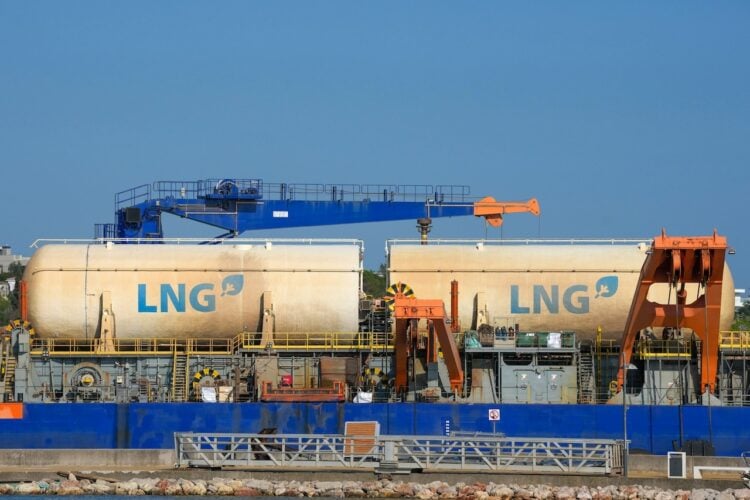
LNG cargoes are largely valued against benchmarks developed in Europe or Asia, despite the Gulf being home to some of the world’s largest gas reserves and fastest-growing export capacity.
As global energy markets become more interconnected and unpredictable, that imbalance is becoming increasingly apparent. Recent disruptions to international shipping and supply chains have highlighted the importance of not only producing energy, but also building the commercial and logistical systems that keep markets functioning during periods of uncertainty. That is the thinking behind Abu Dhabi’s new LNG benchmark. Rather than simply creating another pricing index, the UAE is developing the financial infrastructure to support a stronger regional gas market, one that could benefit producers, importers and international buyers across the Middle East while reinforcing the UAE’s position as a global energy and trading hub.
Building More Than a Price Index
Commodity benchmarks rarely attract public attention, but they underpin hundreds of billions of dollars in global energy transactions every year. They help determine contract prices, provide transparency, allow companies to hedge against market volatility and give investors confidence when financing multi-billion-dollar projects. Europe’s Title Transfer Facility (TTF) dominates gas pricing across the continent, while the Japan Korea Marker (JKM) serves as Asia’s principal LNG benchmark. Both have become trusted references because they are supported by deep, liquid trading markets.
The Middle East, despite being one of the world’s most important LNG-producing regions, has never had an equivalent benchmark designed around its own market dynamics. For the UAE, addressing that gap requires far more than launching an index. It requires building an ecosystem. That strategy is already taking shape through the integration of ADNOC Gas, ADNOC Trading, XRG and the financial framework of Abu Dhabi Global Market (ADGM). Together, they are creating a regional LNG trading hub that links physical production with commodity trading, financial services and market intelligence. The benchmark is designed to sit at the center of that ecosystem, providing greater price transparency while strengthening Abu Dhabi’s role in global LNG trading.
Creating a More Flexible Energy Network
The benchmark is only one part of a much broader investment program. The Ruwais LNG project will add 9.6 million tonnes per annum (mtpa) of production capacity, more than doubling ADNOC’s LNG output once operational. Powered by clean electricity, it is expected to become one of the world’s lowest-carbon LNG export facilities. ADNOC has also secured long-term sales agreements covering the majority of Ruwais’ future production before exports have even begun, demonstrating strong international confidence in the project .At the same time, ADNOC Logistics & Services has significantly expanded its LNG fleet through one of the industry’s largest newbuilding programs. Greater shipping capacity provides more than transport. It gives the UAE greater flexibility to redirect cargoes, optimise delivery schedules and maintain reliable supplies as market conditions evolve.
Combined with a regional trading platform, these investments create a more agile energy network where production, transportation and pricing work together rather than operating independently. That approach reflects how global energy markets are changing. According to Shell, worldwide LNG demand could increase by around 60% by 2040, while international trade continues to expand as countries transition towards cleaner energy sources. As volumes grow, efficient logistics and trusted pricing mechanism s become just as important as production itself.
A Platform for Regional Growth
Perhaps the strongest argument for a Middle Eastern LNG benchmark is that its value extends well beyond the UAE. Qatar remains the world’s LNG powerhouse, with production expected to increase from 77 million tonnes per annum to 142 million tonnes following the expansion of the North Field. Oman continues to strengthen its export position, while countries including Egypt and Jordan rely on increasingly sophisticated gas infrastructure to balance domestic demand and energy security.
Rather than competing with these markets, Abu Dhabi’s initiative has the potential to complement them. A regional benchmark offers Gulf producers another mechanism for pricing cargoes and managing commercial risk closer to home. Smaller exporters gain access to a sophisticated trading ecosystem without depending exclusively on financial centers in Europe or Asia. Import-dependent countries benefit from greater pricing transparency and a benchmark that better reflects regional supply and demand conditions. International buyers also stand to gain. As global LNG trade becomes more diverse, an additional trusted pricing reference originating from one of the world’s largest producing regions can improve price discovery and strengthen confidence across the market. In many respects, the benchmark has the potential to become shared commercial infrastructure for the Gulf, much like ports, pipelines and shipping routes have become shared physical infrastructure over previous decades.
Looking Beyond Production
Creating a globally recognised benchmark will take time. The world’s leading pricing references earned their credibility through years of active trading, transparency and broad market participation. Even so, Abu Dhabi’s direction is becoming increasingly clear. For years, the UAE has invested simultaneously in gas production, cleaner LNG facilities, shipping capacity, commodity trading and financial services. Viewed individually, each project represents another step in the country’s energy strategy. Viewed together, they reveal something more ambitious: an effort to build one of the region’s most complete LNG ecosystems.
If the benchmark achieves the international confidence its developers envision, its greatest significance will extend beyond pricing. It would provide the Gulf with stronger commercial infrastructure, offer regional producers and buyers a pricing framework rooted in their own market realities, and strengthen the Middle East’s role in shaping the future of global LNG trade. For a region that has long supplied much of the world’s energy, developing the systems that help define its value may prove to be just as important as producing it.
Disclaimer: This article is intended for general informational purposes only and reflects analysis of developments in the LNG market. It should not be regarded as investment, financial or trading advice. References to companies, projects and market developments do not constitute an endorsement, and future market outcomes remain subject to commercial, regulatory and geopolitical factors.