

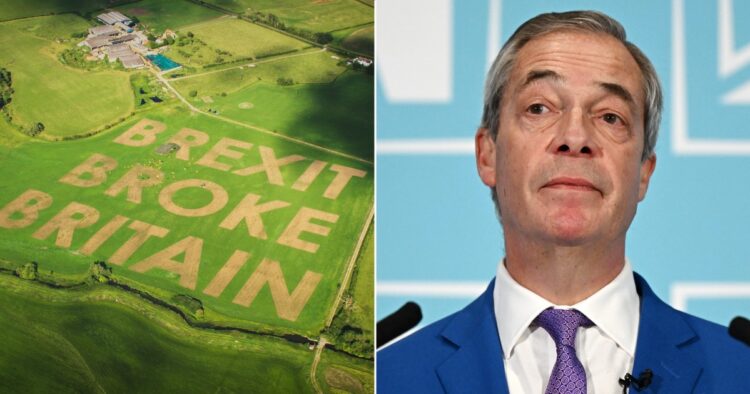
Right-wingers are up in arms at a clause in the UK-EU food and drink deal that has been dubbed a ‘Farage penalty’ by the press.
On Friday, Andy Burnham is due to sign a food and agriculture pact with the European Union in Brussels at a much-anticipated summit.
The deal will remove red tape and paperwork for British exporters to the EU and is the latest step in Labour’s efforts to reset relations with the bloc following the Conservatives’ disastrous Brexit deal.
What is the ‘Farage penalty’?
But Brexiteers have been left furious after it emerged a clause in the deal will require either side to pay compensation if they withdraw from it in the future.
This is clearly a sensible clause to protect the deal from being wrecked by any future governments – which Nigel Farage has already pledged to do.
Farage told the Times: “If Andy Burnham were to do this, it would be wholly illegitimate. He cannot bind a future British government.
“I am putting the EU on notice. If I am prime minister after the next election, I will renege on this deal.”
The right-wing press has dubbed the clause a ‘Farage penalty’, but here’s the thing: the UK has been paying a ‘Farage penalty’ for years.
The real ‘Farage penalties’
Leaving the EU has meant Brits have paid more than they otherwise would have, thanks to the disastrous economic impacts of Brexit.
Here are just some examples of where Brits have been paying ‘Farage penalties’ over the last few years…
Food prices
Since November 2020, food prices have soared by 38.6%. This included a peak of 19.1% in March 2023, the highest rate of increase in food prices since 1977. Whilst other factors such as the war in Ukraine have played a significant part here, there is no denying that Brexit was also a key factor in these historic price increases.
Energy costs
Research from Energy UK published in 2024 found that Brexit has put £370m a year on the price of power from the EU, thanks to new barriers in trade.
The research concluded that unless efforts were made to move towards closer cooperation with the EU on energy, total costs could reach £10bn by the end of the decade thanks to higher energy bills and lower Treasury revenues.
Small businesses struggling
Brits are also paying a ‘Farage penalty’ every time a business is forced to shut up shop in the UK. A study from the Centre for Economic Performance (CEP) found that as many as 20,000 British businesses had stopped exporting goods to the EU since new trading rules were introduced post-Brexit.
This disproportionately affected small businesses with fewer than 10 employees. 16,000-20,000 small businesses stopped exporting to the EU altogether after Brexit
UK economy takes huge hit
In 2023, the estimated hit to UK economic output was £188.8bn compared to where the economy would have been without Brexit. That’s £3.6bn a week, or £2835 per person.
More recently, major studies from Bloomberg and the Office for Budget Responsibility have estimated the UK is up to 4% worse off in terms of its GDP as a direct consequence of Brexit – which has left us approximately £30 billion lighter PER YEAR due to lost tax revenue.
Findings from Goldman Sachs and the US National Bureau of Economic Research are much more severe, stating that GDP is now down ‘by 6-8%’.
This is the real ‘Farage penalty’ we’ve been paying.