

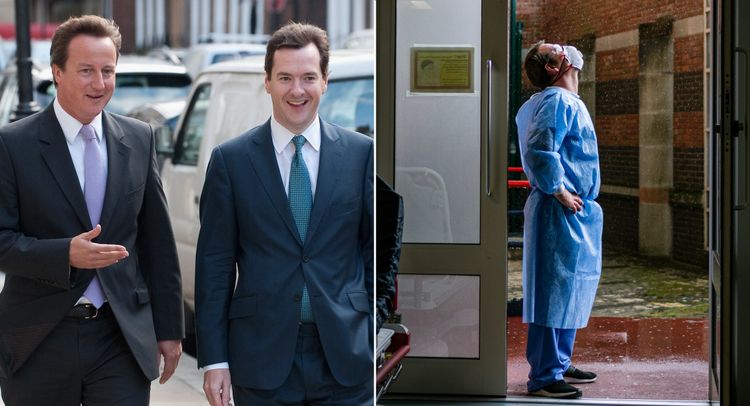
A decade of austerity under the Conservatives was a key factor in the NHS coming close to collapse during the height of the Covid pandemic.
On Thursday, the much-awaited report from the Covid-19 inquiry into the impact the pandemic had on the NHS was published.
The inquiry found that the health service was on the brink of collapse at the height of the crisis, and that this was only avoided due to the “almost superhuman efforts” of those working at the time.
“It is vital to record just how close healthcare systems came to collapse,” the report’s author, Baroness Hallett, writes.
“That collapse was only narrowly avoided because of the extraordinary efforts of all those working in the healthcare systems across the UK, who carried the burden of caring for the sick and dying in unprecedented numbers.”
One of the main findings from the inquiry was the devastating impact a decade of Tory austerity had on the NHS, making it ill-prepared to deal with the pandemic.
10 years of budgets being squeezed on a historic level by successive Conservative governments, combined with fast-rising demand because of the ageing population and an increase in people with long-term health conditions, meant the NHS was in a “precarious position” before the Covid outbreak.
Baroness Hallett wrote that healthcare systems were in a “parlous state, with severe workforce shortages, an ageing hospital estate, low numbers of hospital beds and high bed occupancy rates” before the pandemic.
“It is unsurprising therefore that the impact on the healthcare systems of the four nations was devastating,” she said.
When the pandemic did start, the NHS entered it with not enough beds and staff. The report found that the NHS struggled with the surge in Covid patients, particularly in the first wave when oxygen supplies almost ran out in places.
Throughout the pandemic, patients didn’t get the level of care required as the health service was overwhelmed. The inquiry said healthcare workers and support staff had to work under “intolerable pressure for months on end.”
Waiting times for ambulances grew for even the most severe calls and intensive care staffing ratios went from one nurse to one patient to one to four at times.