

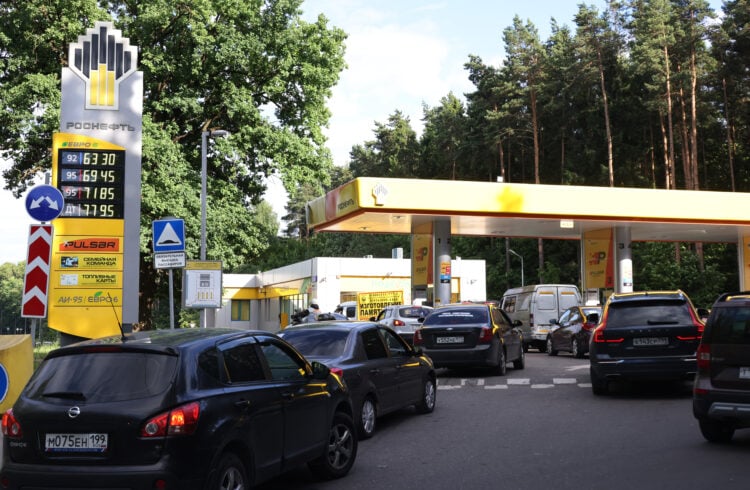
Long queues are forming at petrol stations across Russia as a growing fuel shortage exposes one of the most tangible domestic consequences of the Kremlin’s war in Ukraine.
Despite being one of the world’s largest oil producers, Russia is facing widespread petrol shortages after months of Ukrainian drone strikes targeted refineries and fuel depots. Analysts estimate the attacks have disabled around a quarter of the country’s oil refining capacity, disrupting supplies just as seasonal demand peaks.
The shortages have spread across dozens of regions, with reports of rationing, soaring prices and motorists waiting for hours to fill their tanks. Farmers have also warned that a lack of fuel is threatening this year’s harvest, adding to pressure on the Russian economy.
According to Al Jazeera, the crisis has become particularly severe in areas closer to the Ukrainian border, where restrictions on fuel sales have already been introduced. One analyst told the broadcaster that “indirect evidence indicates that Ukrainian drone attacks have disabled about a quarter of Russia’s oil refining capacity”, while seasonal demand has further intensified shortages.
Kyiv has increasingly focused on striking Russia’s energy infrastructure, arguing that oil revenues help finance Moscow’s invasion. The campaign has hit refineries hundreds of kilometres from the front line, forcing repeated shutdowns and complicating repairs.
The fuel crunch marks a rare instance where the costs of the war are being felt by ordinary Russians on a nationwide scale. While the Kremlin has sought to stabilise supplies through export restrictions and emergency measures, experts warn shortages could persist throughout the summer as repair work struggles to keep pace with continued Ukrainian attacks.