

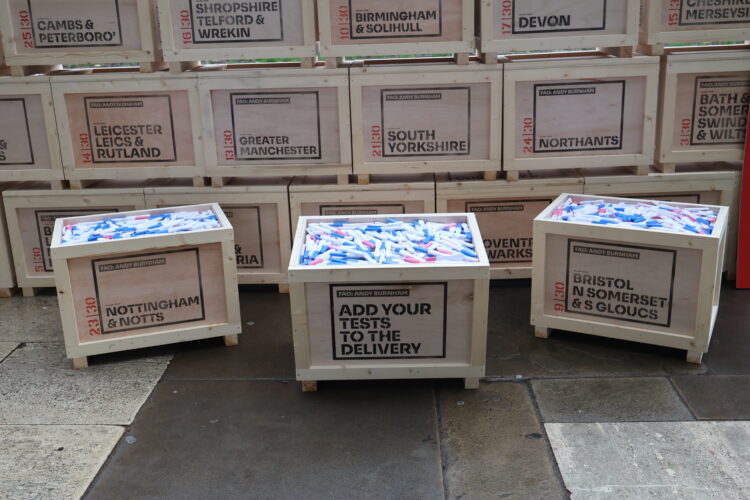
Thirty boxes of negative pregnancy tests have arrived outside Parliament this morning as fertility charity Fertility Action marks National Fertility Awareness Week with a call for urgent change to England’s IVF postcode lottery.
New research has revealed that 86 per cent of people believe it is unfair that access to NHS-funded IVF can depend on where someone lives, while 94 per cent say treatment should be provided equitably across England, regardless of postcode.
Yet despite overwhelming public support for fairer access, the research suggests many remain unaware of the scale of the inequality. Just 39 per cent knew that people can be denied NHS-funded IVF based on where they live, while only 26 per cent were aware that some areas offer less than one full funded cycle.
For people struggling to conceive, a negative pregnancy test can symbolise month after month of hope, waiting and disappointment.
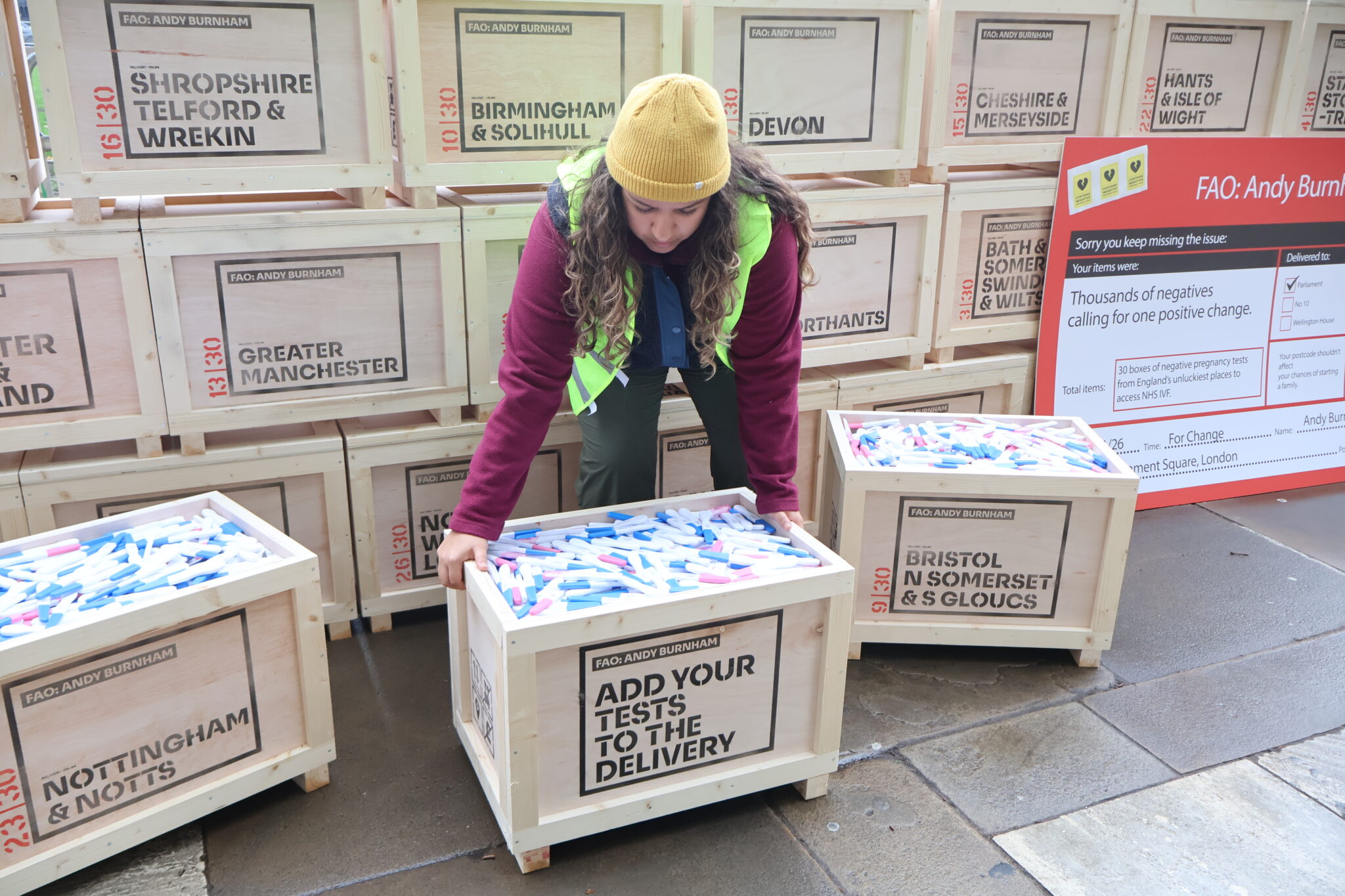
Taking the issue directly to changemakers, Fertility Action has delivered 30 boxes of ‘negative pregnancy tests’, each one representing the 30 Integrated Care Boards (ICBs) confirmed as offering eligible people just one NHS-funded IVF cycle – 19 of which offer only a partial cycle. The boxes, ‘sent’ from their respective ICBs and addressed FAO Prime Minister Andy Burnham, were accompanied by a giant missed delivery card telling the government: ‘Sorry you keep missing the issue’ along with the simple message: ‘Thousands of negatives calling for one positive change’.
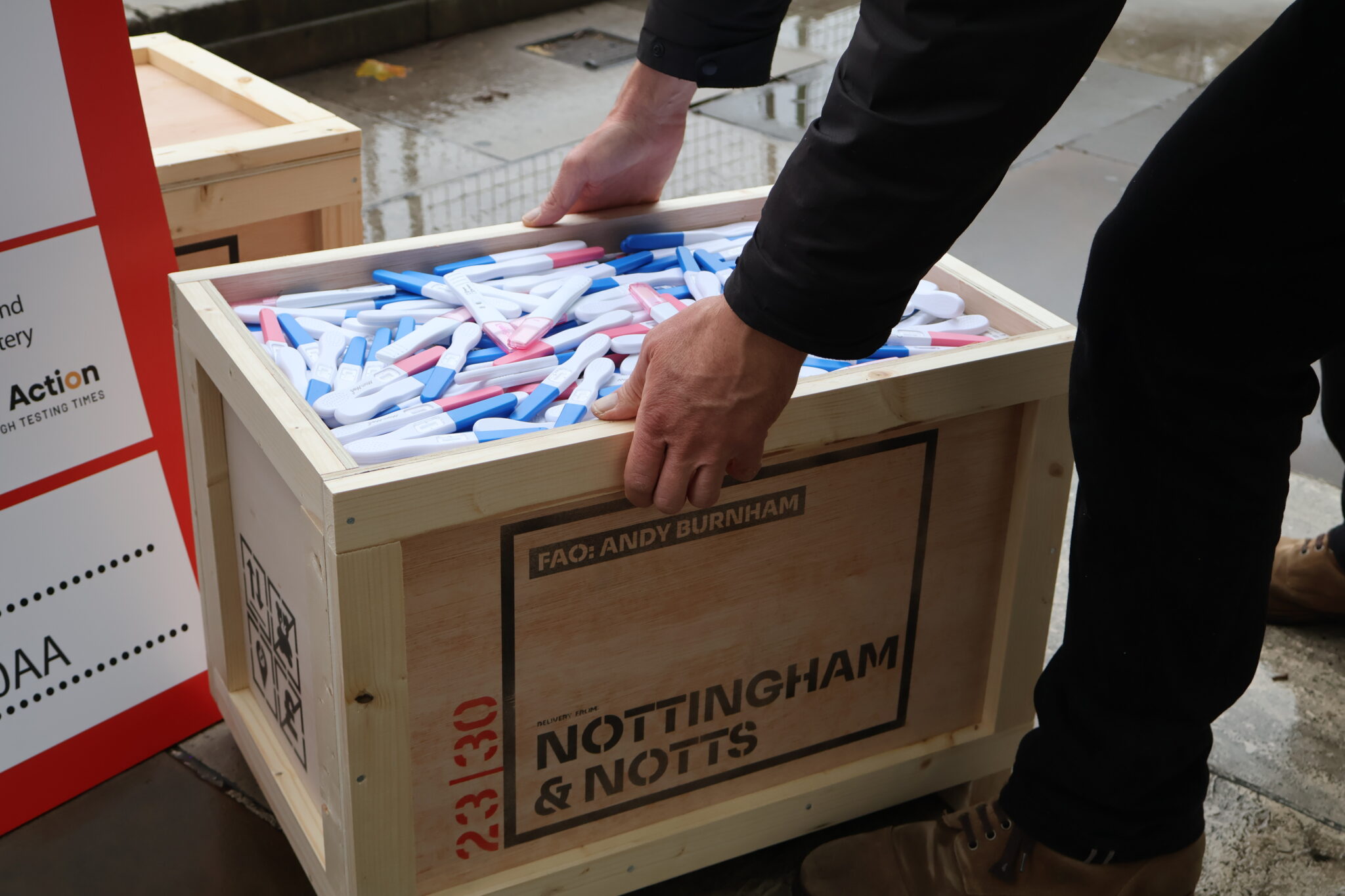
People with lived experience will also be invited to bring pregnancy tests connected to their own fertility journeys and share the stories behind them, donating them to a central collection box.
One woman, aged 38, moved from Somerset to North Bristol with her husband after being advised that relocating could make them eligible for NHS-funded IVF. After more than five years of trying to conceive, they had discovered that her husband’s child from a previous relationship meant they were ineligible for funding under their local policy.
But after uprooting their lives and moving in with her parents in early 2024, they discovered that the eligibility rules in North Bristol had changed, leaving them unable to access treatment there too.
“We moved our entire lives up to Bristol because we thought it would give us the chance to access IVF through the NHS. It hadn’t even occurred to us to check again because we’d been told that moving could make the difference,” she said.
“To then find out we’d done it for nothing was heartbreaking. My husband has been allowed the chance to be a dad, but I haven’t been allowed the chance to experience being a mum.
“I’m a police officer and I don’t earn enough to keep going private.”
Her experience is far from isolated. Of the 502 adults surveyed, 68 said they or their partner had tried to access NHS-funded IVF. Of those, 60 per cent believed where they lived had affected the treatment available to them, while just 32 per cent received the NHS-funded treatment they were seeking.
More than a third (37 per cent) said they had used savings, 29 per cent had paid for private fertility treatment in the UK and 13 per cent had stopped treatment altogether.
For Anna Rackley, 44, from Worthing, West Sussex, the postcode lottery has meant receiving no NHS-funded IVF at all.
Anna and her husband began seeking help through the NHS in 2023, when she was 42. Although she was within the age limit for NHS-funded IVF in her area, her low AMH level meant she was not eligible for treatment.
“It’s the unfairness of it”
She said: “It’s the unfairness of it. You can live 20 minutes away from someone and be offered something completely different. I know someone with a similar AMH level to me who received two NHS-funded rounds, while we were denied any help at all.”
Anna and her husband went on to pursue IVF privately. Their first round produced no embryos suitable for transfer, the second did not result in pregnancy and the third resulted in a pregnancy, which sadly ended in a second-trimester loss on New Year’s Eve last year.
They are still undergoing treatment and have now spent around £80,000, depleting their savings. Anna has taken on additional A&E shifts alongside teaching student nurses, at times working 70-hour weeks, to help fund treatment.
She said: “I just wish we’d been given honest information at the beginning. At no point did anyone explain that we might not be eligible or talk us through the criteria. If we’d known, we could have gone straight to a private consultation and saved seven or eight months that, at my age, could have made all the difference.
“I’m a nurse and I work in the NHS, so it was particularly hard to feel that the system I work for wasn’t there for us. And if someone working within the system didn’t know this, how are other people supposed to?”
Taking on debt
For Tash, 32, from Hampton, London, the postcode lottery has left her and her husband facing the prospect of mounting debt to fund the fertility treatment they need.
After initially being told they were likely to qualify for NHS-funded IVF because of her husband’s sperm quality, the couple discovered in April 2026 that her AMH level meant they were ineligible under their local funding policy.
They were then told by a consultant that moving to Surrey could potentially make them eligible, as different criteria applied there.
“What made it even harder was when the consultant asked if we had plans of moving house soon, because if we lived in Surrey, apparently AMH levels aren’t part of the eligibility criteria for funding. How unfair is that? We weren’t planning on moving,” she said.
“We’re fortunate that private IVF is even an option we can consider, but it means taking on debt. We’re starting treatment with interest-free credit cards at the ready, knowing we may ultimately have to remortgage or downsize our home. We feel incredibly let down by the IVF postcode lottery.”
IVF postcode lottery
Katie Rollings, Founder and CEO of Fertility Action, said:
“Where you live shouldn’t determine whether you have a fair chance to build a family. Yet across England, people are being denied access to the fertility treatment they desperately need simply because of their postcode.
“Behind every negative pregnancy test is someone terrified to face another month of testing, waiting and wondering whether they will ever get the chance to have the family they so desperately want. That uncertainty is made even harder by a system that can offer three funded cycles of IVF in one part of the country and just one somewhere else.
“With fertility challenges affecting around one in six people, both the physical and psychological impact is huge. That’s why thousands of negatives are calling for one positive change. Today, we’re sending 30 boxes from 30 ICBs that offer just one NHS-funded IVF cycle to Parliament, alongside real tests and stories from people whose lives have been shaped by fertility challenges.
“The message has been delivered. Now it’s time for the Government to deliver change. Nobody should have to move house, take on crippling debt or give up on their dream of having a family because of where they live. We’re calling on MPs to help end this postcode lottery and ensure NHS-funded fertility treatment follows NICE guidance, giving eligible people fair and equitable access, whatever their pathway and wherever they live.”
The activation forms part of Fertility Action’s With You Through Testing Times campaign for National Fertility Awareness Week, shining a light on the hidden realities of fertility journeys and connecting people experiencing fertility challenges with support.