

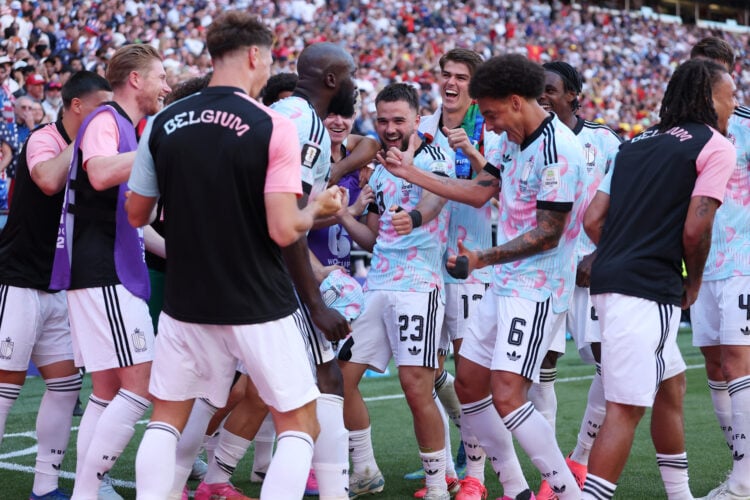
Belgium’s players appeared to revel in more than just their place in the World Cup quarter-finals after knocking the United States out of the tournament, celebrating with what many interpreted as a mocking imitation of Donald Trump’s now-familiar dance moves.
The Red Devils ran out emphatic 4-1 winners over the hosts before several players gathered on the pitch to perform the president’s trademark swaying dance, complete with clenched fists and exaggerated arm movements. The celebration quickly went viral online, with many seeing it as a pointed dig at Trump following days of extraordinary political interference in the tournament.
It capped one of the strangest build-ups to a World Cup knockout tie in recent memory.
The match had already become engulfed in controversy after FIFA sensationally overturned the automatic suspension handed to US striker Folarin Balogun following his red card against Bosnia and Herzegovina. The unprecedented decision came after Trump publicly revealed he had personally urged FIFA president Gianni Infantino to review the dismissal, prompting accusations that politics had been allowed to influence football’s disciplinary process.
The London Economic has followed the saga from the outset, reporting on the backlash to the decision and the wider concerns that FIFA’s intervention risked undermining confidence in the game’s disciplinary system.
Belgium certainly appeared to use the controversy as motivation.
After racing into a commanding lead before eventually winning 4-1, the players’ post-match celebration suggested they felt they had delivered the most emphatic response possible. Belgian media and supporters also embraced the symbolism, with the team’s official social media channels posting the message: “Overturn this” — another apparent swipe at the decision to reinstate Balogun.
Whether the dance was intended as a direct political statement or simply a tongue-in-cheek joke at Trump’s expense, it ensured the fallout from FIFA’s most controversial disciplinary decision in years will continue well beyond the final whistle.
Belgium now march into the quarter-finals with momentum firmly on their side. The United States, meanwhile, are left to reflect on a campaign that became as much about presidential phone calls and refereeing decisions as football itself.