

Metal has moved well beyond its industrial roots. Architects across the UK are using it as a headline material rather than something hidden behind render or brick, and the results are shaping streetscapes from city centres to rural developments.
Perforated Image Sunscreens
Perhaps the most striking development of recent years is the perforated image facade, sometimes called picture perf. Varying the size and spacing of holes across a metal sheet allows an image to emerge from the panel itself, whether a historic photograph, a landscape or a piece of commissioned artwork. The technique turns a practical sunscreen into public art.
The appeal for architects is that these panels work twice as hard. During the day they cut solar gain and glare, reducing the load on cooling systems, while at night interior lighting glows through the perforations and reverses the effect. Car parks, leisure centres and office buildings across the UK have adopted the approach, often using it to reference local heritage in a way that planners respond to warmly.
Weathered Corten Steel
Corten steel has shifted from niche to mainstream. The material develops a stable rust-coloured patina that protects the steel beneath, so the surface that looks weathered is actually doing the work of a protective coating. No painting, no cladding maintenance schedule, and a finish that deepens in character over time.
Designers value the way corten sits against natural landscapes, which explains its popularity in visitor centres, rural housing and public sculpture. Combined with perforation or laser cutting, it produces facades and screens with real depth, particularly when backlit.
Woven Wire in Interiors
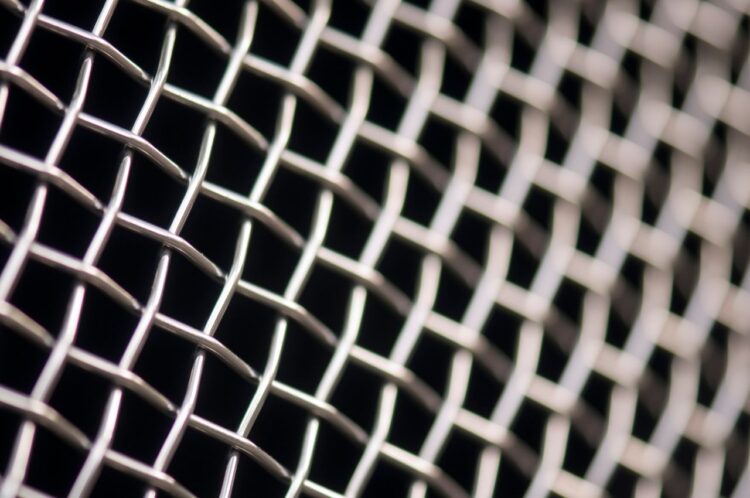
Woven wire mesh has stepped indoors. Once reserved for filtration and screening in heavy industry, woven wire now appears in stair balustrades, partition walls, ceiling features and shopfronts across commercial and hospitality projects. The weave gives interiors texture and movement that flat panels cannot match, and the open structure preserves light and sightlines in spaces that solid partitions would close down.
Material choice does much of the aesthetic heavy lifting here. Stainless steel suits clean contemporary schemes, while brass, bronze and copper weaves bring warmth to restaurants, hotels and residential lobbies. Because the mesh is manufactured to order, architects can specify the weave pattern, aperture and finish to suit each scheme rather than working around stock products.
Security Designed In Rather Than Bolted On
Clients increasingly expect buildings to be secure without looking fortified. That demand has pushed high-strength mesh systems into the architectural conversation, with products such as wirewall specified for perimeters, plant enclosures, secure storage and public buildings where protection needs to sit quietly within the design. Fine apertures resist climbing and cutting, yet the panels read as architectural screening rather than fencing.
The trend reflects a wider shift in how security is procured. Rather than adding barriers after completion, project teams are writing physical protection into the design stage, where mesh can be colour-matched, integrated into cladding lines and detailed to disappear into the overall composition. Schools, substations, transport hubs and commercial campuses have all benefited from the approach.
Metal Rainscreen Cladding
Rainscreen systems continue to grow across UK commercial and residential projects, and metal has become the facing material of choice for many of them. A ventilated cavity behind the outer panel manages moisture and improves thermal performance, while the metal face offers a service life measured in decades. In a market still working through the legacy of combustible cladding, the non-combustible credentials of solid metal panels carry real weight with developers, insurers and building control.
Perforated rainscreen panels push the idea further, adding pattern, ventilation and solar shading to the weather layer. Aluminium and steel dominate on cost grounds, though copper and corten appear on projects where budget allows the facade to age visibly and gracefully.
Where the Trends Point Next
The common thread running through all five trends is that metal is no longer asked to do one job. A single panel might provide shading, security, ventilation and identity at the same time, which is precisely why architects keep returning to it. As manufacturing tolerances tighten and finishes multiply, expect UK buildings to wear their metalwork more proudly still.