

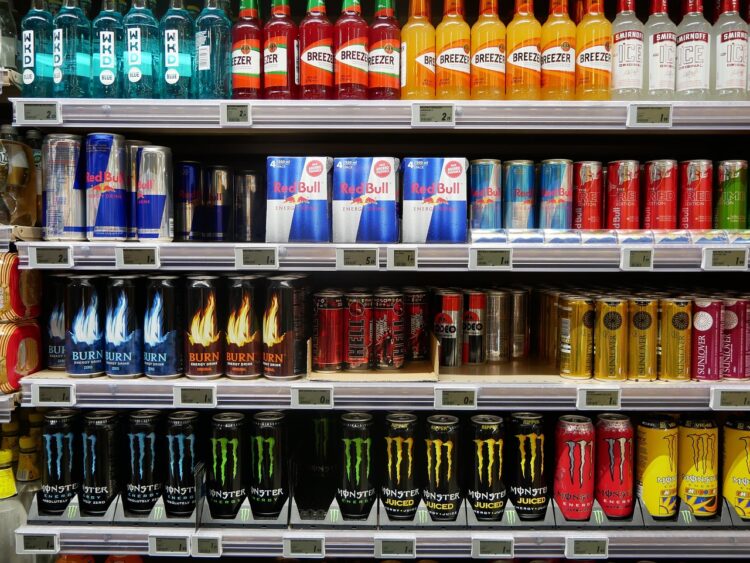
But while caffeine is firmly in the government’s sights, there’s another ingredient in the drinks aisle that deserves attention. And it isn’t necessarily sugar.
What’s Changing and Why?
In July 2026, the government confirmed plans to stop retailers in England selling high-caffeine energy drinks to children under 16, with the restrictions expected to take effect in April 2027, subject to parliamentary approval.
The rules will cover drinks containing more than 150 milligrams of caffeine per litre, including many well-known energy drinks. Shops, cafés, online retailers and vending machines will be affected.
Tea, coffee and lower-caffeine soft drinks won’t be covered by the restrictions.
According to the Department of Health and Social Care, an estimated 100,000 children in England consume high-caffeine energy drinks every day.
The government’s concerns go well beyond an occasional restless night. Research has linked regular consumption to poor sleep, anxiety, reduced concentration and other potential problems affecting children’s health and education.
The government’s consultation also revealed concerns from parts of the drinks industry about whether the restrictions are proportionate and how they might affect businesses. Ministers nevertheless decided that a consistent national approach was justified.
The policy draws a clear line around caffeine. From a dental perspective, however, the ingredients left outside that line are worth examining.
The Problem That Doesn’t Disappear With the Sugar
Most people understand that sugary drinks aren’t particularly good for teeth. Sugar feeds the bacteria responsible for producing acids that cause tooth decay.
What tends to get less attention is that some drinks are acidic before they even reach the mouth.
Energy drinks, sports drinks and many fizzy soft drinks contain acids that can gradually wear away tooth enamel. Unlike tooth decay, which involves bacteria, dental erosion occurs when acid directly affects the tooth’s protective surface.
And once enamel has been lost, the body cannot simply grow it back.
Dr Shabnam Zai, Clinical Director at West House Dental in North West London, explains:
“The restrictions on high-caffeine drinks are a positive step for children’s health, but it’s important not to overlook the effect acidic drinks can have on developing teeth. Parents often associate sugar with dental problems, yet sugar-free drinks can still contribute to enamel erosion. The frequency of consumption matters just as much as what’s written on the label.”
The distinction is supported by research. A 2026 systematic review of energy and sports drinks found evidence suggesting a possible association between frequent energy-drink consumption and dental erosion, although the researchers cautioned that much of the available evidence was limited or of low quality. A separate review published in May 2026 found a significant association between carbonated-drink consumption and dental erosion in adolescents.
Neither finding means every occasional fizzy drink will damage someone’s teeth. The risks depend on factors including acidity, frequency of consumption and individual circumstances.
A Familiar Debate About Children’s Drinks
This isn’t the first time the government has tried to change what children drink.
The Soft Drinks Industry Levy, introduced in 2018 and widely known as the sugar tax, was designed to encourage manufacturers to reduce the sugar content of their products.
As The London Economic reported at the time, an earlier initiative introducing higher prices for sugary drinks at leisure centres in Sheffield had produced a substantial fall in sales, particularly among products marketed to children.
The energy-drink restrictions take a different approach. Instead of encouraging reformulation through taxation, they will prevent retailers from selling drinks above a specified caffeine threshold to younger customers.
Both policies tackle identifiable public-health concerns, but neither is designed to regulate the full range of acidic drinks.
A teenager who can no longer buy a high-caffeine energy drink could still choose a lower-caffeine fizzy drink, an acidic sports drink or a sugar-free alternative. Depending on what they choose, some of the dental-health concerns may remain.
That doesn’t make the new legislation pointless. Its primary purpose is to reduce children’s exposure to high levels of caffeine, not to eliminate every dietary risk to their teeth.
But it raises an interesting question about what happens when one potentially harmful product is replaced with another.