

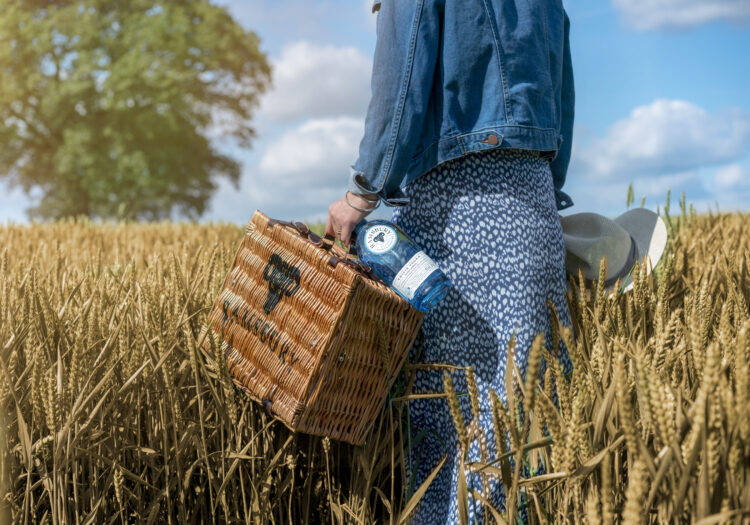
The idea of terroir is readily understood in wine. A bottle belongs to somewhere: a vineyard, a slope, a particular patch of soil. Spirits have traditionally been rather less forthcoming. Grain may come from one place, water from another, distillation happen somewhere else entirely and bottling somewhere else again.
At Ramsbury Estate, they do things differently.
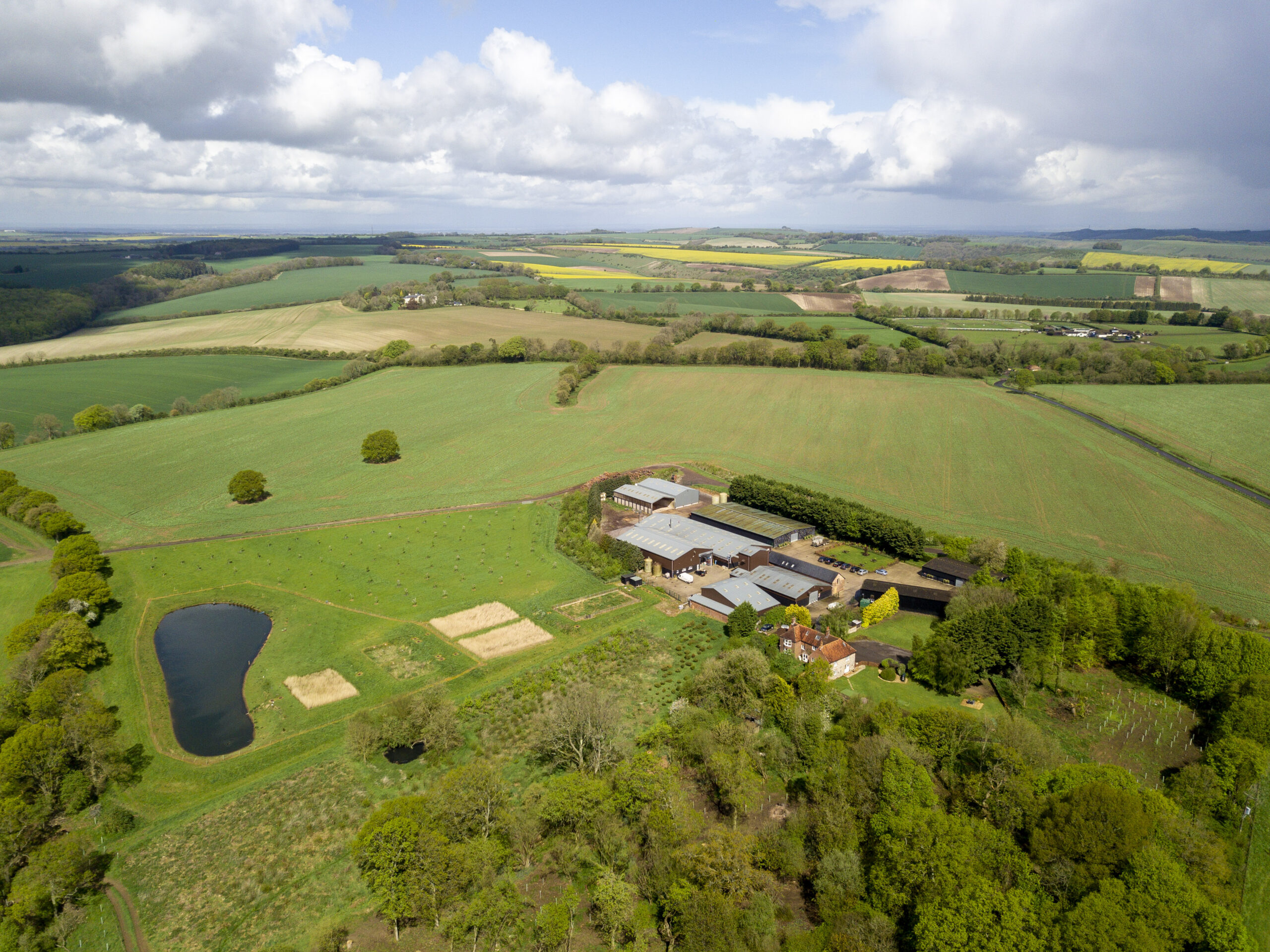
Spread across 19,000 acres of Wiltshire, Berkshire and Hampshire, Ramsbury is an agricultural estate first and a drinks producer second. That distinction matters. The winter wheat used to make its vodka and gin is grown on the estate, harvested and milled there, before being fermented, distilled and eventually bottled without leaving Ramsbury’s orbit.
It is what the estate calls its “field-to-glass” philosophy. And unusually, the phrase is more literal than marketing might suggest.
Each bottle can be traced back to the field in which its wheat was grown. For an industry increasingly fond of talking about provenance, it is an impressive degree of specificity.
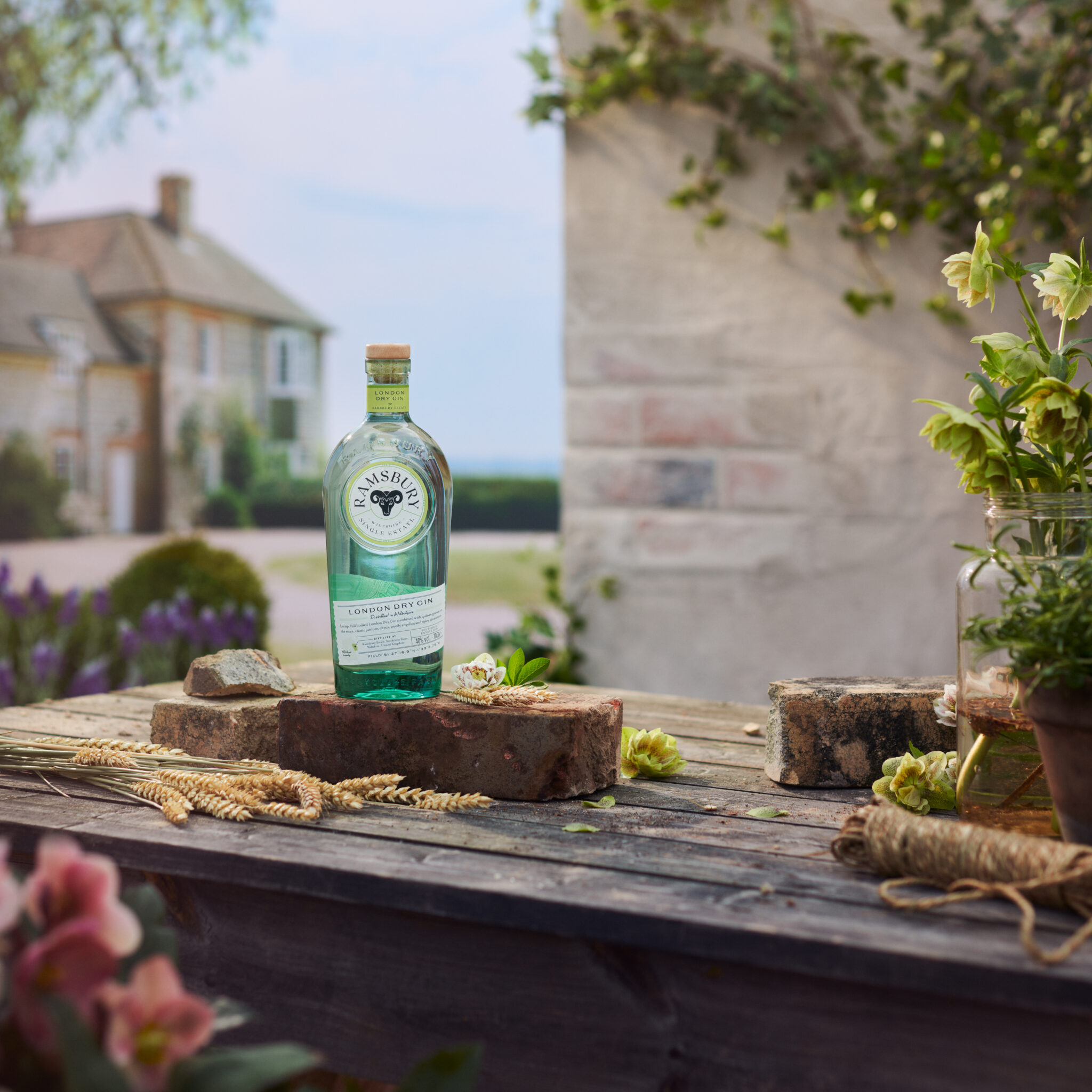
Ramsbury Estate was established in its present form in 1997, while brewing began in 2004 and its distillery followed a decade later. Today, the latter uses estate-grown wheat and water drawn from the local chalk aquifer to produce vodka, which in turn becomes the foundation for its gin.
The wheat is important. Ramsbury uses Horatio, a baker’s wheat rather than simply choosing grain for maximum agricultural yield. Once fermented, the resulting wash is distilled through a 43-plate copper column still to create the clean, characterful base spirit upon which the gin is built.
For the London Dry, that spirit is redistilled with 14 botanicals. Juniper is inevitably prominent, joined by coriander, angelica, cardamom, cinnamon, citrus and bitter almond. More distinctive is quince, grown within the grounds of the distillery.
This control over the raw materials makes Ramsbury interesting. Plenty of distilleries can tell you where they are located; rather fewer can point from the still to the field outside and explain that the spirit effectively began there.
Provenance with a purpose
That relationship between farming and distilling also gives Ramsbury’s sustainability programme rather more substance than simply reducing the weight of a bottle or changing its packaging.
The estate works on a closed-loop principle. Spent grain left behind by brewing and distilling is fed to its cattle. Manure from those cattle returns nutrients to the fields. Wastewater is treated through reed beds before being returned safely to the environment, while timber from the estate’s managed woodland supplies biomass boilers used to generate heat and steam.
There are also 268 solar panels on site, while the core London Dry Gin and Estate Vodka packaging is plastic-free from bottle to closure.
According to Ramsbury, its sustainability measures have reduced CO₂ emissions by 70,922kg, which it calculates as equivalent to planting more than 4,290 trees.
There is something pleasingly agricultural about the whole arrangement. Waste from one process becomes a resource for another, with the distillery operating as part of the farm rather than as an industrial operation simply occupying space upon it.
“We’ve learned that people care most when sustainability is something they can taste, touch or walk across,” says Nik Fordham, Ramsbury’s Master Distiller and General Manager.
His point is a useful one. Sustainability in food and drink can quickly become a language of certifications, percentages and carbon calculations. At Ramsbury it is easier to understand in physical terms: the wheat field, the cattle eating spent grain, the woodland heating the still and the quince growing a short distance from where it will eventually be distilled.
The approach hasn’t prevented the spirits themselves from gaining attention. Ramsbury London Dry Gin was named Gin of the Year at the 2025 London Spirits Competition, while the estate’s vodka was named Vodka of the Year at the same competition in 2024. The Raspberry & Wildflower Honey Gin, using raspberry juice and honey sourced from the estate, received silver at the London Spirits Competition in 2025.
More recently, the London Dry picked up a Great Taste star in 2026.
But awards only tell part of the story. What makes Ramsbury compelling is the unusually short distance between agriculture and finished drink. Its spirits aren’t merely distilled in the countryside; they are products of the estate around them.
And in a category where provenance can sometimes amount to little more than an attractive landscape on a label, being able to identify the field where your gin began feels refreshingly tangible.
Tasting notes
Ramsbury London Dry Gin, 40% ABV
Juniper arrives first, but this isn’t an aggressively pine-heavy London Dry. There is bright citrus and a gently floral quality on the nose, followed by angelica and warmer spice. The quince gives the palate a distinctive rounded fruitiness without pushing things towards sweetness, while cinnamon and bitter almond provide depth underneath. Richer and silkier than might be expected, with a clean, lingering finish. Particularly good in a straightforward G&T, where the quince has space to make itself known.