

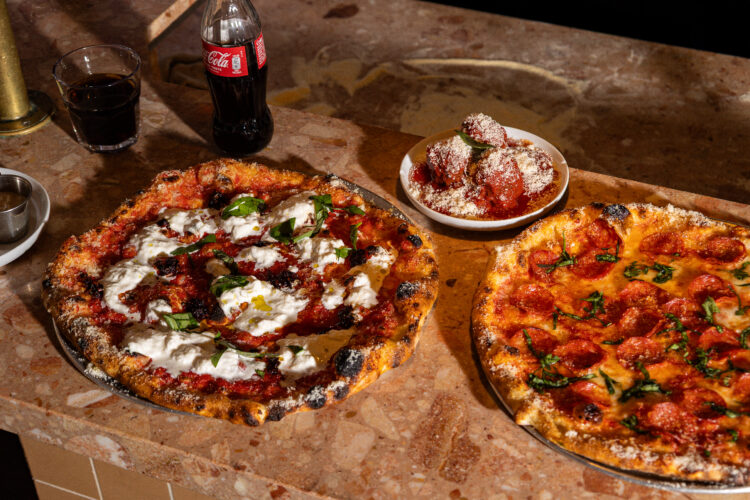
After a decade dominated by the soft, blistered Neapolitan school, London’s pizza makers are looking west. Thin bases, rigid slices and a distinctly New York attitude are becoming the capital’s new obsession – and one Peckham pizzeria is already betting on the style having legs.
For years, the highest compliment one could pay a pizza in London was that it tasted as though it had been made somewhere else.
Preferably Naples. The capital’s great pizza awakening was built around the Neapolitan model: fermented dough, blistered cornicione, restrained toppings and a centre soft enough to demand knife and fork, at least initially. London became remarkably good at it. So good, in fact, that the orthodoxy eventually became ripe for rebellion.
Now the pendulum is swinging towards crunch.
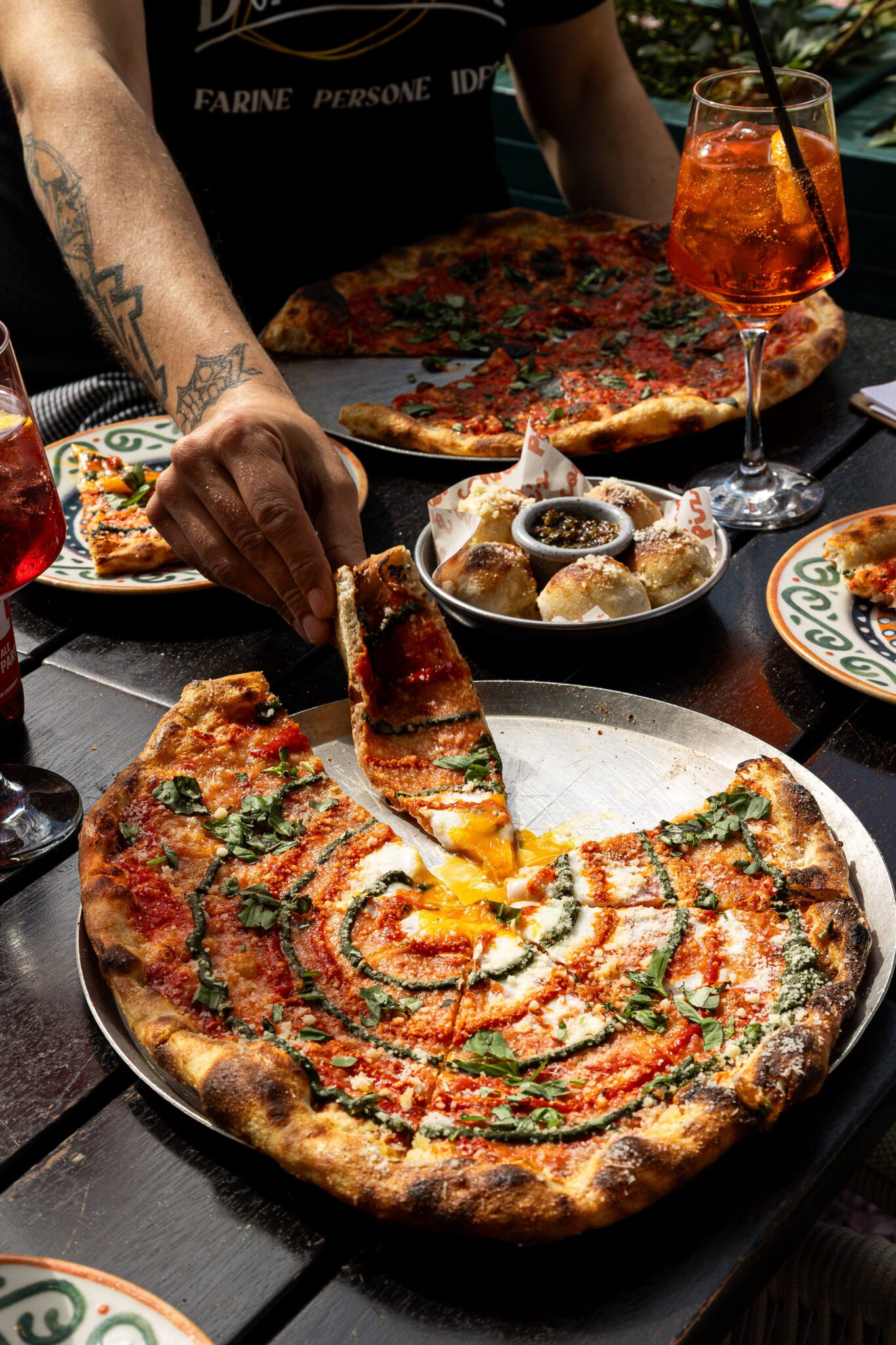
Across the city, a new generation of pizzerias has embraced the architecture of New York pizza: thinner dough, longer bakes, firmer bases and slices capable of supporting their own weight. The terminology remains pleasingly confused. Some call it New York-style; others prefer East Coast, crispy, or, increasingly, “London-style”. What unites them is a rejection of floppiness.
The change is difficult to miss. Crisp Pizza W6 in Hammersmith became an unlikely object of pilgrimage, with diners queueing and competing for limited dough allocations. Alley Cats brought enormous, crackling 14-inch pies to Marylebone before expanding across west London. Carmela’s arrived in Islington with crisp, foldable pizzas and vodka sauce, while its new Covent Garden offshoot Carmy’s has reduced the proposition to its most New York expression: slices, a counter and very little ceremony. Short Road Pizza, meanwhile, describes its own cooking as a meeting of Roman crispness and New York flair.
This is not quite New York pizza as a New Yorker would understand it. And that may be precisely the point.
The New York slice was never conceived as luxury food. Its virtues are structural and democratic. A good slice should be thin enough to fold, crisp enough not to collapse and substantial enough to eat while walking down the street. Sauce, cheese and dough exist in equilibrium rather than as a showcase for any one ingredient. It is food designed around the rhythms of a city.
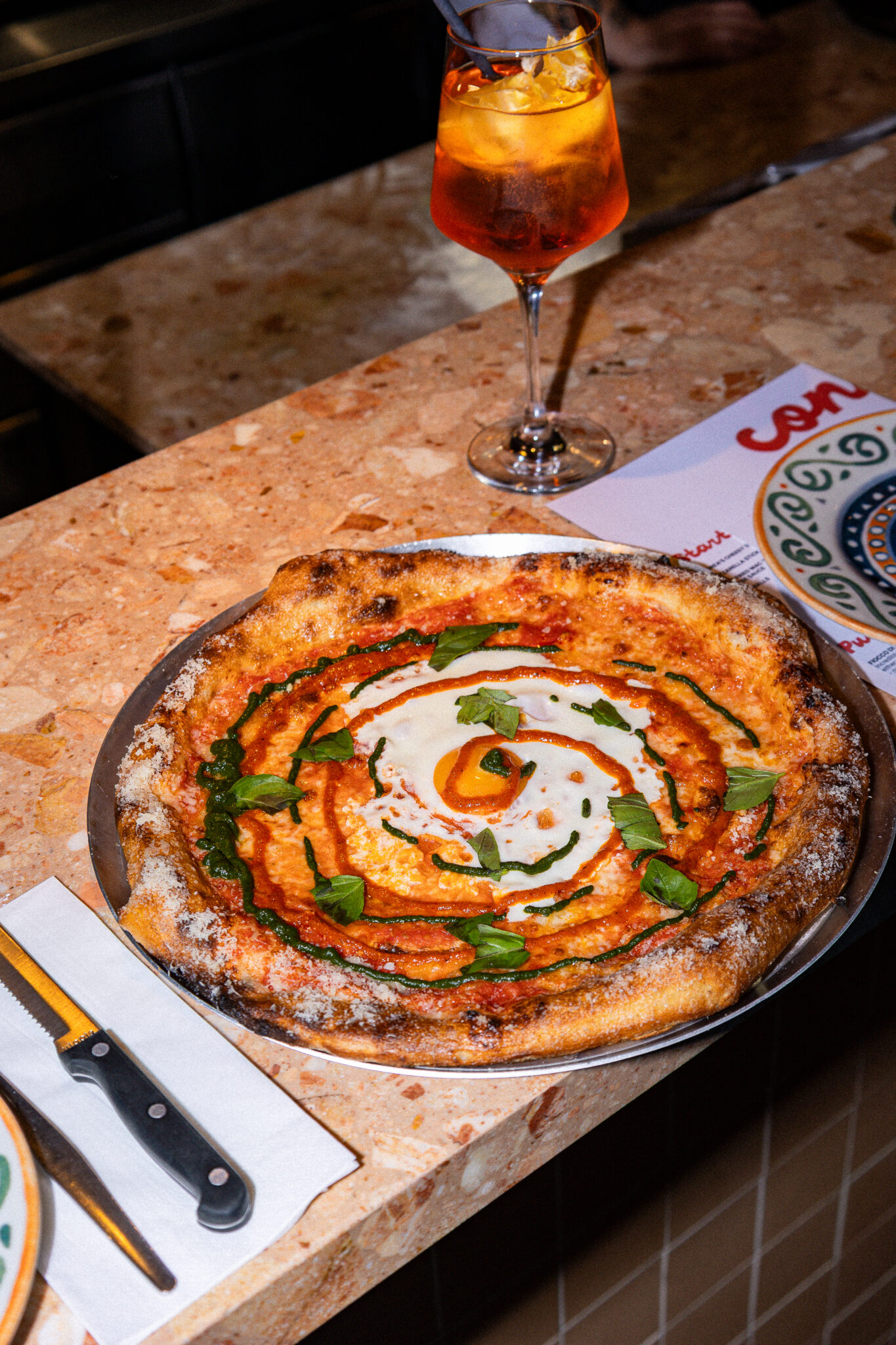
London has taken those principles and, inevitably, made them more restaurant-like. The flour is discussed. Fermentation times are advertised. Stracciatella appears. Hot honey flows. What was once an inexpensive neighbourhood staple on the other side of the Atlantic has become, here, an object of almost oenological scrutiny.
Even the New York references are becoming less literal. When GQ sent a New Yorker to investigate London’s burgeoning crispy-pizza scene in 2024, the conclusion was that restaurants such as Alley Cats were less interested in perfect facsimile than in borrowing New York’s sensibility. Italian ingredients, London dining culture and American technique were already beginning to blur together.
Which brings us to Connie’s.
The Peckham pizzeria opened at the beginning of this year from Naples-born pizzaiolo Andrea Asciuti, already known for the considerably more orthodox 081 Pizzeria. The distinction matters. Asciuti has not abandoned Neapolitan pizza; he has effectively created a separate restaurant in order to escape its rules.
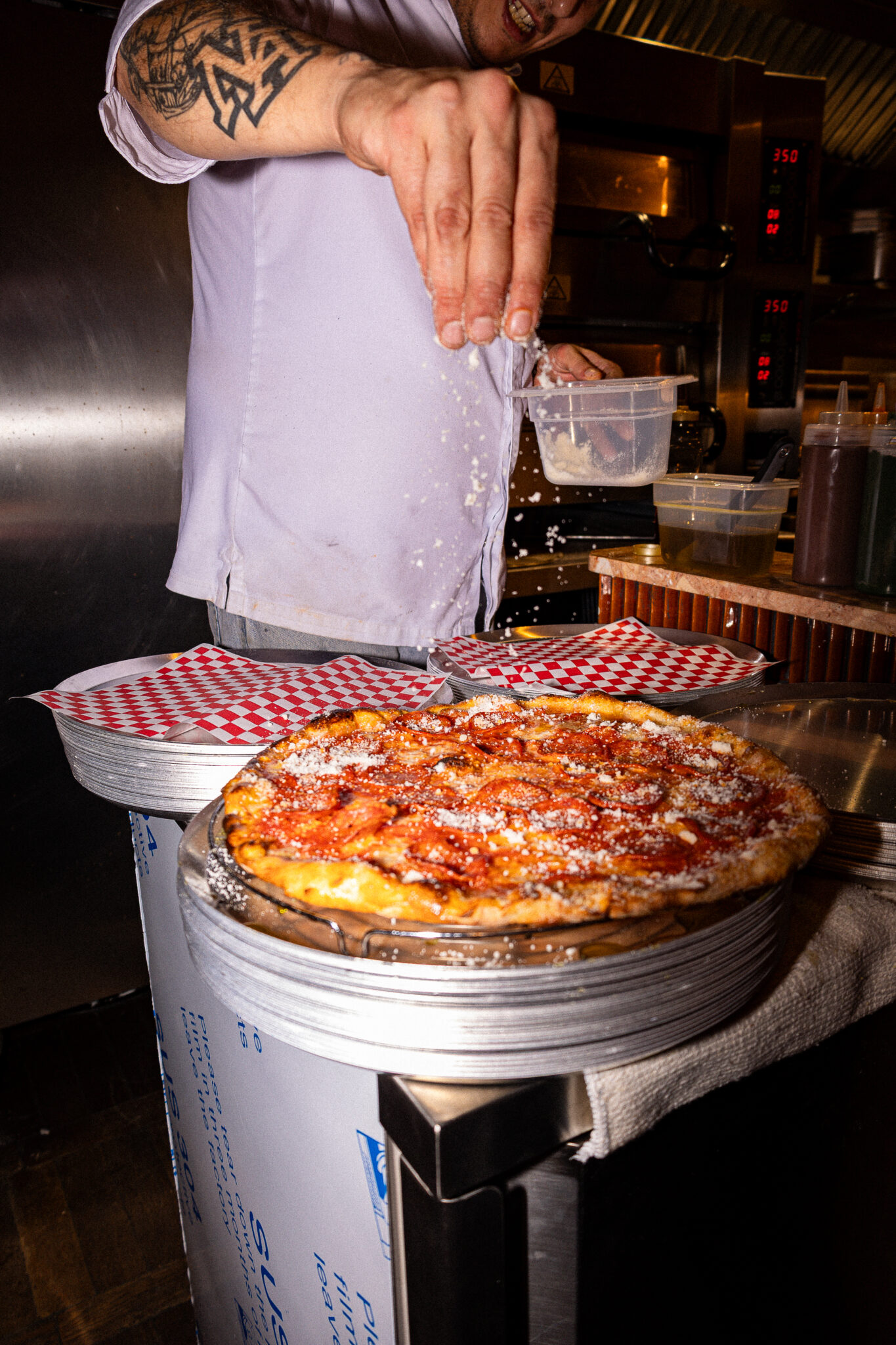
At Connie’s, the dough is high-hydration and fermented for 36 to 48 hours, but is baked at around 370°C – lower and longer than the furious heat associated with Neapolitan pizza – using American flour. The intended result is explicitly “non-floppy”: airy inside, but crisp enough underneath to retain its structure. Italian tomatoes and cheese form the foundation, while British and seasonal ingredients pull the pizzas away from simple New York cosplay.
Asciuti calls the result “Bri-talian”. There is an obvious marketing neatness to the phrase, but behind it lies a more interesting question about where pizza in Britain goes once authenticity ceases to be its principal ambition.
Connie’s menu contains the now-familiar markers of the new transatlantic pizzeria – vodka sauce, double pepperoni and honey, ’nduja and stracciatella – but its technique comes from a pizzaiolo steeped in Naples rather than Brooklyn. When the restaurant opened, Asciuti described the pizza as a meeting of “Italian technique, British flavour” and New York structure, arguing that crispness requires as much technical control as the softer styles that preceded it.
There is some evidence the argument has travelled. Connie’s has since been ranked 48th in 50 Top Pizza’s European list and received its “One to Watch” award; less than a year after opening its first 53-cover restaurant beneath the railway arches at Queen’s Road Peckham, the business is opening a second, considerably larger site in Brighton. The new restaurant occupies a former Gourmet Burger Kitchen and has space for around 130 covers.
The geography is less significant than the confidence behind it. A 15-year lease on a second restaurant suggests crispy pizza is being treated not simply as a London food-fashion moment, but as a proposition capable of travelling.
It is hardly alone. Alley Cats, which began in Marylebone, now lists restaurants in Chelsea, Westbourne Grove and Portobello Road as well as its original site. Carmela’s has already produced a dedicated slice-shop sibling. What started as an alternative to London’s sea of leopard-spotted Neapolitan crusts is beginning to look like a category in its own right.
Perhaps that should not be surprising. London’s restaurant culture has always been at its most interesting when it stops worrying about perfect reproduction. The city learnt the rules of Neapolitan pizza with extraordinary seriousness; the current generation seems more interested in what happens when those rules are loosened.
New York provides a useful permission structure. Its pizza culture is Italian without being Italian, traditional without being especially doctrinaire. The slice has spent more than a century being adapted to the demands of another city.
London is now doing much the same thing.
Whether “London-style pizza” ever becomes a meaningful designation remains to be seen. Food trends have a habit of acquiring grand theories shortly before everybody moves on to something else. But the appetite for thinner, crisper, structurally sound pizza is no longer confined to a queue outside a pub in Hammersmith.
Connie’s expansion is another small indication that the crunch may be here to stay.