

By Zhang Pu
There is nothing particularly new or unusual about telling love stories between people of different ethnic backgrounds. Yet a contemporary love story between a Han Chinese and a Tibetan — one that fully captures the joys and sorrows, the obstacles and triumphs — remains vanishingly rare. The fast-shifting tides of history have rendered such a subject almost untouchable in China.
I was fully aware of the risks. My latest novel, A Tibetan Girl Called Ata, was banned in China and caused a stir in the UK, where I live. In 2017, at a gathering of overseas Chinese in London, a consul in charge of overseas Chinese affairs demanded that those present sever ties with me, despite many of them being British citizens or other foreign nationals.
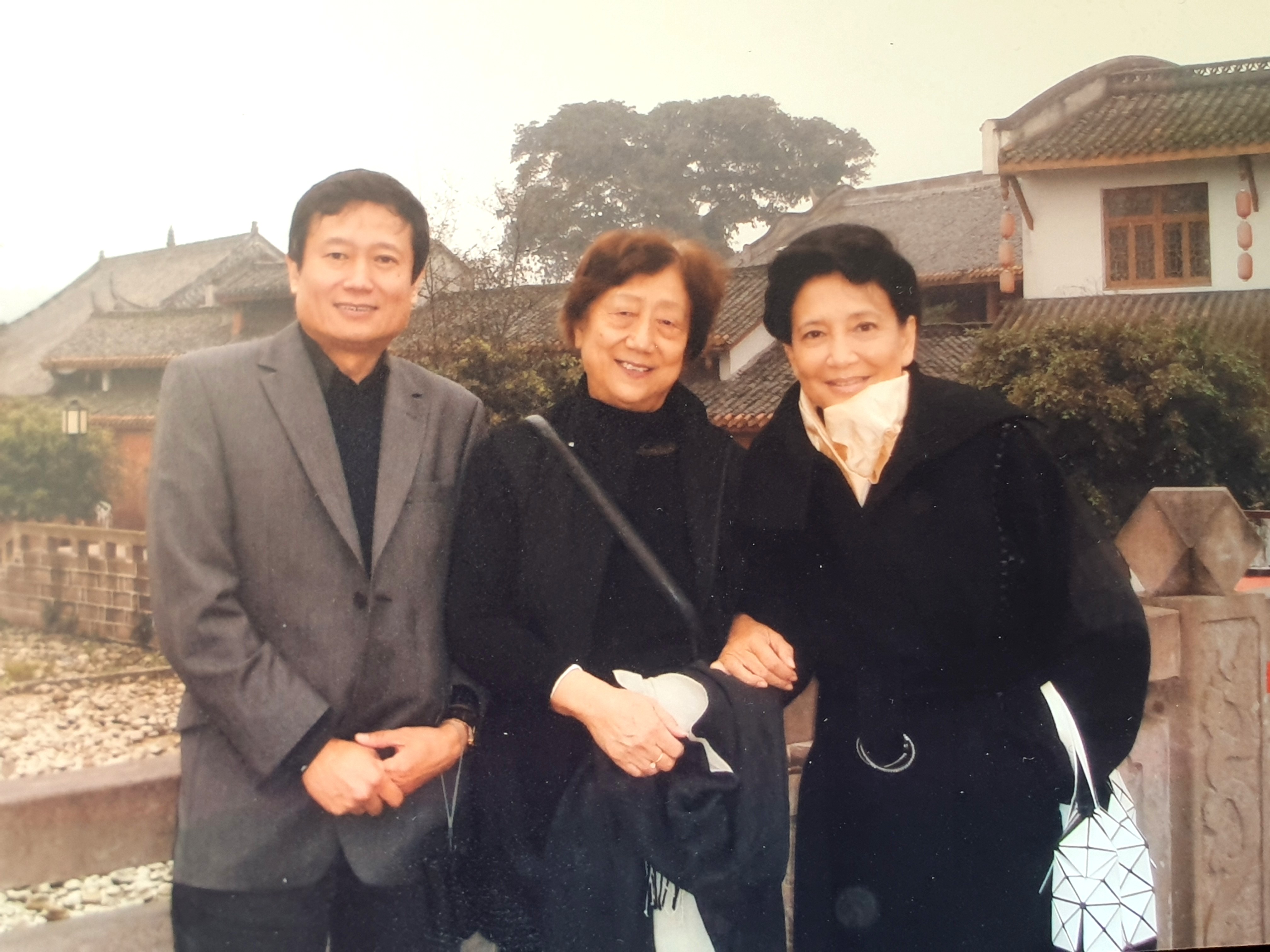
My sister Jung Chang included this episode of mine in her newly published book Fly, Wild Swans. She is very fond of A Tibetan Girl Called Ata, and when she heard that the English language edition was about to be released in the UK, she gladly wrote a few lines for it, which I placed at the front of the book.
From a young age, Jung Chang loved reading and writing classical Chinese poetry. I followed her example and tried my hand at it as well, thinking my work was quite good, though it led to quite a few amusing moments. Perhaps this is how my interest in writing was first nurtured.
During the turbulent and violent years of the Cultural Revolution, our parents were imprisoned. Jung Chang took great care of me, and we supported each other through those difficult times. Living in London has only deepened the bond between us; we meet almost every week.
After the publication of Wild Swans, I translated the book into Chinese, and it was released in Hong Kong and Taiwan. While Jung Chang was writing Mao: The Unknown Story, I often discussed the work with her. In the book’s preface, she wrote: “Without my younger brother, this book would have been much less impressive.”
Unlike her, I prefer writing novels and have published three tragic romance novels. A Tibetan Girl Called Ata is my first work to be published in English. I have also written many political commentaries; one of them, titled Xi Jinping as Seen by His Ex-Wife, received over 50,000 views within less than two days of publication. The authorities of the Chinese Communist Party find my political essays quite troublesome, yet they can do little about them.
A recent report in The Guardian highlighted the stakes: a young Chinese student was arrested upon returning to China and has since disappeared after posting on an online publication run by overseas Tibetans. Her crime? Writing the words, “I hope Chinese people can better understand Tibetan culture and identity. I hope there will be more dialogue between Tibetans and Han Chinese so that both sides can hear each other’s voices.”
A Tibetan Girl Called Ata must frighten the authorities because it refuses to look away. It presents a starkly honest picture of Tibetan history and depicts the tragedy of love caught in the vortex of political turmoil.
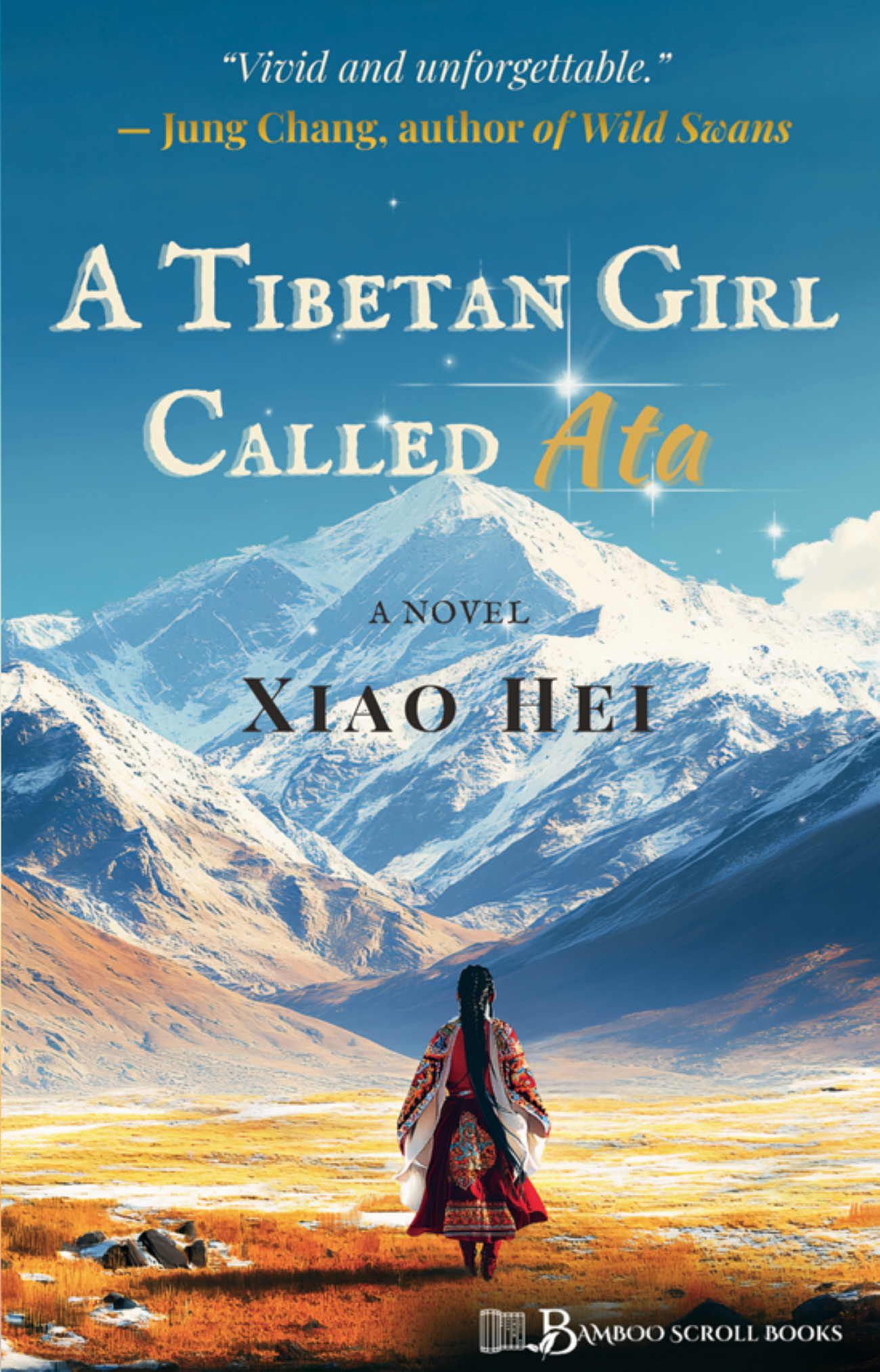
This novel was born from a true story. My hometown, Chengdu, sits on the doorstep of the Tibetan Plateau, home to a vibrant community of hundreds of thousands of Tibetans. It was here that I met the woman who would become the ‘prototype’ for my main character, Ata. In the wake of the 2008 Lhasa riots, she shared her story with me — a brief but hauntingly powerful narrative. The creative impulse it triggered was like a fountain, surging forth until it took the form of this novel.
The story follows a Han Chinese man who falls deeply in love with a young Tibetan woman named Ata, only to discover, far too late, that their love will destroy them both. Their extraordinary relationship unfolds in 2008, during a period of profound unrest in Lhasa, a moment in history that makes their tragic end all but inevitable.
The novel shows how individual destinies are shaped by the torrent of history, and sometimes even swallowed up by it, and describes the pain and hope buried in the history and reality of Han-Tibetan relations.
In China, it seems like politics infiltrates every corner of daily life, leaving irreversible marks on personal relationships. No matter how fiercely love burns, when it falls into the icy grip of politics, tragedy is inescapable. There are countless real-life couples whose love was extinguished by these forces — where love simply could not ‘find a way’.
When discussing Han-Tibetan relations, history and the present are inseparable. Sometimes the smallest details strike the most painful chords. I recall visiting the Potala Palace with a group of tourists when one asked aloud, “When did the Dalai Lama run away?” A nearby monk immediately corrected them: “His Holiness did not run away. He left.”
Since the Communist Party took control of Tibet, protests and resistance have never ceased, nor have the voices calling for the Dalai Lama’s return. It is impossible for a romance between a Tibetan and a Han person to remain untouched by this context.
Even today, many Han Chinese speak of Tibetans with deep-seated prejudice, using derogatory terms like “yaks”, “wild men”, and “barbarians”. My own understanding began in the 1980s during a trip to the region. Through my research, I realised that Tibetan society was never the ‘backward’ or ‘barbaric’ caricature it was portrayed as.
Despite a harsh, high-altitude environment, Tibetans have long maintained a harmonious social fabric, characterised by spiritual peace and a deep sense of satisfaction. They are a remarkable people — only a few million in number, yet guardians of a thousand-year-old civilisation and a rich cultural heritage.
Through this novel, I seek not only to illustrate how geopolitical conflicts and historical legacies fracture private lives but also, more importantly, I want to explore the profound nature of humanity with readers, opening a window to shared understanding. This is a sad story, but sadness doesn’t have to be despair. Tears may fall, but they cannot drown out courage. It is a testament to the sacrifices made for love and a hope that never gives up.
A novel is a reimagining of reality. For a writer, the creative process is both labour-intensive and painful. I poured my heart into this story and these characters. During the final editing stage, I read the manuscript over and over. I nearly had it memorised, and yet still, at times, I found myself in tears.
Q&A with Zhang Pu
In the following Q&A, Zhang Pu discusses the family connection behind the book, the real story that helped inspire it, his sympathy for Tibetans, and why he believes A Tibetan Girl Called Ata would be seen as dangerous by the Chinese authorities. He also speaks about his criticism of Xi Jinping, the threats he says he has received, and why he believes returning to China would no longer be safe.
Your sister Jung Chang has written a few words for the English edition. What did her support mean to you?
Jung has always been very fond of A Tibetan Girl Called Ata, and when she heard the English edition was about to be published, she was happy to write a few lines for the front of the book.
My literary life has been closely connected with hers. After Wild Swans was published, I translated it into Chinese for readers in Hong Kong and Taiwan. When Jung was writing Mao: The Unknown Story, we often discussed the work, and in the preface she wrote: “Without my younger brother, this book would have been much less impressive.”
That was very moving for me. We are brother and sister, and we have both written in different ways about China, memory, suffering and freedom.
Why did you decide to tell this story as a novel?
Fiction allows me to reach the emotional truth of a story. I have written political essays and commentaries, and I will continue to do that, yet novels allow me to enter private lives and show how history changes people from within.
A Tibetan Girl Called Ata grew from a true story. Chengdu, my hometown, lies close to the Tibetan Plateau and has a large Tibetan community. After the unrest in Lhasa in 2008, a Tibetan woman told me a brief story that stayed with me. It was painful, powerful and full of human feeling. The creative impulse that followed came very quickly, almost like a fountain, and eventually became this novel.
What drew you to the story of a Han Chinese man and a Tibetan woman?
Han and Tibetan people can live very close to one another and still know very little about each other. In Chengdu, there are many Tibetans, and daily life brings the two communities into contact through work, trade, study and friendship. At the same time, there is still mistrust, prejudice and political fear.
A love story between a Han man and a Tibetan woman allowed me to explore those tensions through two human beings rather than through slogans. Love can cross language, custom and history, and it can also expose the forces that keep people apart.
The novel is deeply sympathetic to Tibetan suffering. Where did that sympathy come from?
Every time I read about modern Tibetan history, I feel close to tears. During the Cultural Revolution, temples, ancestral halls and historic sites were destroyed on a vast scale. For a people whose spiritual life is so closely woven into daily existence, that was not simply the destruction of buildings. It was a wound to the soul of an entire culture.
My sympathy also comes from personal contact. I have known Tibetan people, spoken with them, listened to them and tried to understand their history beyond the official version. The more I learned, the more strongly I felt that this story had to be written.
Did writing the novel change your own understanding of Tibet?
Yes. Researching and writing the novel deepened both my understanding and my sympathy. Through my interactions with Tibetan people, I came to understand their desire for freedom from Chinese Communist Party control, and their deep hope for the Dalai Lama’s return.
Those hopes have come at a great cost. I wanted the novel to preserve a truth that should not be forgotten: that political conflict is never abstract for the people living inside it. It enters families, friendships, faith and love.
How did growing up in Chengdu shape the book?
Chengdu is the capital of Sichuan Province, and from there it is possible to drive to the Tibetan Plateau in less than half a day. I have travelled to Tibet several times, and that closeness gave me a special feeling for Tibetan life and culture.
Tibetans live in a harsh, high-altitude environment, yet many have a profound sense of harmony, spiritual peace and endurance. They are an extraordinary people, with a civilisation more than a thousand years old and a rich cultural heritage. Many Han Chinese still speak of Tibetans through prejudice and ignorance. I wanted the novel to challenge that view.
You have said A Tibetan Girl Called Ata was banned in China. Why do you think it was considered dangerous?
The novel gives an honest picture of Tibetan history and of love caught in political turmoil. That alone is enough to frighten the authorities.
The Chinese Communist Party does not want people to look too closely at Tibetan identity, Tibetan suffering or Han-Tibetan relations. The book refuses to look away. It asks readers to see Tibetan people as human beings with their own faith, culture, grief and dignity.
What is your view of China’s current policy towards Tibet?
Since Xi Jinping came to power, control over Tibet has become even more stringent. In my view, the goal of China’s ruling party is to assimilate Tibetans into Han Chinese culture and gradually reduce Tibetan identity to a historical symbol rather than a living culture.
Real decision-making power remains in the hands of Han Chinese Communist Party officials. Tibetan Buddhism is treated as a potential tool for separatism and is tightly controlled. The use of the Tibetan language is under pressure. There is zero tolerance for dissent.
Do you support Tibetan independence?
I strongly support the Middle Way approach proposed by the Dalai Lama many years ago. It offers a balanced and pragmatic path towards coexistence and mutual respect.
The most constructive future would be one in which Tibetans’ rights, identity, religion, language and autonomy are properly respected, while regional stability is maintained. Without respect for Tibetan identity, there can be no genuine harmony.
You have also written critically about Xi Jinping and the Chinese Communist Party. Have you been threatened?
Yes, I have received threats. My political essays have caused trouble for the authorities, and one article about Xi Jinping attracted a very large readership in a short time.
As long as I am in the UK, I feel safe. The freedom to write and speak is very precious to me.
Would it be safe for you to return to China?
No. If I returned to China now, I am certain I would be detained and effectively disappear upon entry.
Do you still feel connected to China?
Of course. China is my birthplace, my language and my history. My mother lived there, and my eldest sister still lives in Chengdu. I never discuss sensitive political issues with family members in China because I do not want to place them in danger.
I love England and feel free and comfortable living in London. China no longer holds the same appeal for me, largely because I would not be free there.
Will you continue to criticise the Chinese government?
Yes. As long as the Chinese people are denied freedom, my pen will continue to speak — and to question.
A Tibetan Girl Called Ata by Zhang Pu, writing as Xiao Hei, is translated by Esther Tyldesley and published by Bamboo Scroll Books. It is out now in paperback and eBook.
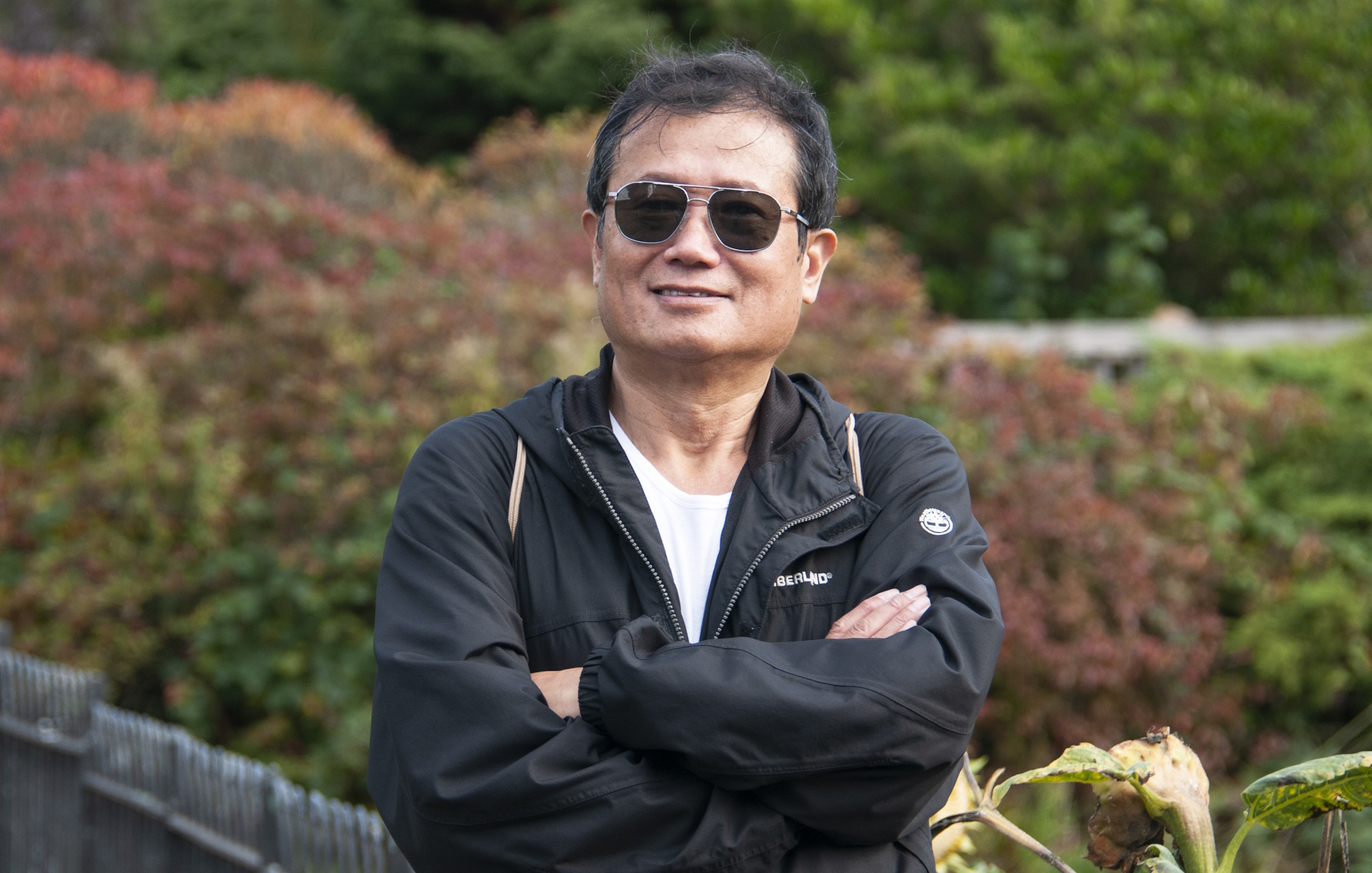
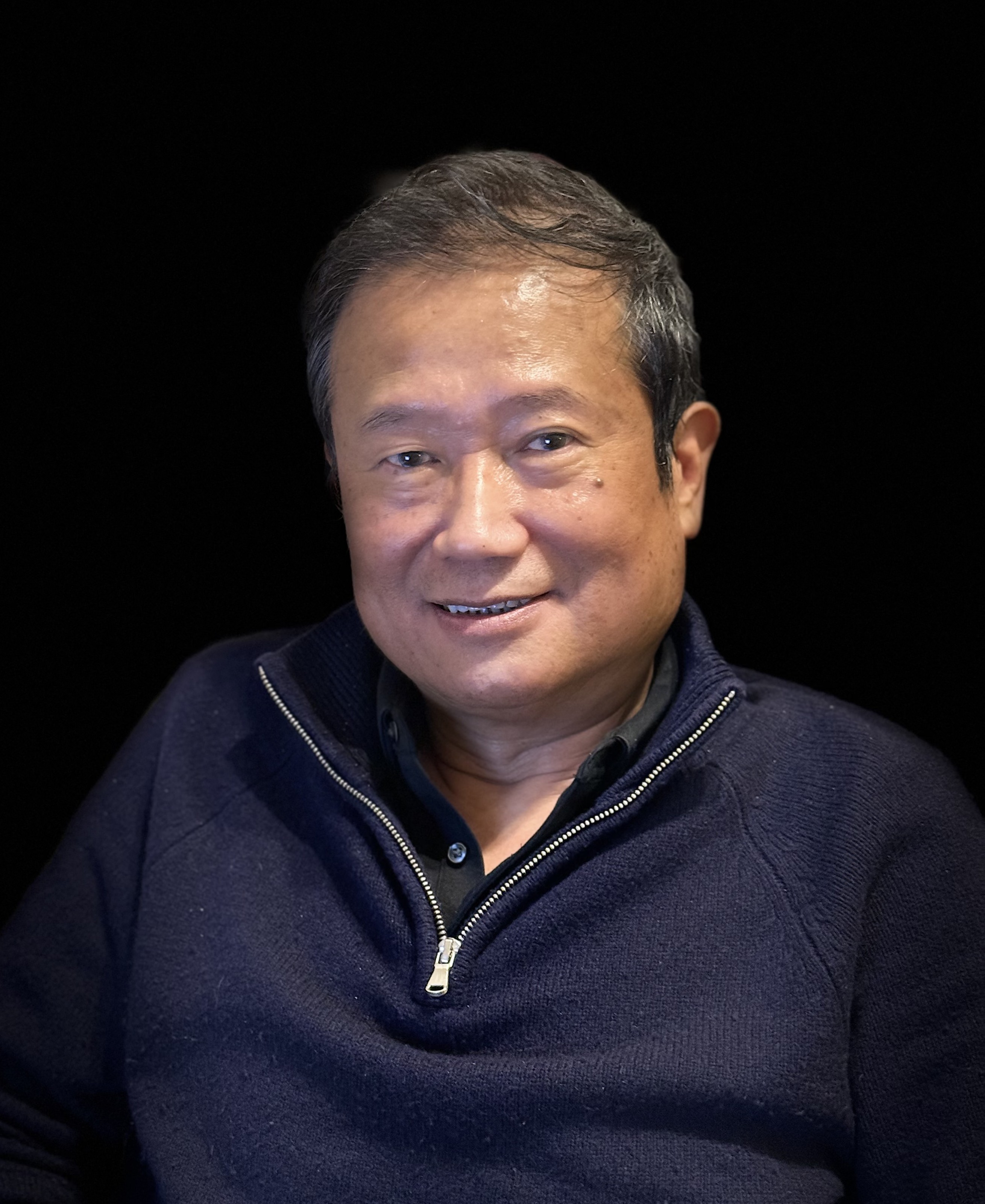
Main Image: Author Zhang Pu, who wrote A Tibetan Girl Called Ata. Credit: Zhang Pu.