

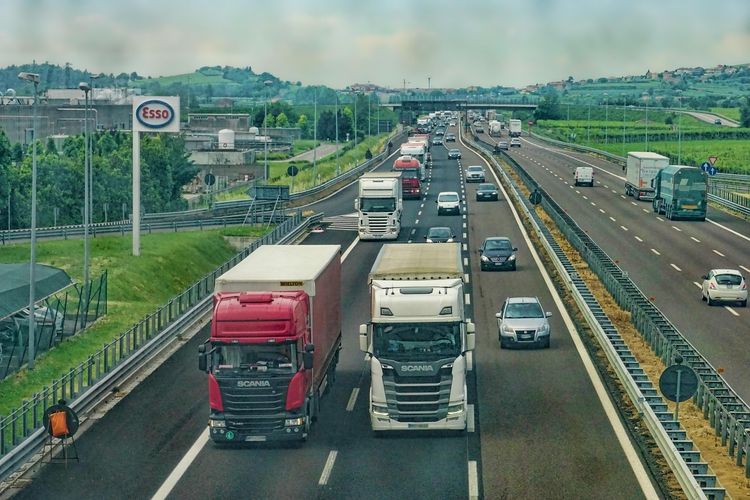
Every lane, signal, intersection, sidewalk, bridge approach, turn lane, and highway ramp is part of a larger system designed to move people safely and efficiently. When that system works well, drivers experience fewer delays, pedestrians feel more protected, freight moves more reliably, and communities can grow with fewer transportation conflicts.
Safer and more efficient roads do not happen by accident. They are the result of careful planning, data analysis, design, construction coordination, and long-term performance monitoring. Transportation engineers evaluate how roads are used today, how they will be used in the future, and what improvements are needed to support public safety, economic activity, and quality of life.
What Is Transportation Engineering?
Transportation engineering is a specialized field of civil engineering focused on the planning, design, operation, and improvement of transportation systems. While many people think first of highways and roadways, the field also includes intersections, pedestrian facilities, bicycle routes, transit access, traffic signals, drainage considerations, construction phasing, and roadway safety features.
The goal is not simply to build more roads. In many cases, the better solution is to improve how existing infrastructure functions. That may mean redesigning a dangerous intersection, adjusting signal timing, adding turn lanes, improving sight distance, creating safer pedestrian crossings, or coordinating roadway improvements with future land development.
Transportation engineers often study questions such as:
- Where are crashes happening most often?
- Why does congestion occur at certain times of day?
- How will a new development affect nearby roads?
- Are pedestrians and cyclists safely accommodated?
- Can signal timing be improved to reduce delays?
- What design changes will improve long-term traffic flow?
By answering these questions, transportation engineering helps communities make informed decisions rather than relying on guesswork.
The Connection Between Road Safety and Engineering Design
Road safety depends on more than driver behavior. Design has a major influence on how people navigate the road, how quickly they react, and how much room they have to correct mistakes. A well-designed roadway gives users clear information and enough space to move safely.
For example, transportation engineers consider lane width, shoulder conditions, turning radii, speed limits, pavement markings, lighting, and visibility. They also study how vehicles, pedestrians, cyclists, buses, and trucks interact in the same space. When these elements are not properly coordinated, the risk of crashes increases.
Good roadway design can help reduce common safety issues, including:
- Rear-end crashes at congested intersections
- Side-impact collisions caused by unclear turning movements
- Pedestrian conflicts at poorly marked crossings
- High-speed crashes on roads with inadequate sight distance
- Unsafe merging conditions near ramps or lane drops
- Confusion caused by inconsistent signage or pavement markings
In growing regions, working with a transportation engineering firm can help public and private projects address traffic patterns, roadway capacity, and safety needs before problems become more difficult and expensive to solve.
Improving Traffic Flow Without Overbuilding
Efficiency is another major purpose of transportation engineering. As communities grow, traffic demand changes. A road that functioned well ten years ago may no longer serve current travel patterns. New neighborhoods, commercial centers, schools, warehouses, airports, and employment hubs can all change how traffic moves through an area.
However, improving traffic flow does not always require major widening or large-scale reconstruction. Transportation engineers often look for practical solutions that improve performance while making responsible use of available space and budgets.
These solutions may include:
- Coordinated traffic signal timing
- Dedicated left-turn or right-turn lanes
- Roundabouts or innovative intersection designs
- Access management for driveways and entrances
- Improved ramp spacing and merge areas
- Better roadway striping and signage
- Transit stop placement that reduces traffic conflicts
Small changes can produce meaningful results when they are based on accurate traffic data and sound engineering judgment. For example, adjusting signal timing along a busy corridor may reduce stops, improve travel times, and lower driver frustration. Adding a turn lane at a key location may prevent backups from blocking through traffic. Reconfiguring an intersection may reduce conflict points and improve safety for all users.
How Data Guides Better Transportation Decisions
Modern transportation engineering relies heavily on data. Engineers collect and analyze information about traffic volume, vehicle speed, crash history, turning movements, pedestrian activity, peak-hour demand, and future growth projections. This data helps determine what problems exist and which solutions are most appropriate.
Traffic studies are especially important for development and infrastructure planning. Before a new project moves forward, engineers may evaluate how it will affect nearby intersections and roadways. This allows communities, developers, and agencies to identify needed improvements early in the process.
Common transportation data sources include:
- Traffic counts
- Crash reports
- Travel time studies
- Signal performance data
- Field observations
- Land use and growth projections
- Pedestrian and bicycle activity counts
Data also helps prioritize improvements. Not every roadway issue can be fixed at once, so engineers help identify which locations present the highest safety risks, the greatest congestion problems, or the strongest need for near-term upgrades.
Designing Roads for All Users
Transportation engineering has evolved beyond a vehicle-only approach. Today, effective roadway design must consider everyone who uses the transportation network. This includes drivers, pedestrians, cyclists, transit riders, emergency responders, delivery vehicles, school buses, and people with disabilities.
A road may move cars efficiently but still fail the community if it is unsafe or uncomfortable for people walking or biking. Similarly, a corridor may create problems if it does not provide safe access to bus stops, schools, parks, medical facilities, or commercial areas.
Pedestrian and Bicycle Safety
Pedestrian and bicycle improvements can include sidewalks, shared-use paths, bike lanes, crosswalks, pedestrian refuge islands, curb ramps, accessible signals, and improved lighting. These features help create safer connections between neighborhoods, businesses, schools, and public spaces.
Transportation engineers also consider how roadway speed affects pedestrian safety. A crossing that may be acceptable on a low-speed street may require more protection on a wider, faster corridor. Design decisions must reflect real-world conditions, not just minimum requirements.
Accessibility and ADA Compliance
Accessibility is another important part of transportation design. Roads and sidewalks must support safe movement for people of all ages and abilities. This includes curb ramps, detectable warning surfaces, accessible pedestrian signals, proper sidewalk slopes, and clear paths of travel.
ADA transition planning and accessibility upgrades help communities identify barriers and improve public infrastructure over time. These improvements are not only regulatory requirements; they also make transportation systems more usable and inclusive.
The Role of Intersections in Roadway Performance
Intersections are some of the most important points in any transportation network. They are also common locations for congestion and crashes because multiple movements happen in a limited space. Vehicles may be turning, stopping, merging, accelerating, or crossing paths with pedestrians and cyclists.
Transportation engineers study intersections carefully to determine how they can operate more safely and efficiently. In some cases, the solution may involve signal timing adjustments. In others, it may require new turn lanes, improved signage, a roundabout, protected turn phases, or a redesigned layout.
Innovative intersections can also help manage high traffic volumes while reducing conflict points. These designs must be carefully evaluated because they can change how drivers navigate a location. Clear signage, pavement markings, and public understanding are essential to successful implementation.
Supporting Growth and Economic Development
Reliable transportation infrastructure supports economic development. Businesses need access for customers, employees, deliveries, and freight. Residential communities need safe connections to jobs, schools, healthcare, and services. Public agencies need transportation systems that can handle growth without creating avoidable congestion or safety concerns.
Transportation engineering helps align infrastructure with development. When roads, intersections, and access points are planned early, projects can move forward more smoothly and with fewer long-term problems. This is especially important in fast-growing areas where development pressure can quickly outpace existing roadway capacity.
For private development, transportation engineers may assist with traffic impact analyses, site access planning, driveway permitting, roadway improvements, and coordination with local or state agencies. For public projects, they may support corridor studies, roadway design, safety improvements, construction plans, and long-range transportation planning.
Technology and Intelligent Transportation Systems
Technology is increasingly important in roadway operations. Intelligent Transportation Systems, often called ITS, use tools such as cameras, sensors, dynamic message signs, traffic monitoring systems, and connected signal networks to improve real-time management of transportation systems.
ITS can help agencies respond more quickly to crashes, congestion, weather events, and construction impacts. It can also support better signal coordination and provide drivers with timely information. As transportation systems become more complex, technology allows agencies to manage roads more actively instead of relying only on physical expansion.
Construction Planning and Long-Term Performance
Transportation engineering does not stop at design. Construction phasing, inspection, and coordination are essential to successful roadway projects. Engineers must consider how construction will affect traffic, nearby businesses, emergency access, pedestrians, and adjacent properties.
Construction engineering and inspection services help confirm that roadway improvements are built according to plans and specifications. This protects public investment and supports long-term performance. Poor construction coordination can create delays, safety concerns, and maintenance problems, so technical oversight is a critical part of the process.
Why Transportation Engineering Matters
Every community depends on roads that are safe, efficient, and adaptable. Transportation engineering brings together planning, design, safety analysis, technology, and construction knowledge to improve how people and goods move.
Strong transportation systems help reduce crashes, manage congestion, support development, improve accessibility, and create better daily experiences for road users. Whether the project involves a local intersection, a major highway, a pedestrian corridor, or a regional transportation plan, engineering decisions shape how well the system performs for years to come.
As travel patterns continue to change and communities keep growing, transportation engineering will remain essential to building roads that do more than carry traffic. It helps create connected, resilient, and safer places where people can move with greater confidence and efficiency.