

Monitoring noise, air quality, water, and microclimate is now perceived not as an optional extra, but as part of the basic infrastructure of modern life.
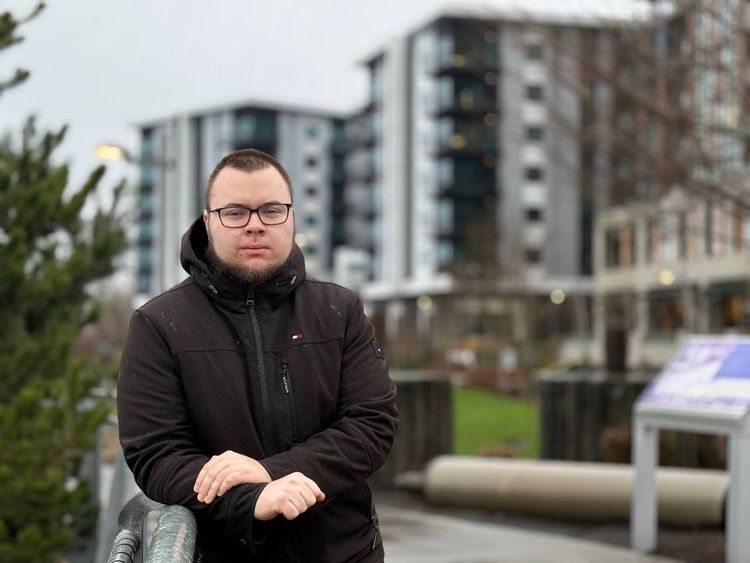
As part of our People in Business series, we speak to Viacheslav Yakovlev who is an environmental engineer and environmental monitoring specialist who has worked with private and corporate clients for over eight years, helping them make decisions based on measurements rather than assumptions. His professional focus is practical ecology: where data directly impacts environmental health, efficiency, and sustainability.
Viacheslav, in 2026, ecology is increasingly discussed in the context of ESG, sustainable development, and urban planning. How do you define the role of environmental monitoring today?
— Environmental monitoring is no longer a support function. Today, it’s a risk management tool for businesses, developers, municipalities, and individuals. We live in an environment where decisions must be based on data: noise levels, pollutant concentrations, indoor air parameters. Without this, it’s impossible to talk about comfort, health, or long-term sustainability. Monitoring isn’t about control for the sake of control, but about the conscious management of space.
In London and other major UK cities, special attention is paid to the quality of the urban environment. What problems do you consider universal for megacities, regardless of country?
— Noise and air quality are two of the most underestimated factors. People become accustomed to a constant background noise: transport, ventilation systems, dense development. But chronic noise and elevated levels of CO₂ or fine particulate matter directly impact concentration, sleep, and cognitive function. This is a global problem for megacities, and it can’t be solved intuitively, solely through measurements and engineering solutions.
Many still consider environmental measurements to be secondary. Why is this approach becoming obsolete now?
— Because the cost of error has become too high. In 2026, businesses already understand that a poor environment means decreased productivity, increased employee turnover, and reputational risks. Private clients understand that it affects family health and the long-term value of real estate. Environmental parameters directly impact the economy, and the market is gradually realizing this.
You work with dozens of clients every month. How do you maintain accuracy and trust in your results with such a volume?
— Through standardization and discipline. Ecology is a field where subjective perceptions cannot be relied upon. There are methods, protocols, equipment, and laboratory tests. But the key is ethics. If a specialist begins to tailor data to a client’s expectations, they cease to be an engineer. Trust is built on the fact that the results remain consistent, regardless of whether they are convenient or not.
What client requests have become particularly noticeable in recent years?
— There’s growing interest in comprehensive assessments: not just “checking the air,” but understanding how the entire environment functions: ventilation, acoustics, materials, water. People no longer want point answers; they want a system. This is a very mature demand, and it indicates that ecology is becoming part of the decision-making culture.
There’s increasing talk about the digitalization of environmental monitoring: sensors, automated data collection, smart cities. To what extent, in your opinion, can technology replace the classic engineering approach?
— Technology is a tool, but not a substitute for professional interpretation. Automatic sensors and monitoring systems do provide a valuable continuous picture, especially in high-density cities like London. However, data alone doesn’t answer the question “what to do next.” You need a specialist who understands the context: the building’s architecture, pollution sources, human factors, and the space’s operating conditions. In 2026, the key will be not just collecting data, but correctly interpreting it and translating it into engineering solutions. Therefore, the future lies not in automation replacing humans, but in the intelligent combination of both.
Speaking of forecasts: how do you envision environmental monitoring in 2030?
— It will become as commonplace as energy audits or building inspections. In developed cities, monitoring will be integrated into the development, leasing, and operation of offices and residential complexes. We’re moving toward a model where a lack of data is perceived as a risk, not a norm.
Can environmental monitoring influence the social agenda, and not just private decisions?
— Absolutely. Data is the foundation of public dialogue. When there are measurements, there’s no room for manipulation. This is important for cities, regulators, and businesses. Ecology ceases to be an emotion and becomes an argument.
Have you ever refused to collaborate despite the commercial benefits?
— Yes, if they expect us to deliver the desired result, not analysis. Environmental monitoring is incompatible with compromises in data interpretation. This is a line that cannot be crossed without losing professional integrity.
If we’re talking about individuals, not businesses or cities, what do you consider the main mistake in the approach to housing ecology?
— The main mistake is to perceive ecology as something abstract and secondary. People are willing to invest in design, technology, and visual comfort, but they rarely consider what exactly they breathe and what acoustic environment they live in every day. You often hear, “We’re comfortable here,” but comfort doesn’t always equate to safety. In 2026, when we spend more and more time indoors, the quality of the indoor environment becomes a critical factor in health. Environmental monitoring in living spaces isn’t anxiety, but a mature approach to one’s own life and long-term well-being.