

Britain’s economic engagement with Central Asia is entering a new phase. For much of the post-Cold War period, the region sat at the margins of UK commercial strategy. That is changing. As global supply chains fragment, energy security re-emerges as a structural concern, and competition over critical minerals intensifies, Central Asia is no longer peripheral. It is increasingly part of the architecture of economic resilience.
The United States and the European Union have already moved in this direction. Washington has deepened its C5+1 framework and expanded critical minerals cooperation across the region, especially with Kazakhstan. Brussels has signed strategic partnerships on raw materials and connectivity, while elevating transport corridors such as the Middle Corridor that bypass traditional chokepoints. The UK’s recent ministerial engagement with Central Asian foreign ministers under the new CA5+UK format signals that London, too, is institutionalising its presence.
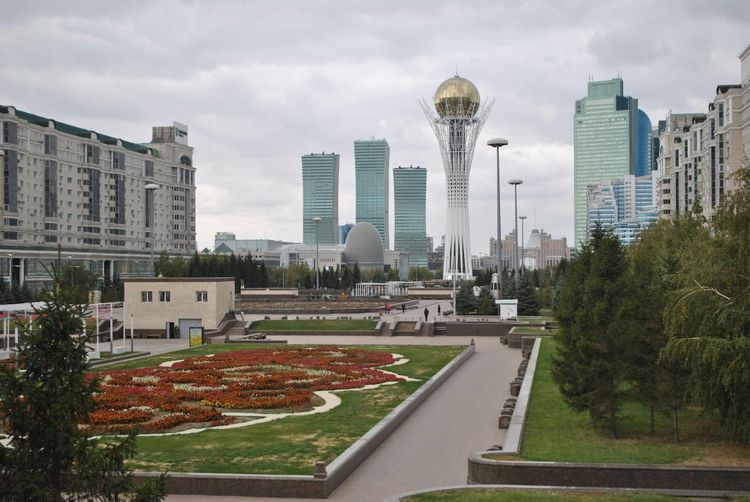
Within that regional recalibration, Kazakhstan stands out as the anchor state.
Kazakhstan accounts for more than 60% of foreign direct investment flows into Central Asia and generates over half of the region’s GDP. Its economy exceeds $300 billion in nominal terms, placing it among the world’s top 50 economies. Thirteen major transit corridors cross its territory, and around 85% of overland cargo between Europe and Asia moving through Central Asia passes via Kazakhstan. For any external partner seeking structured, scalable engagement with the region, Astana is the natural starting point.
The visit of Kazakhstan’s Foreign Minister, Yermek Kosherbayev, to London on February 25-26 reflected that reality. What is notable is the shift in emphasis. UK–Kazakhstan relations are moving from dialogue and frameworks towards practical delivery.
Trade figures illustrate the momentum. Bilateral trade reached $1.6 billion last year, marking an 84% increase. The UK is among the top ten largest investors in Kazakhstan, with British investments exceeding $700 million in 2024. More than 500 UK-affiliated companies operate in the country, spanning energy, mining services, finance, engineering, digital technology and education.
Yet the strategic significance lies less in aggregate numbers and more in sectoral direction. Critical minerals sit at the centre of the new phase of cooperation. Of the 36 minerals designated as strategically important in the UK’s Critical Minerals Strategy, 22 are already produced in Kazakhstan, including uranium, titanium, silicon and rhenium. In a world where processing and supply chains remain heavily concentrated, diversification is not a slogan but an industrial necessity.
The Kazakhstan–UK Roadmap on Strategic Partnership in the Field of Critical Minerals through 2027, signed during Yermek Kosherbayev’s visit, provides structure to that ambition. Crucially, the conversation is shifting beyond extraction. Both sides are focusing on geological exploration, processing and refining capacity, recovery of associated components, recycling and the introduction of advanced technologies. In other words, the emphasis is on value creation rather than volume alone.
For Britain, this aligns squarely with economic security objectives: securing access to inputs essential for defence, energy transition and advanced manufacturing, while ensuring projects operate within transparent, rules-based frameworks. For Kazakhstan, it offers opportunities to move up the value chain and attract technology-intensive investment.
Energy cooperation remains important but is no longer the sole pillar. Kazakh oil supplies to Europe have remained stable, providing continuity at a time of volatility. However, the partnership is broadening into green energy, carbon capture, artificial intelligence and digital connectivity. Cooperation with firms such as Weir Group, Standard Chartered and London Stock Exchange Group reflects the diversity of UK commercial involvement.
Transport and connectivity form another core component. The development of the Trans-Caspian International Transport Route – often referred to as the Middle Corridor – aims to strengthen Eurasian trade links that reduce overreliance on any single transit pathway. For the UK, which seeks resilient supply chains in an era of geopolitical risk, diversified connectivity across Eurasia is economically rational.
Education and innovation provide the longer-term foundation. British universities have established an expanding footprint in Kazakhstan, including campuses of Coventry University, Heriot-Watt University, De Montfort University and Cardiff University. Plans for additional campuses, AI research centres and expanded academic exchanges signal a deeper institutional embedding.
These are not symbolic gestures. Educational partnerships underpin skills development, regulatory familiarity and innovation ecosystems. They create networks of graduates, researchers and professionals who operate comfortably across both systems. In economic terms, they lower transaction costs over time.
Human-to-human ties are often treated as a secondary layer of diplomacy. In reality, they are a form of long-term economic infrastructure. They connect institutions, professional standards and corporate cultures. Over time, they reinforce trust – a decisive component of cross-border investment.
The broader regional context matters. Central Asia is a region of growing strategic and economic importance, characterised by steady economic growth and increasing intra-regional cooperation. Kazakhstan has positioned itself as a reliable and predictable partner within that landscape. Its ongoing institutional reforms, aimed at strengthening governance, investor protection and parliamentary oversight, are designed to create a more balanced and accountable system. For foreign investors, regulatory clarity and institutional stability are not abstract virtues but material considerations.
The CA5+UK format reflects Britain’s recognition that structured regional engagement enhances, rather than dilutes, bilateral ties. By anchoring its Central Asia strategy through Kazakhstan while engaging the wider region, London can align its strengths in finance, regulatory standards, technology and education with Central Asia’s resources, geography and demographic potential.
In a fragmented global environment, resilience depends on diversified supply chains, investable projects and trusted partners. UK–Kazakhstan cooperation increasingly fits that definition.
The narrative emerging from the recent ministerial engagement is therefore that the relationship has matured. Framework agreements are in place. Intergovernmental mechanisms are active. Business communities are engaged. Parliamentary dialogue has been institutionalised. The focus now is on implementation: financing projects, building processing facilities, expanding research centres, strengthening transport corridors and scaling educational partnerships.
Britain’s attention to Central Asia needs structural adjustment to a changing global economy. If delivered effectively, it offers tangible benefits: strengthened supply chains for the UK, upgraded industrial capacity, and enhanced connectivity across a region that sits at the crossroads of Europe and Asia. In an era defined by uncertainty, this is strategically necessary.