

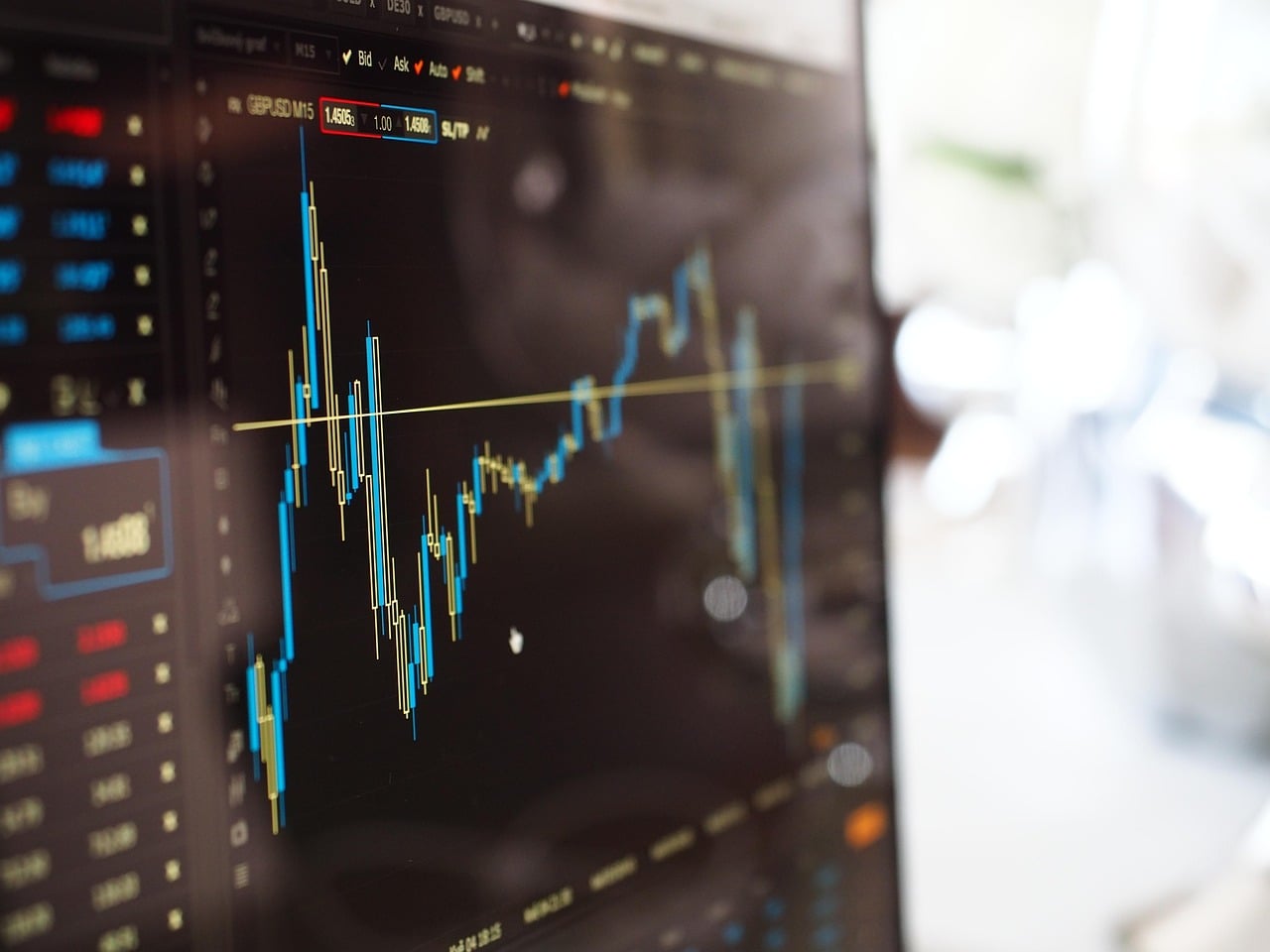
Volatility Is a Core Feature of Crypto Markets
Every asset class has its own characteristics. Bonds are often associated with income, real estate with cash flow, and crypto with high price volatility.
Bitcoin’s annualized volatility has historically been much higher than that of major stock indices, while many altcoins can move sharply over short periods. For long-term holders, that may be something to tolerate. For active traders, it is often the feature they are trying to understand and manage.
The question is not whether crypto is volatile, but how market participants respond to that volatility. Many experienced traders focus on structuring positions so that risk-reward is clearly defined before a trade is entered. The approaches below are commonly discussed examples, not guarantees of profit.
Strategy 1: Trend Following on Higher Timeframes
Trend following is one of the oldest systematic approaches in trading, and many traders believe it can be effective in crypto because price trends can sometimes persist for extended periods.
The basic idea is simple: once Bitcoin or a major altcoin establishes a clear directional trend, some traders look for ways to participate in that move rather than trying to call the exact top or bottom. Previous bull and bear cycles are often used as examples of markets that moved further and for longer than many expected.
How it is often applied in practice:
- Identify the trend using simple tools such as the 50-day and 200-day moving averages, or a sequence of higher highs and higher lows on the daily chart
- Look for entries in the direction of the prevailing trend after a pullback or consolidation
- Use trailing stop-losses to help protect gains if the market reverses
- Be cautious with counter-trend trades, which can be more difficult to manage in strongly directional markets
When leverage is used, some traders prefer to keep it relatively modest in trend-following setups. The aim is usually to stay in the move long enough to capture a broader trend, rather than maximise return on a single entry.
Strategy 2: Mean Reversion on Lower Timeframes
Mean reversion is based on the idea that prices that move unusually far from a recent average may move back toward it. In crypto, some traders watch for this on shorter timeframes such as the 1-hour or 4-hour chart.
A common setup includes:
- Watching for price to move well beyond a recent average, often using tools such as Bollinger Bands
- Using a predefined invalidation point rather than assuming price must reverse
- Targeting a move back toward the mean if market conditions remain range-bound
This type of setup is generally considered more suitable for ranging conditions than for strong trends. In fast directional markets, mean reversion can fail quickly, which is why traders often pair it with strict risk controls.
Identifying market regime matters. The Average True Range (ATR) is one tool traders sometimes use to gauge whether volatility is expanding or contracting.
Because shorter-term strategies can involve more frequent trading, execution quality, fees, and discipline can have an outsized impact on outcomes.
Strategy 3: Breakout Trading
Consolidation patterns such as triangles, rectangles, and wedges can compress volatility. When price breaks out of those ranges, some traders look for follow-through momentum.
The mechanics are often described as follows:
- Identify a visible consolidation pattern on the 4-hour or daily chart
- Plan entries around a break of support or resistance rather than reacting emotionally after the move
- Define a stop-loss or invalidation level before entering
- Use measured-move logic or nearby market structure to estimate possible targets
False breakouts are common, which is why traders often look for additional confirmation such as volume, momentum, or repeated acceptance above a key level.
Bitcoin’s breakout from the $25,000–$30,000 range in late 2023 is often cited as an example of how a long period of consolidation can precede a strong directional move. Traders who recognised the technical pattern had a framework for participating, though no pattern removes risk.
Strategy 4: Hedging Spot Holdings With Short CFDs
Not every derivatives position is taken for pure speculation. Some market participants use derivatives to reduce exposure temporarily when they do not want to sell a long-term holding.
For example, an investor holding BTC in spot may be concerned about a short-term event risk but may not wish to sell the underlying asset immediately. In that situation, a short derivatives position can be used as a temporary hedge.
A simplified illustration:
- Spot holding: 1 BTC at $95,000 = $95,000 exposure
- Temporary hedge: a short position sized to offset some or all of that exposure
- If BTC falls, losses on the spot position may be partially offset by gains on the hedge
- If BTC rises, the hedge may reduce upside as well as downside
Hedging can reduce directional exposure, but it also introduces costs, execution risk, and complexity. It should not be viewed as a guaranteed protective solution.
Strategy 5: Funding Rate Arbitrage
This strategy uses the funding rate mechanism on perpetual contracts. When funding is strongly positive, some traders short the perpetual contract while holding an equivalent long position in spot.
In theory, the spot and perpetual positions can reduce directional exposure while allowing the trader to receive funding payments, provided market conditions remain favourable.
During strong bull markets, funding rates can rise sharply. However, those rates can also fall or flip negative, and maintaining both sides of the trade can involve trading fees, slippage, counterparty risk, and operational risk.
For that reason, funding rate arbitrage is better described as a market-neutral strategy with specific risks, rather than a risk-free or universally low-risk approach.
Position Sizing: The Strategy Behind the Strategy
Every strategy above depends on proper position sizing. This is one of the most important risk-management concepts in trading.
A common framework includes:
- Define risk per trade as a small percentage of account value
- Calculate position size from stop-loss distance and overall exposure
- Stress-test the trade so that one loss does not materially damage the account
For example, if a trader risks 2% of a $10,000 account, the maximum planned loss is $200. That principle is simple, but it can be more important than finding the perfect entry.
Position sizing is rarely the most exciting part of trading. It is often one of the most important.
Execution Matters: Choosing the Right Platform
Strategy is one part of the equation. Execution is another. A setup can look strong on paper but still perform poorly if a platform has slow execution, unclear margin data, or unreliable order handling during periods of stress.
Factors many active traders look at include:
- Execution speed during volatile conditions
- Clarity around margin, fees, P&L, and liquidation thresholds
- Order types and risk controls
- Interface usability and access to demo functionality where available
- Whether the platform and product set are suitable for the trader’s jurisdiction and experience level
The market offers a range of platforms, from large exchanges to more focused trading terminals where you can Trade Bitcoin With up to 100x Leverage. Platform choice should be assessed carefully in light of fees, product availability, legal restrictions, and personal risk tolerance.
The Mental Game
Even a well-designed strategy can fail if execution is inconsistent. Many trading mistakes come from abandoning a plan after the trade is live.
Common patterns that can damage trading performance include:
- Revenge trading after a loss
- FOMO entries after a move has already extended
- Ignoring stop-loss or invalidation levels
- Increasing leverage after a winning streak without reassessing risk
One common solution is to define the trade in advance: entry, size, invalidation point, and exit logic. The less that is improvised under pressure, the easier it is to evaluate whether the strategy actually works.
FAQ
Which strategy is often considered the simplest to study first?
Many traders start by studying higher-timeframe trend following because it is slower and easier to review than very short-term strategies. That does not make it safe or suitable for everyone.
How much capital do traders typically need?
Platform minimums vary, but small accounts can be heavily constrained by fees, slippage, and risk limits. Many traders use smaller sums for practice and testing rather than expecting meaningful income immediately.
Can multiple strategies be combined?
They can, but experienced traders usually separate them by market, timeframe, or risk budget so performance can be evaluated clearly.
How important is backtesting?
Backtesting and forward-testing are widely used to evaluate whether a strategy has behaved consistently across different market conditions. Historical performance does not guarantee future results, but testing is still a useful discipline.
What is one common mistake with leverage?
Using leverage without a clearly defined exit plan. Larger position exposure can magnify both gains and losses, so leverage and stop distance should be considered together.
Do experienced traders use stop-losses?
Many do, though the exact method varies. Some use fixed stops, others use structure-based invalidation or options-based hedging. The key point is that risk is usually defined before entry.
Disclaimer
This article is for general informational and educational purposes only and does not constitute financial advice, investment advice, tax advice, trading advice, or a recommendation to buy, sell, or use any cryptoasset, derivative, CFD, exchange, or platform.
Cryptoassets are high risk and highly volatile, and you could lose all of your capital. Any references to strategies, historical market moves, or trading tools are illustrative only and do not guarantee future results. Past performance is not a reliable indicator of future performance.
Readers are responsible for checking whether any product or service mentioned is available, lawful, and appropriate in their jurisdiction. In the UK, retail consumers are prohibited from buying cryptoasset derivatives, including crypto CFDs, under FCA rules. Nothing in this document is intended to encourage or invite any person to engage in activity that would be unlawful in their location.
This document contains promotional content and a commercial link. Always do your own research and consider seeking independent professional advice before making any financial decision.