

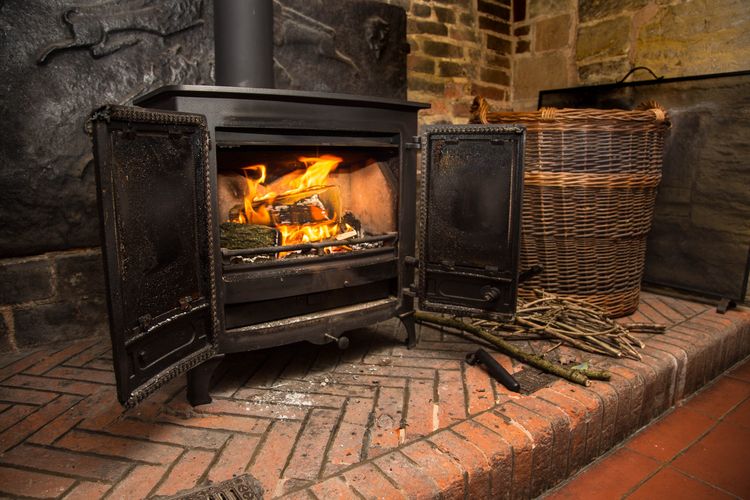
Wood-burning stoves could face a partial ban in England as part of updates to Labour’s environment plan.
On Monday, ministers released an updated environmental improvement plan (EIP), which includes tightened targets for concentrations of PM2.5 particulate pollutants to match current EU targets.
Environment secretary Emma Reynolds told the Guardian the new EIP would boost nature recovery in a number of areas, replacing an EIP under the last government she said was “not credible”.
A source Reynolds’ department told the Guardian the EIP will involve a crackdown on PM2.5 pollution, including those from wood-burning stoves and fireplaces.
This could include pollution limits being tightened in smoke control areas, setting out that wood can be burned only in approved types of stoves or burners, not in fireplaces.
It means some older appliances would effectively be banned, while in other parts of England, it may not be possible to use any device whatsoever.
PM2.5 pollutants bury deep into the lungs and exposure to them is linked to numerous health conditions including asthma, lung disease, heart disease, cancer and strokes.
Domestic combustion accounted for a fifth of PM2.5 emissions in 2023 and has been found to produce more pollution than traffic.
The current annual PM2.5 limit is 25ug/m3 (micrograms per cubic metre), with an aim to meet 10ug/m3 by 2040. The EU has stricter limits, with a new directive passed last year asking member states to meet 10ug/m3 by 2030.
The World Health Organization recommends an annual limit of 5ug/m3.
“What we’re talking about is restoring nature, not house by house, but at a more strategic level. We can be both pro-development and pro-home-ownership and pro-nature,” Reynolds said.
“The last EIP, under the previous Tory administration, wasn’t credible. I’m confident that our EIP is credible, because it’s got these delivery plans built in. You can’t just set the targets. You’ve got to explain how you’re going to achieve those targets. And that’s exactly what we’ve done.”