

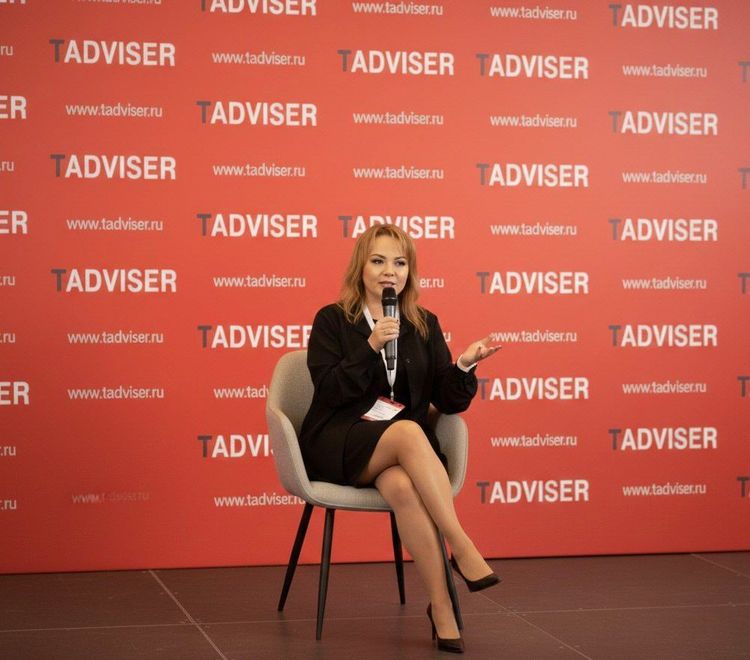
Finance executive Oksana Malysheva cut a clinic network’s losses and published ten papers on why expensive AI systems fail without financial governance
A total of 1,744 companies in England and Wales entered insolvency in January 2026, four per cent more than in December, according to the UK Insolvency Service. Wholesale, retail, and hospitality businesses accounted for 30 per cent of all insolvencies over the past twelve months, with 7,081 companies affected. Yet many of the failing businesses were not short on data. They collected it, stored it, and sometimes even analysed it. Still, when conditions shifted, their leadership could not answer a basic question: where exactly is the money going?
Oksana Malysheva, Head of Finance at clinic network O’Patra London and Cosmo Tech, has spent her career answering that question for companies that could not answer it themselves. Her approach: strip every cost centre bare, build real-time tracking before investing in anything else has been tested across international organisations, independent consulting clients, and a multi-location healthcare business.
Centralised controls across four regions
Long before standing on the TAdviser stage, Malysheva had been solving these problems in practice. Between 2004 and 2005, working as a senior accountant at a multi-regional retail company in Kazakhstan, she was responsible for financial operations spread across four regions – a setup that demanded coordination between branches dealing with volatile commodity prices and seasonal demand.
To solve this, she built a centralised monitoring system and brought in automated tracking of inventory movements and tax payments. Error rates dropped by 30 per cent, and statistical reporting to government agencies accelerated. More importantly, she introduced predictive cash flow models that anticipated seasonal liquidity gaps before they could disrupt operations.
“The biggest surprise was managing the swings in the prices of goods,” Malysheva recalls. “I got to grips with it by setting up predictive financial models that could forecast cash flow and prevent the company from running into liquidity problems at its busiest periods.”
Similar challenges appeared a year later at a production and trading company, where Malysheva directed the integration of royalty accounting into existing financial systems. Custom modules within the accounting software tracked royalties on imported goods, catching discrepancies that had gone unnoticed. An inventory audit uncovered errors serious enough that correcting them produced a 25 per cent gain in operational efficiency across the company’s branches.
Both cases reinforced a lesson she would carry through the rest of her career: financial problems rarely start as financial problems; they start as visibility problems, gaps in information that management cannot see until the damage has already been done.
A conference talk at the right moment
By November 2020, when she delivered her TAdviser SummIT presentation, businesses worldwide were dealing with pandemic-driven shifts to digital operations. Companies invested heavily in new platforms and tools, but their ability to track where money was actually flowing often lagged behind.
Malysheva’s talk, titled “Budget Control and Financial Transparency in Technology-Oriented Organisations,” drew on two decades of experience in education, trade, consulting, and healthcare. At that point, she had managed finances for an international educational network, consulted for businesses hit by pandemic shutdowns, and worked across multiple regulatory environments.
From her experience, business owners and CEOs often rely on operational metrics: customer numbers, marketing reach, product performance, while lacking a structured view of which cost centres drain resources and which investments actually pay off. Analytical tools that connect these dots, she has argued, bring more discipline to financial management than any amount of raw data.
When AI needs governance, not just deployment
Parallel to her executive career, Malysheva has maintained a sustained research programme. Ten peer-reviewed and professional publications between 2020 and 2025 examine the intersection of financial analytics, artificial intelligence, and regulatory compliance.
Where her earlier work addressed macroeconomic forecasting and systemic risk, her most recent publications focus on a problem directly relevant to the transparency gap she described at TAdviser. One February 2025 paper, “Explainable Artificial Intelligence in Banking: Balancing Predictive Performance and Regulatory Compliance,” examines how financial institutions deploy AI models that produce accurate predictions but cannot explain their outputs to regulators or, often, to their own management teams. In March 2025, a separate publication on model risk management addresses what happens when AI-driven analytics drift from the conditions they were trained on, proposing governance frameworks for detecting that drift before it leads to flawed decisions.
Earlier, in September 2024, she published research on alternative data in credit scoring — exploring how non-traditional information sources can improve lending decisions while raising questions about fairness and regulatory boundaries. Running through all these papers is a consistent argument: the critical problems in financial technology are not accuracy or speed, but opacity and the absence of governance. When models cannot explain their outputs, and when nobody monitors whether those outputs still reflect reality, organisations face risks they cannot even identify – let alone manage.
Financial dashboards for a clinic network
Since 2022, she has served as Head of Finance at O’Patra London and Cosmo Tech, a network of cosmetology and aesthetic medicine clinics. Managing finances for a London-branded healthcare operation from Central Asia meant dealing with cross-border regulatory requirements, equipment import compliance, and client data privacy – all layered on top of standard multi-location financial complexity.
Much of what she built echoed her earlier work for retail and trade companies, scaled up and adapted. Management dashboards integrating revenue streams, cost breakdowns, and operational indicators replaced fragmented reporting. Scenario-based budgeting allowed the network’s leadership to model responses to market fluctuations rather than reacting after the fact. Expansion and equipment investment decisions began running through financial due diligence models before approval.
“Working in highly regulated and high-responsibility environments was a real test,” she says, “for errors or non-compliance were simply not acceptable. Coming up with real-time revenue trackers for multiple locations was a real challenge, but it had to be done.”
Twelve years of bilingual reporting at an international educational network — in Russian and French for government bodies and foreign stakeholders had prepared her for exactly this kind of cross-border complexity.
Passing the methods on
Beyond conference speaking, Malysheva has increasingly focused on transferring her approach to other professionals. During 2023 and 2024, she conducted specialised masterclasses for members of the International Business Leaders Association on financial strategy, budgeting, and analytics-driven decision-making for business owners and executives. Starting in 2024, she has served as a mentor within the Alliance of Independent Experts of Central Asia, guiding members on financial modelling and business strategy.
Professional recognition has come from several directions. Kazakhstan’s president awarded her a state medal for distinguished labour in December 2018, and the Ministry of Economy issued a separate medal for her contribution to economic development in 2024. Last year, the Strong People Business Club recognised her with an award for professional leadership. She has also served on the jury of the Glonary Awards for Achievement in Women in Business and as an expert judge for the AITEX Summit.
The visibility question remains open
Five years on from her TAdviser SummIT presentation, the latest UK insolvency figures suggest the core problem she addressed has not receded. Businesses continue to invest in systems that generate data while neglecting the financial governance structures needed to turn that data into usable insight.
Building centralised controls for a retail chain, integrating royalty accounting for a trading company, designing financial dashboards for a healthcare network — none of these required breakthrough technology. Each required the discipline to make financial visibility a strategic priority rather than an afterthought.
Budget transparency is not a technical problem. It is a management problem that technology can support but never replace.
If you are a successful business person or entrepreneur and would like to feature in our People in Business series, please contact [email protected]