

The investment market is undergoing structural changes. Ten to fifteen years ago, tech startups and commodity giants were considered the key drivers of growth, but today more and more capital is being directed toward sustainable companies with so-called ESG assets. The share of purchases of such securities is growing at an accelerated pace, and interest from banks and large funds is becoming systemic.
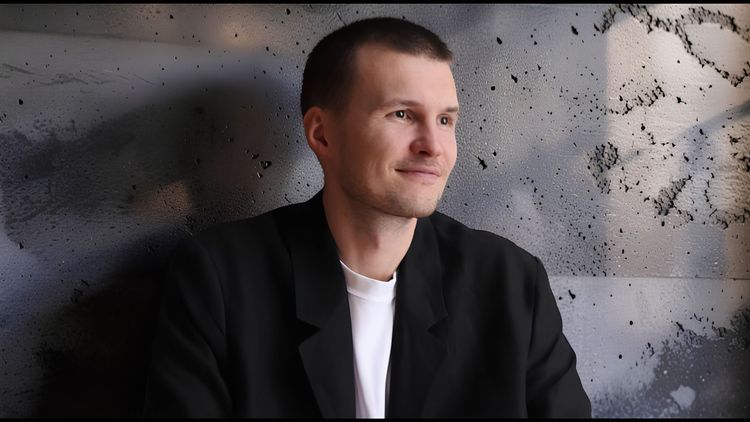
Artem Nikonov, a trader and investor, member of the Global Association of Risk Professionals and the Corporate Finance Institute, and winner of the Businessman of the Year award at the European Business and Finance Awards 2025, explains why sustainability is no longer just a buzzword.
Who are these companies with ESG assets?
These are businesses that combine a number of criteria: stable economic development, effective corporate governance, environmental responsibility, and social orientation. These are companies that demonstrate competitiveness and progressiveness while minimizing their negative impact on the environment.
The ESG concept assumes that, first and foremost, a company should benefit society through responsible production, a transparent economy, and a long-term development strategy.
Tesla, IKEA, Patagonia, Natura, and Nestlé are considered to be among the world’s largest leaders in sustainable investment.
“According to international studies, about 75% of consumers prefer companies with a low carbon footprint. This indicates a change in consumer habits and the formation of a new economic consciousness, a focus on preserving resources for future generations,” says Nikonov.
Western standard
According to Artem Nikonov, ESG has long gone beyond marketing in Western markets.
“For large international companies, sustainability is a matter of reputation, national standards, and long-term competitiveness. It is a principle of development that affects both global and local markets,” notes the expert.
At the same time, Nikonov admits that he has certain questions about the nature of such rapid growth in the ESG sector.
“We cannot ignore the fact that sustainable assets have been showing steady growth for more than 15 years. Whether it is artificial or organic, only time will tell. But the dynamics are obvious,” he says.
Competitors or allies?
Interestingly, the growth of investment in sustainable companies has largely overshadowed speculative interest in cryptocurrencies, particularly Bitcoin.
The editorial team asked Artem for his opinion on this matter. As it turns out, he does not consider these areas to be mutually exclusive.
“It can be seen that investing in sustainable companies has pushed digital assets into the background. However, the tandem of ESG and digital assets is important to me. Sooner or later, they may be integrated into a single economic model: technological, transparent, and focused on steady growth,” emphasises trader.
A problem for small and medium-sized businesses?
While sustainability has become an essential part of corporate strategy, the transition to an ESG model remains a difficult task for small and medium-sized businesses..
“The main barrier today remains the additional costs of compliance with standards: environmental modernization, auditing, transparent reporting, and social programs. For small companies, this is a serious financial burden,” says Nikonov.
This is where the main question arises: are small and medium-sized enterprises willing to invest in sustainability today for the sake of long-term growth and reputation tomorrow?
According to Nikonov, economic transparency and a systematic approach to management will sooner or later become a competitive advantage even for small players.
Sustainable companies are the future of the economy
Sustainable companies are increasingly being called the economy of the future. Perhaps this vector is being shaped by the pressure of global social and environmental problems. However, the rapid development of ESG on the world stage indicates a profound transformation of the investment environment.
“You can be skeptical about this, or you can see it as a new ideology. But the fact remains: capital is systematically flowing into sustainable assets,” says Artem Nikonov.
Recognition of expertise
The expert himself not only analyzes the sustainable investment market, but also actively works with it in practice. In 2023, Artem Nikonov received a professional award for outstanding leadership, strategic vision, and significant contribution to the development of business and economic innovation on the international stage. The expert jury of the Alliance Top Award 2023 competition awarded Artem in the “Sustainable Investment Leader” category.
“The award confirmed that the chosen direction was the right one. My goal was not to prove that ESG is the only correct model. My task was to show in practice that investments in sustainable companies can bring stable, predictable returns,” he modestly notes.