

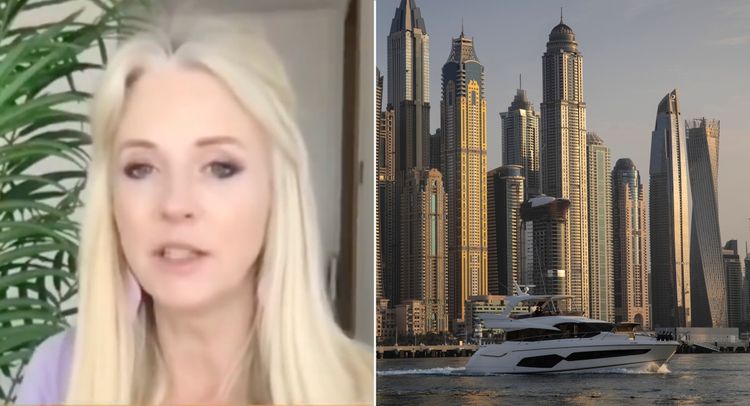
There is something quietly revealing about the growing number of British right-wing figures who warn obsessively about the dangers of Islam at home, yet choose to live, holiday or network in Dubai. A city in a Muslim-majority state, governed by religiously informed law, has somehow become a haven for people whose public careers are built on portraying Muslims as a civilisational threat.
Tommy Robinson has visited. Katie Hopkins once lived there. Isabel Oakeshott now resides in Dubai while remaining active in British political life and engaged to Reform UK MP Richard Tice. Nigel Farage has made high-profile trips, praising the UAE’s business environment and low crime while reportedly courting donors.
At first glance, it looks like hypocrisy. But the attraction is not accidental, and it is not really about Islam at all.
Dubai does not trigger the same reaction because it is not a society of equal citizens. It is a stratified expat economy where labour is imported, politics is closed, and dissent is minimal. For wealthy Western visitors, it offers the pleasures of global capitalism without the inconvenience of sharing power.
This is the key. What unsettles much of the British right is not religious difference in itself, but the idea of minorities as equals — neighbours with rights, voters with influence, citizens who expect to be heard. The “problem” with Muslims in Britain is not that they exist, but that they belong.
Dubai offers a world where belonging is tightly rationed. The majority of the population are migrant workers with limited rights. Political opposition barely exists. Trade unions are restricted. Protest is rare and risky. Power flows downwards, not outwards. It is diversity without democracy.
For figures who spend their careers railing against “wokeness”, “activists” and “rights culture”, this is not a contradiction — it is a glimpse of the kind of order they admire. A society where wealth is protected, hierarchy is normalised, and social conflict is managed by authority rather than negotiation.
This is why Dubai feels reassuring rather than threatening. It is Islam stripped of its most politically unsettling feature: equality.
There are, of course, practical incentives. Dubai offers tax advantages, elite lifestyles, sunshine, status, and a sense of having escaped a Britain portrayed as over-regulated, over-taxed and socially chaotic. Oakeshott’s relocation was framed around avoiding Labour’s tax policies – turning personal mobility into political theatre.
But the deeper appeal is ideological. Dubai demonstrates that you can have globalisation without pluralism, modernity without democracy, and diversity without rights. You can enjoy the aesthetics of cosmopolitan life while keeping political power tightly concentrated.
It is also a reminder that much of today’s culture war rhetoric about “freedom” is highly selective. Many of the loudest champions of free speech seem perfectly comfortable operating in a state where criticism of power is severely limited – as long as those limits fall on others.
So the contradiction dissolves. Dubai does not undermine their worldview; it fulfils it. It offers a version of society where inequality is built in, dissent is marginal, and order is enforced rather than debated.
What these figures oppose in Britain is not Islam. It is the messy, uncomfortable reality of living in a country where people they dislike are entitled to the same voice, the same rights and the same claim to the future.
Dubai lets them imagine a different kind of world – one where diversity exists, but democracy does not get in the way.