

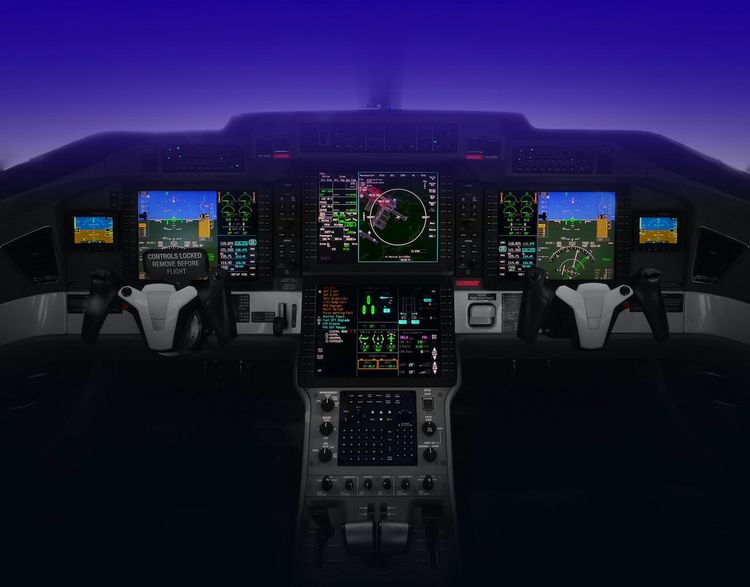
The aerospace sector is changing faster than ever. Modern aircraft run on millions of lines of code. Satellites coordinate GPS navigation and climate monitoring. This shift has turned embedded software development for aerospace into something that directly affects whether planes stay in the air and missions succeed.
What makes this moment tricky: the industry faces a mess of conflicting demands. Legacy systems from the 1980s still power critical infrastructure, yet they need to work with AI algorithms and cloud connectivity. Cybersecurity threats have gone from theoretical to documented incidents. Regulations can’t keep up with autonomous flight systems and urban air mobility.
This guide looks at the real-world complexities of building software for aerospace. We’ll cover what separates aerospace embedded systems from consumer electronics, explore certification processes that take years, and examine technologies reshaping the field.
What Makes Aerospace Embedded Software Different
Consumer electronics push updates overnight and tolerate bugs. Aerospace systems can’t. A software failure at 35,000 feet doesn’t just crash an app — it can crash an aircraft. This reality shapes everything about embedded software development for aerospace.
The hardware environment is brutal. Aerospace processors handle extreme temperatures, intense vibration, radiation in space, and electromagnetic interference that would destroy commercial electronics. Software must work reliably across this hostile environment while meeting strict weight and power limits. Every kilobyte affects fuel efficiency.
Real-time performance adds more complexity. Flight control systems must process sensor data within microseconds. Miss a deadline and the aircraft’s stability suffers. This demands deterministic behavior — the software responds within guaranteed time windows, always. No exceptions.
Certification requirements dwarf other industries. DO-178C defines five criticality levels based on failure consequences. Level A software, where failure means catastrophe, requires the most rigorous development process ever devised for commercial software. You trace every single requirement through design, implementation, and testing. Prove correct behavior through exhaustive test coverage. Document everything.
These constraints actually drive innovation. When you can’t throw more processing power at problems, you get brilliant at optimisation. Many advances in reliable software engineering originated in aerospace precisely because there’s zero margin for error.
Core Technologies and Development Approaches
Real-time operating systems form the foundation. VxWorks, INTEGRITY, and specialised Linux variants dominate because they provide deterministic scheduling and minimal latency. They’re not user-friendly, but they excel at predictable behavior.
Programming languages reflect safety priorities. C and Ada remain heavily used because their behavior is well-understood and thoroughly analysed. Ada shines for its strong typing and compile-time error detection. Recent projects use C++ subsets with restricted features. Rust is emerging as interesting, though it lacks decades of aerospace heritage that certification authorities prefer.
Model-based development has become standard for complex systems. MATLAB/Simulink lets engineers design control algorithms visually, simulate extensively, and auto-generate certified code. This reduces human errors and makes verification tractable. Auto-generated code might look ugly, but it’s consistent and provably correct.
Organisations in this space often rely on specialised expertise. Companies providing aerospace defence infrastructure technology services have built frameworks that handle redundancy management, health monitoring, and fault tolerance. Development teams can focus on mission-specific functionality.
Version control takes on heightened importance when a codebase might fly for 30+ years. Every change must be trackable and documented. Aerospace projects maintain detailed records of who changed what, when, and why for every line of code.
The Certification Marathon
Getting aerospace software certified is like defending a thesis — repeatedly, to hostile committees who catch every gap. The process consumes 50-70% of total development effort for safety-critical systems.
DO-178C compliance starts with planning documents before you write the first line of code. These aren’t formalities — they’re binding commitments that auditors verify meticulously.
Requirements management becomes obsessive. Every system requirement decomposes into software requirements. Each needs clear acceptance criteria. Requirements trace forward to design, code, and tests. They trace backward so any code piece can justify its existence. This creates a web of documentation proving the software does exactly what it should.
Testing reaches extraordinary depths. Level A software requires Modified Condition/Decision Coverage — tests must exercise every possible combination of conditions in Boolean expressions. Structural coverage analysis measures which code paths tests exercise. Any gap requires additional tests or formal justification.
Independent audits provide external scrutiny. A separate team reviews all artifacts, checks compliance, and validates results. They look for any deviation from plans, any requirement without verification, any code without coverage. Finding issues here triggers costly rework.
The timeline stretches years. Initial certification might take 3-5 years for a new flight control system. Changes to certified software require impact analysis — major changes can restart substantial certification portions. This explains why aerospace updates happen infrequently.
Security Challenges in Modern Systems
Connectivity brought new capabilities to aerospace — and new vulnerabilities barely imaginable when platforms were designed. Embedded software development for aerospace now addresses cybersecurity with the same rigor as safety.
The threat landscape evolved dramatically. Modern aircraft connect to ground systems for maintenance data and flight planning. Satellites receive ground commands. Each connection point is a potential attack surface. Documented incidents include researchers attacking aircraft systems through entertainment networks and GPS spoofing that confused navigation.
Legacy systems present particular challenges because they predate current security thinking. Many were designed when physical isolation provided security. Adding security retroactively to certified systems is fiendishly difficult — changes require recertification, but leaving systems vulnerable isn’t acceptable.
Defense-in-depth has become standard. Cryptographic authentication verifies commands come from legitimate sources. Secure boot ensures systems start with trusted software. Network segmentation isolates critical flight systems from passenger services. Intrusion detection watches for anomalies.
The safety-security intersection creates unique considerations. Safety systems fail safely — shut down gracefully when something goes wrong. Security systems need to keep operating under attack — an aircraft can’t safely shut down mid-flight. This creates design tensions where security must enhance protection without compromising safety properties.
Emerging Technologies Reshaping the Field
Autonomous systems push embedded software development for aerospace into uncharted territory. Urban air mobility, autonomous drones, and self-flying aircraft require software that makes complex decisions without humans. Traditional deterministic programming can’t handle the full range of situations.
Machine learning brings promise and problems. Neural networks excel at pattern recognition — obstacle detection, terrain classification, anomaly identification. They process sensor data beyond human capabilities. But they’re black boxes whose decision-making resists traditional verification. How do you prove a trained neural network behaves correctly in all situations when you can’t examine its logic? This keeps certification authorities awake.
Some interesting work is happening in verifiable AI. Researchers develop constrained learning architectures whose behavior can be formally proven. Runtime monitoring watches AI components and overrides dangerous decisions. Hybrid approaches use traditional software for safety-critical decisions while delegating perception to machine learning.
Digital twins enable extensive testing in simulation before deploying updates to real aircraft. Engineers validate software across thousands of flight scenarios and failure modes without flight testing. Digital twins also support predictive maintenance by comparing virtual and actual behavior to detect degradation before failures.
Space systems face unique challenges. Small satellite constellations need autonomous coordination software. Deep space missions require systems handling communication delays measured in minutes — no real-time ground control possible. Radiation-hardened processors lag commercial computing capabilities, forcing creative solutions.
Practical Lessons from Industry Veterans
Experience teaches lessons that textbooks miss. Engineers who’ve shipped certified systems share hard-won wisdom.
Start verification early — from day one. Waiting until code is “done” guarantees painful surprises and expensive rework. Write tests alongside requirements. Conduct design reviews before implementation. Run static analysis continuously.
Simplicity beats cleverness. That elegant algorithm you’re proud of? It’s a maintenance nightmare and verification headache. Straightforward code that’s obviously correct outperforms clever solutions requiring deep analysis.
Interface definitions deserve obsessive attention. More integration problems trace to mismatched interface assumptions than any other source. Document not just what data flows but timing constraints, valid ranges, error handling, and failure modes.
Automate everything within qualified tool constraints. Manual processes introduce errors and don’t scale. Automated builds, tests, and analysis — anything scriptable should be. Just ensure automation tools are qualified or outputs are independently verified.
Cultural factors matter tremendously. Teams that welcome finding problems early, that reward thorough documentation, that value asking questions — those teams produce better results than brilliant engineers in dysfunctional environments. The best aerospace teams have strong psychological safety where admitting uncertainty or finding bugs is celebrated.
Plan for the long haul. Aerospace software outlives the engineers who wrote it. Code that seemed clear becomes cryptic years later. Comments explaining why prove invaluable. Design documents capturing rationale help maintainers avoid breaking things they don’t understand.
Conclusion: The Future of Embedded Software Development for Aerospace
Embedded software development for aerospace stands between heritage and innovation. The fundamentals ensuring safety — rigorous verification, comprehensive documentation, defense in depth — remain non-negotiable. But the technology landscape is shifting.
The next decade will see aerospace software tackle seemingly contradictory challenges. Incorporating AI while maintaining certifiable safety. Enabling rapid updates within frameworks designed for stability. Protecting against cyber threats without compromising safety properties that made aviation remarkably secure.
Success requires evolution, not revolution. Smart organisations build bridges between new technologies and existing certification frameworks. They invest in tools reducing verification burden without reducing rigor. They develop talent understanding both cutting-edge techniques and aerospace constraints.
The opportunities are real. Software-defined systems offer capabilities impossible with mechanical or analog solutions. Autonomous systems could make aviation more accessible. Advanced analytics could predict failures beforehand. Optimised flight paths could reduce environmental impact.
But the responsibilities are profound. Every line of code exists within a trust relationship with passengers, crews, and the public. That trust was earned through decades of increasingly safe operations. Maintaining it while embracing innovation remains the central challenge.
Engineers and organisations that succeed will respect both aerospace software engineering’s legacy and the imperative to evolve. They’ll understand that fast isn’t enough — it needs to be fast and right. They’ll know cutting corners on verification doesn’t save time, it discovers problems later at higher cost.