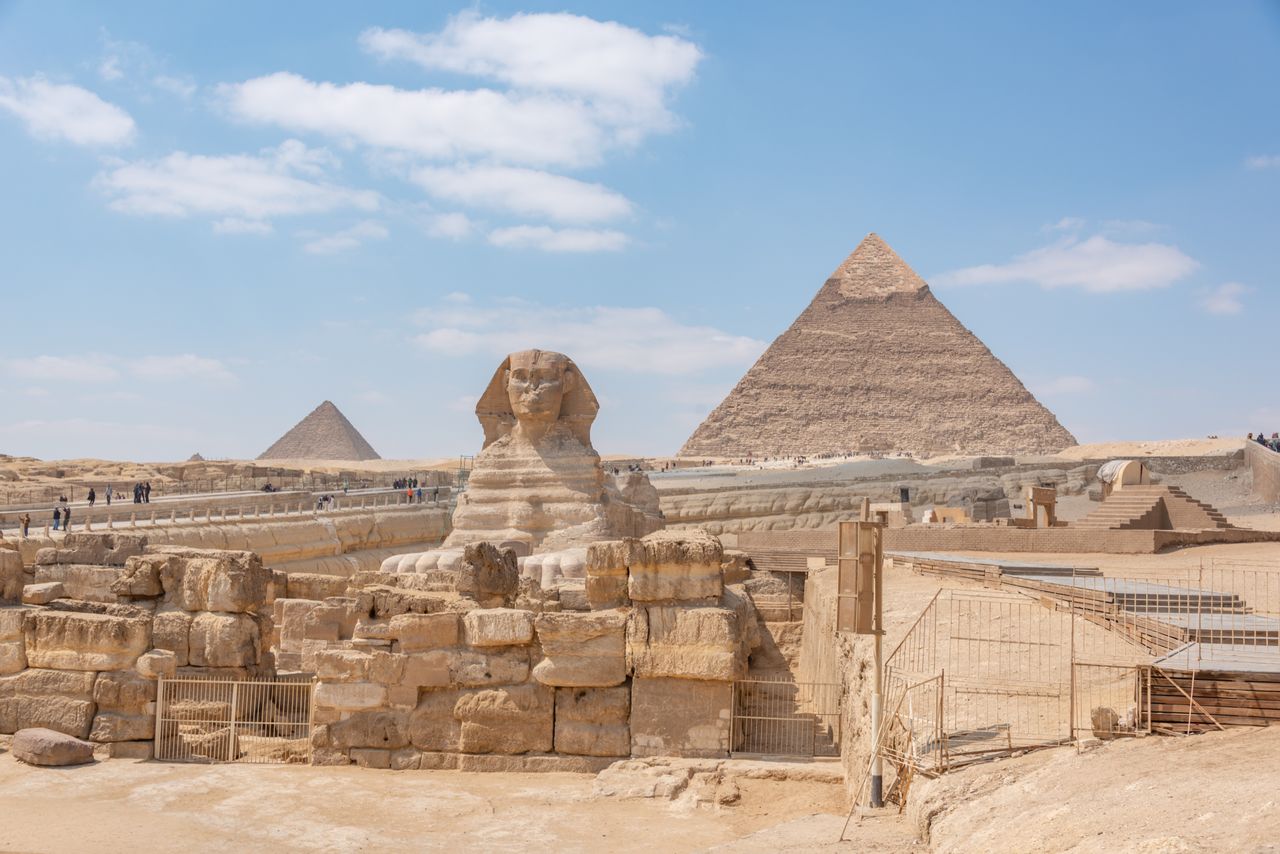
Egypt Tours are entering an interesting new era as travellers increasingly look beyond the familiar pyramid photographs and traditional sightseeing circuits in search of richer cultural experiences, slower journeys, and a closer connection with the country’s living heritage. Egypt remains one of the world’s most compelling destinations for history enthusiasts, but the current travel landscape is changing the way visitors experience its ancient monuments, archaeological sites, cities, deserts, and waterways.
The renewed interest in Egypt is not simply connected to its famous monuments. The country has always possessed extraordinary archaeological wealth, yet changing traveller preferences are encouraging visitors to explore beyond the most photographed attractions.
Modern travellers increasingly value experiences that feel meaningful rather than rushed. Standing before the Great Pyramid remains an unforgettable experience, but visitors are also interested in understanding how ancient Egyptian society functioned, how temples were used, how religious beliefs influenced architecture, and how the Nile shaped settlements for thousands of years.
This broader curiosity has helped transform Egypt from a conventional sightseeing destination into a more immersive cultural destination.
Cairo provides one of the clearest examples. The capital combines monumental antiquity with medieval architecture, bustling markets, contemporary neighbourhoods, museums, galleries, restaurants, and everyday Egyptian life. A traveller can move from an archaeological setting into a busy urban street within minutes, creating a contrast that is difficult to replicate elsewhere.
The same pattern appears throughout the country. Luxor offers access to monumental temples and royal tombs while remaining a functioning city. Aswan presents ancient sites alongside Nubian cultural traditions and communities. Alexandria introduces another historical dimension through its Mediterranean setting and connections with the Greco-Roman world.
One of the most significant developments in Egyptian tourism has been the emergence of the Grand Egyptian Museum as a major cultural attraction. Its location near the Giza Plateau places ancient Egyptian heritage within a much broader visitor experience.
The museum represents more than an additional stop on an itinerary. Its scale and approach to presenting Egypt’s archaeological heritage reflect a growing expectation that travellers should be able to understand artefacts within a larger historical narrative.
For visitors, this creates an opportunity to approach ancient Egypt through objects, architecture, craftsmanship, burial traditions, religious practices, and royal history before or after visiting the monuments themselves.
This relationship between museum collections and archaeological sites is particularly valuable. A pyramid can appear mysterious when viewed only as an enormous stone structure. Historical context helps explain the political organisation, engineering knowledge, religious beliefs, labour systems, and cultural ambitions that made such construction possible.
As museums become increasingly important parts of travel experiences, Egypt has an opportunity to encourage visitors to spend more time understanding its heritage rather than simply photographing it.
The Nile has always been fundamental to Egyptian civilisation, and it continues to shape the way travellers experience the country. A journey along the river provides a completely different rhythm from conventional road-based sightseeing. Instead of moving between isolated attractions, travellers can experience the landscape as a continuous cultural environment. Villages, farmland, temples, archaeological remains, riverbanks, and modern communities appear as part of the same setting. For travellers seeking a more immersive experience, Nile River Cruises offer an opportunity to appreciate these changing landscapes while travelling between some of Egypt’s most important historical destinations.
This slower perspective is increasingly attractive at a time when many travellers are reconsidering hurried holidays. A river journey creates natural pauses between major visits, allowing destinations to be appreciated without the feeling that every hour must be filled with another attraction.
The Nile also helps explain Egyptian history in a way that individual monuments cannot. Ancient settlements depended on the river for agriculture, transportation, trade, and survival. Temples and cities developed in relation to this geographical reality.
Travelling along the Nile therefore becomes more than transportation between archaeological sites. It offers a way to understand why civilisation developed where it did and why the river remains such a defining element of Egyptian identity.
The pyramids remain essential to any discussion of Egyptian tourism, but visitor expectations are becoming more sophisticated.
For many first-time travellers, Giza is still the emotional centre of a trip. The scale of the monuments creates an immediate connection with the ancient world that photographs cannot reproduce. Yet the modern traveller often wants more context surrounding that experience.
Instead of seeing the pyramids as isolated wonders, visitors are increasingly interested in the surrounding necropolis, ancient funerary practices, construction methods, archaeological discoveries, and the evolution of Egyptian royal architecture.
This shift is significant because it encourages deeper engagement with the destination. The pyramid becomes the beginning of a historical story rather than the entire story.
The same principle applies elsewhere. Karnak is not simply a spectacular temple complex. Its columns, sanctuaries, inscriptions, avenues, and courtyards reveal centuries of religious development and royal patronage. The Valley of the Kings is not merely a collection of tombs. It provides insight into ancient Egyptian beliefs about death, kingship, ritual, and the afterlife.
Slow travel is becoming increasingly relevant across the global tourism industry, and Egypt is particularly well suited to this approach.
The country contains enough historical and cultural depth to reward longer stays. Travellers who spend additional time in one region can discover details that are easily missed during rapid tours.
In Luxor, for example, visitors can dedicate more time to both the east and west banks of the Nile. The contrast between monumental temples associated with religious and royal life and the funerary landscape of the western bank creates a much richer understanding of ancient Thebes.
In Aswan, the experience can extend beyond archaeological attractions to include the river environment, local communities, traditional crafts, food, and Nubian heritage.
Cairo likewise rewards travellers who allow themselves time to explore different layers of the city. Ancient, Islamic, colonial, and contemporary influences coexist within the metropolitan landscape.
Slower travel does not necessarily mean doing less. It means allowing individual experiences enough time to become memorable.
Egypt’s deserts provide an important counterpoint to its river valleys and urban centres.
The Western Desert contains vast landscapes where dramatic rock formations, open horizons, dunes, and remote oases create an entirely different atmosphere from the Nile Valley. These environments appeal to travellers interested in nature, photography, geology, astronomy, and adventure.
Desert tourism also highlights the geographical diversity of Egypt. The popular image of the country often focuses heavily on monuments and archaeological sites, but much of Egypt is defined by landscapes that are remarkably different from the fertile areas surrounding the Nile.
For photographers, the changing light across desert terrain can be particularly compelling. Early mornings and evenings reveal textures and colours that are difficult to appreciate beneath the intense midday sun.
At the same time, responsible desert tourism is becoming increasingly important. Fragile ecosystems and remote archaeological areas require careful management, particularly as visitor interest expands.
Cultural tourism is not limited to museums and monuments. Food provides another way to understand a country.
Egyptian cuisine reflects centuries of agricultural traditions, regional influences, and everyday social customs. Dishes based around beans, grains, vegetables, bread, rice, and spices demonstrate how local food culture developed around available ingredients.
For travellers, eating in local settings can provide a more immediate connection with contemporary Egyptian life. Traditional meals are often closely connected to family, hospitality, celebrations, and community.
This is particularly relevant to the broader movement toward experiential travel. Visitors increasingly want to return home with memories that involve more than landmarks. A meal shared in a lively neighbourhood, a conversation with a resident, or an encounter with a traditional craft can become as memorable as a famous archaeological site.
Egypt’s extraordinary archaeological heritage also creates a responsibility.
Large numbers of visitors can place pressure on monuments, historic structures, surrounding landscapes, and local communities. Preservation therefore needs to remain closely connected with tourism development.
Responsible tourism can support conservation when visitors respect archaeological sites, follow access restrictions, avoid touching vulnerable surfaces, and choose experiences that contribute positively to local communities.
The future of Egyptian tourism will depend partly on finding a sustainable balance between accessibility and preservation. The country’s monuments belong to humanity’s shared cultural heritage, but they also remain physical places that require protection from environmental and human pressures.
This makes informed tourism increasingly valuable. Travellers who understand the significance of a monument are more likely to appreciate why preservation rules exist.
Egypt has no shortage of iconic attractions, but its future appeal may depend on how successfully those attractions can be connected into broader experiences.
The pyramids, ancient temples, museums, the Nile, desert landscapes, historic cities, cuisine, and contemporary communities all contribute different pieces to the country’s identity.
The strongest travel experiences often emerge when these elements are experienced together. A museum visit can provide context for an archaeological site. A journey along the Nile can explain the geography behind ancient settlements. A meal can introduce aspects of modern Egyptian culture that monuments cannot communicate. A visit to a desert landscape can reveal the geographical diversity behind the civilisation traditionally associated with the river.
That combination is what makes Egypt continually relevant to modern travellers.
The country does not need to rely solely on the fame of its ancient monuments. Its greatest strength lies in the relationship between ancient history and living culture. As travellers increasingly seek authenticity, meaningful encounters, slower experiences, and deeper cultural understanding, Egypt is exceptionally positioned to meet those expectations.
The next chapter of Egyptian tourism may therefore be less about seeing as many famous places as possible and more about understanding what those places represent. For visitors willing to look beyond the obvious, the country offers a journey through history that remains remarkably alive in the present.