

If it was up to young Britons to decide who should govern Britain after the next election, the Greens would win by a landslide. That single fact tells you almost everything about the political mood among the under-40s – and just how badly the political mainstream has misread it.
Recent polling from YouGov shows the Green Party of England and Wales would secure the largest share of the youth vote, overtaking Labour by a clear margin and leaving Reform in its wake too. This isn’t a protest spike or a quirky outlier. It reflects a deeper enthusiasm building among younger voters who increasingly see the Greens as the party that gets both their anxieties and their ambitions.
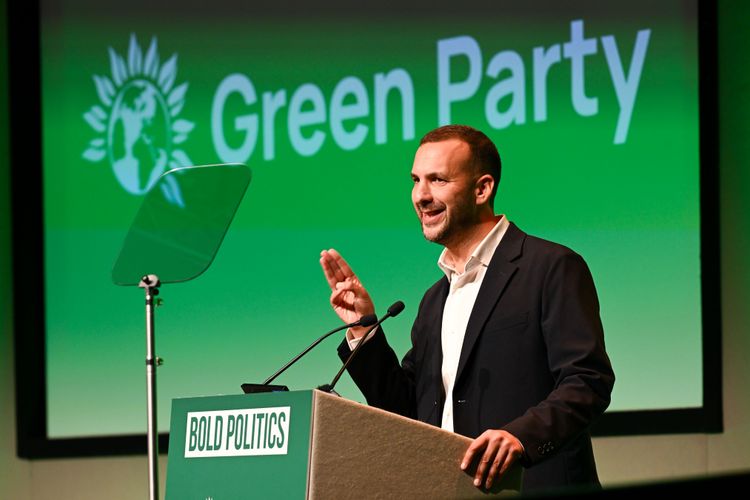
Much of that appeal comes from how the Greens are now presenting themselves, not as a single-issue environmental pressure group, but as a serious political force rooted in everyday life. Their new leader, Zack Polanski, has been central to that shift. His brand of eco-populism reframes climate politics away from abstract targets and moral lectures, and towards rent, bills, transport, food prices and quality of life.
In a recent interview with the Evening Standard, Polanski leaned into exactly this idea: that green politics isn’t about hair-shirt sacrifice, but about making life cheaper, healthier and more secure. Warm homes instead of extortionate energy bills. Clean, reliable public transport instead of car dependency. Food systems that work for people, not just profits.
That framing matters to a generation that has grown up amid financial crisis, wage stagnation and climate breakdown. For many young voters, climate change isn’t a distant threat – it’s the backdrop to their entire adult lives. The Greens are speaking to that reality with a confidence and optimism that feels strikingly absent elsewhere.
Crucially, this enthusiasm cuts across gender lines. While young women have been moving towards the Greens for some time, the data shows young men are increasingly doing the same. The oft-repeated claim that young men are flocking en masse to Reform UK doesn’t hold up. On housing, cost of living and environmental resilience, young men are more likely to favour green solutions than culture-war politics.
Perhaps the most telling shift is where these votes are coming from. In 2024, Labour Party commanded a majority of young people’s support. Today, a significant portion of that backing has transferred to the Greens. This isn’t ideological purism – it’s impatience. Young voters want urgency, clarity and moral confidence on the issues shaping their futures.
What’s emerging is less a generational label than a political identity: Gen G. A cohort that sees climate action as inseparable from economic justice, and responds to politics that is bold, emotionally literate and rooted in lived experience.
The Greens didn’t stumble into this moment by accident. They’ve worked for it – and if current trends continue, Britain’s youngest voters may end up reshaping the political landscape faster than anyone in Westminster expects.