

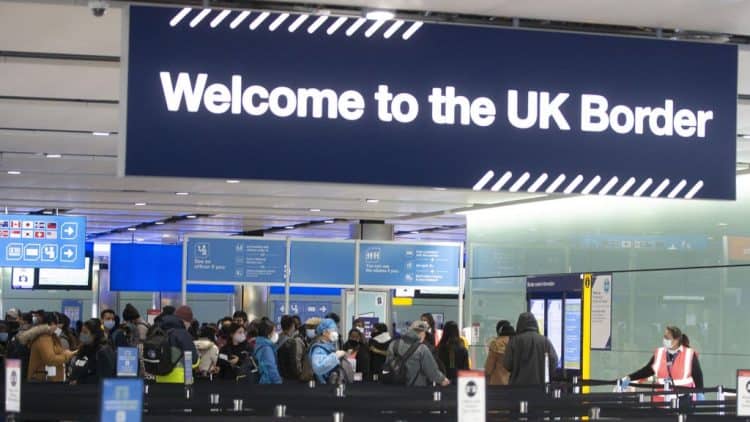
Net migration to the UK is set to fall to its lowest level in nearly 30 years.
The Telegraph reports that official data released later this month will show that net migration fell to around 120,000 for the year to June.
This would be the lowest level since 1997, excluding the Covid pandemic years.
Net migration is the number of people arriving in Britain minus those leaving the country.
READ NEXT: Nigel Farage caught-out over one of his biggest Brexit lies
After peak in 2023, net migration plummets
The Office for Budget Responsibility predicts that net migration will fall to at 114,000 in 2027, although it has previously been conservative in its forecasts. For example, the OBR overestimated net migration by almost 50,000 for the year to December 2025.
In 2023, net migration hit a record high of 944,000, driven by immigration hitting 1.45 million that year.
Now, immigration has fallen to around 800,000, whilst emigration has increased from 500,000 to over 640,000.
This isn’t a case of British citizens leaving the country though, as the emigration figures are largely being driven by migrants who arrived in Britain during the ‘Boriswave’ returning home after their visas ran out.
Dr Madeleine Sumption, the director of the University of Oxford’s Migration Observatory, told the Telegraph: “Immigration has come down, but emigration is still quite high. That doesn’t last forever. Most people who emigrate are not British. They are previous migrants.
“When you have a high period of immigration, most people who leave will leave within five years of arriving.”
Labour taking back control of immigration
In recent years, there has been an increase in restrictions on migrants’ work visas, including measures introduced by Labour since the party came into power in 2024.
Earlier this month, home secretary Shabana Mahmood confirmed plans to double the length of time migrants will have to live in the UK to qualify for indefinite leave to remain (ILR), from five years to 10.
Certain groups, such as high earners, some care workers and ‘skilled’ public service workers, will still be able to qualify for ILR after five years.
Since Labour came into power, the party has overseen plenty of success in bringing down net migration.
In May this year, net migration fell to its lowest level since 2021, after figures dropped by almost 50% to 171,100 in 2025.
At the same time, small boat arrivals continue to decline, hitting their lowest levels in years.
It’s perhaps little wonder then that the party whose only policy seems to be stopping small boat crossings and reducing immigration is experiencing a remarkable polling slump.