

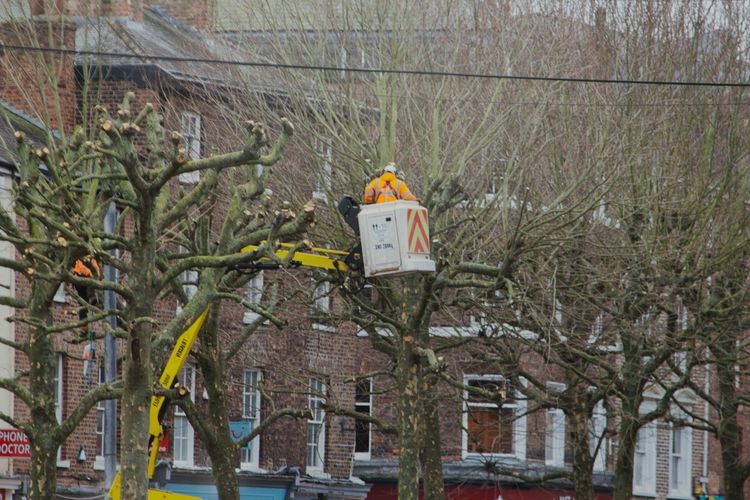
The shift is not about replacing skilled climbers. It is about choosing the access method that reduces risk and disruption on the day. UK guidance is clear that planners should actively consider MEWPs during job planning, and that in many cases they provide safe and quick access to trees and a secure working platform. For site-specific selection, photos and measurements can be reviewed by specialists like Access Platform Sales, who can advise on machine choice, training and aftercare.
What the regulator says
The Health and Safety Executive’s tree-work page on MEWPs states that while the law does not mandate platforms for all tree work, you should always consider them when planning. The same page highlights their suitability for scenarios with fragile structures, limited tie-in points or public interface. That framing matters because it puts the decision on a risk basis, not on tradition or habit.
Across the wider picture, the HSE’s most recent fatal-injury overview shows agriculture, forestry and fishing remain among the deadliest sectors each year. Any credible measure that cuts exposure at height or near the public deserves attention. In 2024–25 HSE recorded 124 worker deaths across all industries, with 23 in agriculture, forestry and fishing.
Where MEWPs beat ropes
A tracked spider will not win every brief. It becomes the safer, faster or more publicly acceptable choice when trees are compromised, access is awkward or predictable positioning is essential.
- Dead or storm-damaged trees. Where timber integrity is uncertain or tie-in points are limited, a platform reduces the time a person spends suspended in the crown. The Arboricultural Association’s Safety Guide 5 summarises good practice for MEWP use in tree work and points to the full TG5 technical guidance.
- Fragile surroundings. Work above glass, slate, conservatories or play areas benefits from precise positioning and controlled slewing that limits swing and debris. HSE highlights these use cases in its MEWP guidance for tree work.
- Public interface and traffic. In streets, schools and hospital estates, a platform and a banksman deliver a tidier exclusion zone and shorter occupation of the site.
- Proximity to utilities. Work near overhead power lines is a recurring cause of serious incidents. MEWPs do not eliminate electrical risk, but they support planned clearances, predictable movement and disciplined stand-off distances when combined with utility owner guidance.
- Tight or sensitive access. Tracked spiders spread load and squeeze through domestic side passages, then auto-level on modest slopes. That combination is hard to match with ladders or scaffold.
None of this displaces rope and harness for fine pruning, complex rigging or canopies where a platform simply cannot reach. It does mean the default planning question should be, can a MEWP lower risk here, before a method is chosen.
The limits to respect
Platforms are not a safety shortcut. HSE’s construction MEWP page is blunt about the causes of serious harm, including overturn, entrapment and poor planning. Competent operators, correct machine selection and a site-specific plan are non-negotiable.
- Ground truth. Outriggers can overload soft ground. Use pads sized to the surface and add mats to protect lawns and root protection areas. Stop and reset if pads sink or tilt.
- Wind and weather. Obey the machine rating, measured as gusts, and stop in conditions that reduce visibility or control.
- Power lines. Treat electricity as a separate risk assessment. HSE’s tree-work power-line page starts with a simple test, are you within ten metres of overhead lines, and links to separation and control measures.
- Rescue planning. A written rescue plan, trained ground crew and familiarisation with emergency lowering are essential. AFAG 403 sets out safe working practices for MEWPs in tree work when a risk assessment has determined a platform is the appropriate access method.
When a MEWP is the safer plan
Dead or unstable tree, limited tie-in points, fragile structures below, public interface, utilities nearby, tight timelines, awkward or sensitive access.
People, productivity and the neighbourhood test
Tree work is judged by more than finish cuts. In dense neighbourhoods or high streets, the quiet footprint of electric and hybrid spiders earns public acceptance and shortens traffic management windows. A platform’s predictable movement also helps insurers and clients visualise and control risk, especially on sites with glazing, heritage fabric or heavy pedestrian flow.
Crews that operate both methods often describe a practical split. Use a platform for removal, heavy reduction, inspections and any work with public exposure. Use a climber for fine pruning, rigging and the last metre of finesse. That balance is sustainable because it respects both skill sets and keeps exposure hours at height under active control.
Data points that should sharpen planning
Industry safety reporting shows how incident patterns shift with use. IPAF’s Global Safety Reports highlight recurring risks such as electrocution and entrapment for particular MEWP categories and note year-on-year movements in reported incidents. The specifics change each cycle, the constant is the need for competent planning, selection and rescue readiness.
On the macro side, the fatal-injury burden in agriculture and forestry remains stubbornly high relative to workforce size. Even modest reductions in exposure for arborists, whether through platforms or better controls, are therefore worth pursuing.
A fair conclusion
Rope and harness will always be part of arboriculture. There are trees and tasks where only a climber can do what is needed. The case for tracked spiders is not that they replace craft, it is that they reduce the number of hours people spend in the most hazardous positions when a platform can reach. The regulator already points the way, consider MEWPs at the planning stage and use them where they lower risk. Crews that plan this way tend to finish earlier, disturb neighbours less and walk away with fewer near misses. That is a definition of safer streets and calmer sites worth adopting.